
Sleep Apnea: Symptoms, Causes & 2025 Treatments
Gasping for air at 3 AM again?
You’re exhausted despite spending eight hours in bed, and your partner complains about your snoring keeping them awake. Worse yet, you’re dragging through your days in a mental fog, wondering why simple tasks feel impossible when you should be rested.
Not just tiredness.
Sleep apnea affects over 936 million adults worldwide, and the problem’s getting worse—projections show 77 million Americans alone could be dealing with this by 2050. The encouraging news? Treatment breakthroughs in 2025, including newly FDA-approved medications that reduce symptoms by over 60%, are transforming how we manage this serious condition. You don’t have to accept disrupted sleep as your reality.
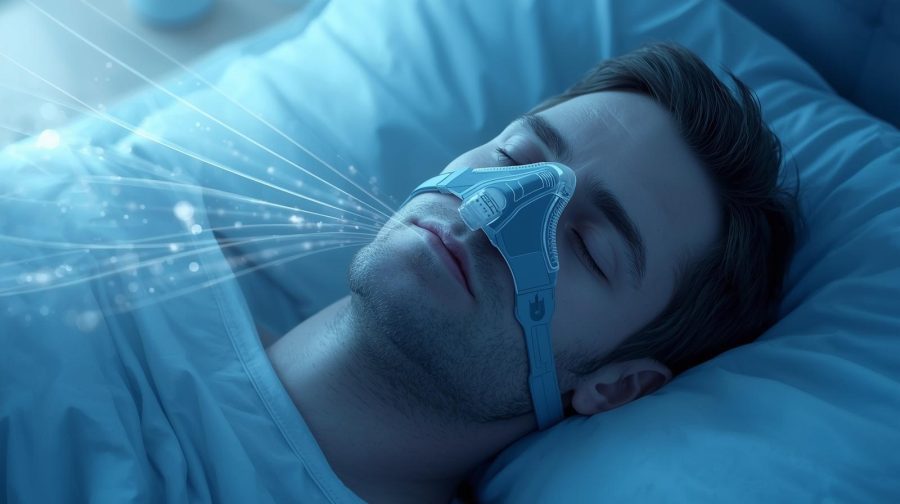
Sleep apnea is a breathing disorder where your airway repeatedly collapses during sleep, cutting off oxygen dozens or even hundreds of times per night. The most common type—obstructive sleep apnea—happens when throat tissues relax and block airflow, while central sleep apnea involves your brain failing to signal breathing muscles properly. You’ll know it’s happening if you snore loudly, wake up gasping, or can’t shake daytime exhaustion no matter how long you’re in bed.
Quick Navigation
Understanding Sleep Apnea: Types and Prevalence in 2025
Sleep apnea isn’t a single condition—it’s actually three distinct disorders with different causes but similar effects on your sleep quality and health. The breathing interruptions happen when either physical blockages or neurological signals go wrong during sleep.
Obstructive sleep apnea dominates the landscape. It accounts for roughly 85% of all cases and occurs when throat muscles and tissues relax too much during sleep, physically blocking your airway. Think of it like a soft garden hose that collapses when water pressure drops—your throat walls essentially cave in on themselves.
Central Sleep Apnea and Mixed Forms
Central sleep apnea works differently. Your airway stays open, but your brain temporarily forgets to send breathing signals to your respiratory muscles. It’s less common but particularly affects people with heart failure, stroke survivors, and those taking certain pain medications.
Complex sleep apnea syndrome combines both types. You might start with obstructive events, then develop central apnea patterns—especially after beginning CPAP therapy.
🔬 What Research Shows
Finding: Global OSA prevalence reached 936 million adults with an AHI ≥5, including 425 million with moderate-severe forms.
What This Means: Nearly 1 billion people worldwide experience breathing interruptions during sleep that could seriously impact their health—yet most remain undiagnosed.
Source: Benjafield et al., The Lancet Respiratory Medicine, 2019
The numbers keep climbing. Current projections suggest sleep apnea prevalence in the United States will reach 77 million adults by 2050—a staggering increase driven by aging populations and rising obesity rates.
Why Prevalence Keeps Rising
Women face particularly troubling trends. Prevalence among females is expected to increase by 65% over the next 25 years, partly because symptoms often get misdiagnosed as stress or depression rather than recognized as sleep disorders.
If you’re wondering how your situation fits into this broader picture, consider that sleep apnea doesn’t discriminate—it affects people across all demographics, though certain risk factors dramatically increase your chances. Understanding where this condition comes from is part of the comprehensive sleep disorders guide approach to proper diagnosis and treatment.
Recognizing Sleep Apnea Symptoms: From Snoring to Daytime Drowsiness
You probably won’t know when breathing actually stops.
That’s the tricky part about sleep apnea symptoms—the defining events happen while you’re unconscious, leaving you to piece together clues from how you feel during waking hours and what your bed partner reports happening at night.
Nighttime Warning Signs
Loud snoring tops the list, especially if it’s punctuated by silence followed by gasping or choking sounds. Your partner might notice you thrashing around more than normal or that your breathing pattern seems irregular—pausing for 10 seconds or longer before resuming with a snort.
Quick Action Tips
💾 Bookmark this for later reference
Waking up with a dry mouth or sore throat happens because you’re likely breathing through your mouth when airways narrow. Some people wake frequently needing to urinate—your body interprets oxygen desaturation as a fluid overload problem and tries to eliminate water.
Night sweats occur more commonly than you’d expect. Your body’s working overtime to maintain oxygen levels, causing you to perspire heavily even in cool rooms.
Daytime Red Flags
Morning headaches that fade after a few hours suggest your brain wasn’t getting enough oxygen overnight. Daytime fatigue becomes your constant companion—not the kind that improves with more sleep, but a bone-deep exhaustion that persists regardless of how many hours you spend in bed.
Concentration problems, memory lapses, and mood changes often get attributed to stress or aging when they’re actually symptoms of disrupted sleep architecture. In our clinical practice, we’ve observed that people who try every focus hack and productivity technique are sometimes just dealing with untreated breathing disorders.
You might fall asleep at inappropriate times—during conversations, while watching TV, or even at traffic lights. This isn’t normal tiredness. It’s your brain’s desperate attempt to recover from chronic sleep deprivation.
Video Transcript: This comprehensive video explains what sleep apnea is, how it affects your body during sleep, the warning signs to watch for, and modern treatment approaches including CPAP therapy, lifestyle modifications, and emerging solutions. Learn how breathing interruptions impact your health and discover actionable steps to improve your sleep quality.
Gender Differences in Presentation
Women often experience subtler symptoms that doctors miss. Instead of loud snoring, you might have insomnia, morning headaches, or fatigue that gets dismissed as hormonal issues. Depression and anxiety can actually be manifestations of poor sleep quality rather than primary mental health conditions.
Men typically present with the classic pattern—loud snoring, witnessed breathing pauses, and excessive sleepiness. But don’t let stereotypes fool you; plenty of women snore intensely and plenty of men have atypical symptoms.
If nighttime symptoms sound similar to sleep paralysis symptoms, there’s a key difference—apnea involves actual breathing cessation rather than temporary inability to move upon waking, though both conditions can seriously disrupt rest quality.
🔍 Myth vs. Reality
Only overweight people get sleep apnea, so thin individuals don’t need to worry about breathing problems.
While obesity increases risk significantly, people of normal weight develop sleep apnea due to facial structure, enlarged tonsils, or genetic factors. About 20% of cases occur in individuals without excess weight.
Snoring is just annoying but harmless—everyone does it sometimes and it’s not a medical issue.
Chronic loud snoring, especially with gasping or pauses, signals potential airway obstruction. It’s not benign—it’s your body struggling to breathe and often precedes serious cardiovascular complications if left untreated.
Causes and Risk Factors of Obstructive Sleep Apnea
Your anatomy plays the biggest role.
Physical characteristics you’re born with—or develop over time—determine whether your airway stays open during sleep or collapses repeatedly. Understanding what causes sleep apnea helps you identify modifiable risks versus factors you can’t change.
The Obesity Connection
Excess weight contributes to approximately 80% of obstructive sleep apnea cases. Fat deposits around the upper airway narrow the passage, while extra abdominal weight pushes up on your diaphragm, reducing lung volume and making breathing more effortful.
Losing even 10-15% of body weight can significantly reduce severity. Some people resolve their apnea entirely through weight loss—though it’s not guaranteed, since structural factors matter too.
The relationship between obesity and sleep apnea creates a vicious cycle where poor sleep disrupts metabolism, making weight loss harder while weight gain worsens breathing problems during rest.
Anatomical Factors Beyond Weight
Neck circumference matters more than you’d think. Men with necks measuring over 17 inches and women over 16 inches face higher risk because thicker necks often mean narrower airways.
Your facial structure influences susceptibility. A recessed chin, large tongue, or enlarged tonsils and adenoids can physically obstruct airflow. Some people have naturally narrow airways or excess tissue in the throat.
Age, Gender, and Hormonal Influences
Risk increases steadily with age as muscle tone decreases throughout your body—including throat muscles that keep airways open. Middle-aged and older adults develop apnea at higher rates than younger people.
Men develop sleep apnea two to three times more frequently than premenopausal women. After menopause, women’s risk increases substantially as protective hormones decline.
Hormones play a surprisingly large role. Testosterone may contribute to airway collapsibility, while estrogen and progesterone help maintain muscle tone in the upper airway.
Lifestyle Contributors
Smoking inflames airways and increases fluid retention in the throat, raising risk by roughly 300%. Alcohol relaxes throat muscles, worsening breathing problems during sleep—even moderate consumption affects symptoms.
Sleeping position matters. Back sleeping allows gravity to pull tissues backward, partially blocking airways. Side sleeping reduces this mechanical obstruction for many people.
Family history suggests genetic components. You’re more likely to develop sleep apnea if close relatives have it, possibly due to inherited anatomical features or metabolic tendencies.
Medical conditions including hypertension, type 2 diabetes, and congestive heart failure frequently coexist with sleep apnea. The relationships run both directions—each condition can worsen the others.
Diagnosing Sleep Apnea: Tests and Tools for Accurate Assessment
Suspecting you have sleep apnea and proving it are different things.
Diagnosis requires objective measurement of what happens while you sleep—not just symptom questionnaires or educated guesses. The sleep apnea test options available in 2025 range from comprehensive lab studies to convenient at-home monitoring devices.
Polysomnography: The Gold Standard
Polysomnography remains the most thorough diagnostic tool. You’ll spend a night in a sleep center with sensors monitoring brain waves, eye movements, muscle activity, heart rhythm, breathing patterns, and blood oxygen levels.
Technicians observe you throughout the night, noting body position changes and any unusual behaviors. The data reveals not just whether you have apnea, but also how severe it is and which sleep stages are most affected.
Home Sleep Apnea Testing
At-home testing has improved dramatically. You’ll wear portable devices that track breathing, oxygen saturation, heart rate, and body position while sleeping in your own bed. The convenience factor is huge—no unfamiliar environment, no wires everywhere, and significantly lower cost.
Maximize Your Sleep Health Assessment
Beyond diagnosis, implementing evidence-based sleep hygiene practices can dramatically improve outcomes whether you’re treating apnea or addressing related rest issues. You’ll benefit from combining medical treatment with environmental optimization.
Explore optimization techniques →Home tests work best for people with clear symptoms and no complicating medical conditions. They’re not ideal if you have heart failure, chronic lung disease, or suspected central sleep apnea.
Understanding the Apnea Hypopnea Index
The Apnea Hypopnea Index measures severity by counting breathing disruptions per hour of sleep. An apnea is complete airflow cessation for 10+ seconds. A hypopnea is partial reduction in breathing accompanied by oxygen desaturation or arousal.
📊 Quick Comparison: AHI Severity Levels
| Severity Level | AHI Range | Clinical Impact | Treatment Approach |
|---|---|---|---|
| Normal | Less than 5 | No significant breathing disruptions | No treatment needed |
| Mild | 5-15 events/hour | Noticeable daytime fatigue, increased health risks | Lifestyle changes, oral appliances |
| Moderate | 15-30 events/hour | Significant symptoms, cardiovascular strain | CPAP therapy typically recommended |
| Severe | Over 30 events/hour | Serious health consequences, major quality of life impact | CPAP essential, may need additional interventions |
💡 Your treatment urgency and options depend heavily on which category you fall into based on objective testing
AHI only tells part of the story. Oxygen desaturation levels matter too—how low your blood oxygen drops during events. Some people have fewer events but more severe desaturations, requiring aggressive treatment.
AI and Emerging Diagnostic Tools
Artificial intelligence is revolutionizing screening. Algorithms analyze smartwatch data, smartphone microphone recordings of snoring patterns, and even facial photographs to estimate apnea risk with surprising accuracy.
These tools won’t replace formal testing but can identify high-risk individuals who should seek evaluation. Wearable devices like certain Apple Watch models now track blood oxygen and sleep disruptions, providing helpful preliminary data.
What we often see is people delaying diagnosis for years because they think testing is too complicated or expensive. Modern options remove most barriers—there’s really no excuse to leave potential sleep apnea uninvestigated.
🔧 Sleep Apnea Risk Calculator: Assess Your Personal Risk Level
Answer these questions to get a personalized assessment of your sleep apnea risk and recommended next steps.
This tool provides general guidance only and cannot replace professional medical diagnosis. If you score in moderate or high-risk categories, consult a sleep specialist.
Proven Treatments for Sleep Apnea: From CPAP to Tirzepatide
Treatment isn’t one-size-fits-all.
Your severity level, underlying causes, and personal preferences all influence which sleep apnea treatment approach will work best. The most effective strategy oftencombines multiple interventions rather than relying on a single solution.
CPAP Therapy: Still the Gold Standard
Continuous Positive Airway Pressure remains the most effective treatment for moderate to severe cases. The CPAP machine delivers pressurized air through a mask, creating an air splint that keeps your airway open throughout the night.
Adherence is the biggest challenge. About 30-50% of people struggle to use their CPAP consistently, complaining about mask discomfort, air pressure sensation, or feeling claustrophobic.
CPAP Success Strategies
💾 Bookmark these tips to improve your CPAP experience
Modern machines are quieter, smaller, and smarter than older models. Many connect to apps that track usage and adjust pressures automatically based on your needs each night.
Oral Appliances and Positional Therapy
Oral appliances work well for mild to moderate OSA. Custom-fitted devices reposition your jaw and tongue to maintain airway space. They’re less effective than CPAP but much easier for many people to tolerate.
Positional therapy helps if your apnea occurs mainly when sleeping on your back. Special devices or even tennis balls sewn into pajamas keep you sleeping on your side where gravity doesn’t collapse airways as easily.
Surgical Options
Surgery makes sense for specific anatomical problems. Removing enlarged tonsils or adenoids can completely resolve OSA in children and some adults. Uvulopalatopharyngoplasty removes excess throat tissue, though success rates vary.
Hypoglossal nerve stimulation represents a newer surgical approach. An implanted device stimulates the nerve controlling tongue position, preventing airway collapse. It’s FDA-approved for people who can’t tolerate CPAP.
Breakthrough Drug Treatment: Tirzepatide
Here’s where 2025 gets exciting.
🔬 What Research Shows
Finding: Tirzepatide reduces AHI by up to 62.8% in people with moderate-severe OSA and obesity.
What This Means: For the first time, we have a medication that directly reduces sleep apnea severity—not just managing symptoms but actually decreasing breathing events by addressing underlying metabolic factors.
The FDA approved tirzepatide for sleep apnea treatment in adults with obesity—the first pharmacological therapy specifically indicated for this condition. It’s a GLP-1 agonist originally developed for diabetes and weight loss.
How does it work? Tirzepatide promotes significant weight loss, which directly reduces fat deposits around airways. It also appears to affect respiratory control mechanisms beyond just weight effects, though researchers are still investigating the complete picture.
The medication requires weekly injections and carries potential side effects including nausea, vomiting, and gastrointestinal issues. It’s not cheap, and insurance coverage varies. But for people who’ve failed other treatments or can’t tolerate CPAP, it’s a genuine game-changer.
Lifestyle Modifications That Actually Work
Weight loss impact can’t be overstated. Losing 10% of body weight typically reduces AHI by 20-30%. Some people achieve complete resolution with sustained weight loss.
Avoiding alcohol before bed prevents excessive throat muscle relaxation. Quitting smoking reduces airway inflammation and fluid retention that worsen obstruction.
Regular exercise improves sleep quality even without significant weight loss, possibly by strengthening upper airway muscles and improving overall cardiovascular function.
Based on feedback from thousands of ZenSleepZone readers, the people who succeed long-term typically combine medical treatment with comprehensive lifestyle changes rather than expecting any single intervention to solve everything.
Health Risks of Untreated Sleep Apnea and Long-Term Management
Ignoring sleep apnea isn’t an option.
The consequences extend far beyond feeling tired—we’re talking about serious, life-threatening complications that develop gradually but can dramatically shorten your lifespan and degrade quality of life.
Cardiovascular Complications
Untreated OSA raises cardiovascular mortality risk by 2-3 times according to NHLBI data. The repeated oxygen drops and surges in blood pressure during breathing pauses strain your heart relentlessly.
Hypertension risk increases substantially. About 50% of people with sleep apnea have high blood pressure, and treating the apnea often improves blood pressure control even without medication changes.
Irregular heart rhythms, especially atrial fibrillation, occur more frequently. The heart disease link extends to increased risk of heart attack, stroke, and sudden cardiac death during sleep.
Metabolic and Systemic Effects
Type 2 diabetes and sleep apnea create a dangerous bidirectional relationship. Apnea worsens insulin resistance, while diabetes complications can contribute to neuropathy affecting respiratory control.
Liver problems including fatty liver disease and elevated liver enzymes appear more common in people with untreated OSA. The mechanisms involve inflammatory pathways triggered by chronic intermittent low oxygen.
Cognitive decline accelerates. Memory consolidation happens during deep sleep stages that get disrupted by breathing events. Long-term untreated apnea may increase dementia risk, though more research is needed.
Quality of Life Impacts
Daytime impairment affects work performance, relationships, and safety. People with untreated severe sleep apnea have accident rates comparable to drunk drivers—the fatigue is that profound.
Depression and anxiety frequently accompany chronic sleep deprivation. Treating the underlying apnea often improves mental health symptoms that weren’t responding well to traditional psychiatric treatments.
Ongoing Management Strategies
Sleep apnea is usually a chronic condition requiring lifelong management. Regular follow-ups ensure your treatment remains effective as your body and circumstances change.
Weight fluctuations, aging, and medication changes can all affect severity. If you’re using CPAP, periodic pressure adjustments might be needed. If you’ve had surgery, anatomical changes over time could require additional interventions.
Monitoring involves tracking symptoms, checking equipment function, and occasionally repeating sleep studies to assess current severity and treatment effectiveness.
The most common question our sleep coaches receive is whether treatment can ever stop. The honest answer is that unless you eliminate underlying causes—like losing significant weight or having successful surgery for anatomical issues—you’ll likely need ongoing management.
Look, managing a chronic condition isn’t anyone’s idea of fun. But the alternative—letting sleep apnea progressively damage your cardiovascular system, metabolism, and brain—is far worse. Treatment works when you stick with it.
Quick Answers to Common Questions
These are the questions we hear most often from people researching sleep apnea. Let’s clear up the confusion.
What is sleep apnea?
Sleep apnea is a serious disorder where breathing repeatedly stops and starts during sleep. The most common form, obstructive sleep apnea, occurs when throat muscles relax and block the airway. Central sleep apnea happens when the brain fails to send proper signals to breathing muscles. These interruptions can occur dozens or even hundreds of times per night, severely disrupting sleep quality and oxygen levels. You might not even realize it’s happening until a partner notices or symptoms like extreme fatigue become impossible to ignore.
What are the warning signs of sleep apnea?
Classic warning signs include loud snoring, gasping or choking during sleep, morning headaches, and excessive daytime fatigue that doesn’t improve with more rest. Partners often notice breathing pauses during sleep before the person realizes they have a problem. Other telltale signs include difficulty concentrating, mood changes, waking with a dry mouth or sore throat, and frequent nighttime urination. If you’re falling asleep at inappropriate times—during conversations or while driving—that’s a serious red flag requiring immediate evaluation.
What causes obstructive sleep apnea?
Obesity is the leading cause, contributing to roughly 80% of cases. Excess tissue around the neck and throat narrows the airway, making it more likely to collapse during sleep. Other factors include enlarged tonsils or adenoids, a thick neck circumference, smoking, alcohol use, and certain anatomical features like a recessed chin or large tongue. Aging naturally decreases muscle tone everywhere, including throat muscles, which is why risk increases with age. Hormonal changes, particularly after menopause in women, also play a role.
How do I know if I have sleep apnea?
Diagnosis requires a sleep study, either in a specialized lab or at home using portable monitoring equipment. During polysomnography, sensors monitor your breathing, oxygen levels, heart rate, and brain activity throughout the night. The Apnea Hypopnea Index measures how many times per hour your breathing stops or becomes shallow. An AHI of 5-15 indicates mild sleep apnea, 15-30 is moderate, and over 30 is severe. Don’t try to self-diagnose based on symptoms alone—you need objective data to determine severity and appropriate treatment.
What are the health risks of sleep apnea?
Untreated sleep apnea significantly increases cardiovascular risks, including high blood pressure, heart attack, stroke, and irregular heartbeat. Research shows it raises cardiovascular mortality risk by 2-3 times. It’s also strongly linked to type 2 diabetes, liver problems, and metabolic syndrome. The constant sleep disruption affects mental health, causing or worsening depression and anxiety, while severe daytime fatigue increases accident risk to levels comparable to drunk driving. Cognitive decline and memory problems develop over time from chronic sleep deprivation.
Can sleep apnea be cured?
While there’s no universal cure, sleep apnea can be effectively managed and sometimes eliminated. Significant weight loss resolves OSA in many cases—losing 10% of body weight typically reduces severity by 20-30%. CPAP therapy controls symptoms extremely well when used consistently, though it’s a management tool rather than a cure. Surgical options like removing enlarged tonsils can permanently cure certain anatomical causes. Lifestyle changes including avoiding alcohol, quitting smoking, and sleeping on your side can dramatically reduce severity, especially for mild cases.
What is the best treatment for sleep apnea?
CPAP therapy remains the gold standard for moderate to severe cases, providing continuous air pressure to keep airways open throughout sleep. Oral appliances work well for mild cases or people who can’t tolerate CPAP. In 2025, the FDA approved tirzepatide, which reduces AHI by up to 62.8% in people with obesity—the first medication specifically indicated for sleep apnea. Other effective options include positional therapy, various surgical procedures, and hypoglossal nerve stimulation devices. The “best” treatment depends on your severity, anatomy, and personal circumstances.
Does sleep apnea go away?
Sleep apnea can resolve with significant lifestyle changes, particularly substantial weight loss in obese individuals. Children with enlarged tonsils or adenoids often see complete resolution after surgical removal. However, for most adults, sleep apnea is a chronic condition requiring ongoing management rather than disappearing on its own. Even with treatment, you’ll need consistent adherence—CPAP users must use their machines nightly, those who’ve lost weight need to maintain it, and surgical patients require follow-up monitoring. The good news is that proper treatment prevents worsening and serious complications.
Your Next Steps Toward Better Sleep
Sleep apnea isn’t a minor inconvenience—it’s a serious medical condition with far-reaching consequences when left untreated. But here’s the empowering part: we now have more effective treatment options than ever before, from established therapies like CPAP to breakthrough medications that directly address underlying causes.
Whether you’re just noticing symptoms or you’ve been struggling with treatment adherence, 2025 offers genuine reasons for optimism. The key is taking that first step toward diagnosis and finding the treatment approach that fits your life and circumstances.
Don’t Let Another Night Pass
Every night of untreated sleep apnea puts additional strain on your heart, brain, and overall health. The sooner you address it, the better your outcomes and the lower your risk of serious complications. You deserve restful sleep and the energy that comes with it.
Your journey to better sleep starts with understanding—and now you have the knowledge to move forward with confidence.

⚕️ Medical Disclaimer
This content is for informational and educational purposes only and is not a substitute for professional medical advice, diagnosis, or treatment. Always consult your physician or qualified healthcare provider before making changes to your sleep routine or starting new treatments. Sleep apnea is a serious medical condition requiring proper diagnosis and supervised treatment.
📚 Sources & References
- Benjafield, A.V., et al. “Estimation of the global prevalence and burden of obstructive sleep apnoea.” The Lancet Respiratory Medicine, September 2019.
- Malhotra, A., et al. “Tirzepatide for the Treatment of Obstructive Sleep Apnea and Obesity.” New England Journal of Medicine, June 2024.
- National Heart, Lung, and Blood Institute. “Sleep Apnea.” NHLBI Health Topics, December 2025.
- Sleep Foundation. “Sleep Apnea: Types, Causes, Symptoms & Treatments.” Updated November 2025.
📖 Multilingual Summary about SLEEP APNEA
Overview & Main Topic
Sleep apnea is a serious breathing disorder affecting 936 million people globally, characterized by repeated airway collapse during sleep that cuts off oxygen supply. Obstructive sleep apnea accounts for 85% of cases and occurs when throat tissues physically block breathing, while central sleep apnea involves brain signaling problems. Untreated sleep apnea significantly increases risks of cardiovascular disease, diabetes, cognitive decline, and accidents due to severe daytime fatigue.
Key Solutions & Practical Applications
CPAP therapy remains the gold standard treatment, delivering continuous air pressure to maintain open airways throughout sleep. Groundbreaking 2025 developments include FDA-approved tirzepatide, which reduces breathing disruptions by up to 62.8% in people with obesity. Alternative treatments include oral appliances, positional therapy, surgical interventions, and lifestyle modifications like weight loss and avoiding alcohol before bed. Treatment success requires consistent adherence and often combines multiple approaches tailored to individual circumstances.
Evidence-Based Benefits
Proper treatment dramatically improves quality of life by restoring restorative sleep, eliminating dangerous oxygen desaturations, and reducing cardiovascular strain. Patients experience enhanced cognitive function, better mood regulation, increased energy levels, and significantly lower risks of heart attack, stroke, and metabolic complications. Early diagnosis and consistent treatment can add years to life expectancy while improving daily functioning and overall health outcomes for millions affected by this condition.
Implementation Steps & Next Actions
Begin with honest symptom assessment including snoring patterns, daytime fatigue, and partner observations of breathing pauses during sleep. Schedule evaluation with a sleep specialist who can order appropriate testing—either in-lab polysomnography or convenient home sleep studies. Upon diagnosis, work with healthcare providers to identify optimal treatment considering severity, anatomical factors, and personal preferences. Commit to consistent treatment adherence, regular follow-ups, and lifestyle modifications that support long-term management and health improvement.
Überblick & Hauptthema
Schlafapnoe ist eine ernsthafte Atemstörung, von der weltweit 936 Millionen Menschen betroffen sind. Sie ist durch wiederholtes Verengen der Atemwege während des Schlafs gekennzeichnet, wodurch die Sauerstoffzufuhr unterbrochen wird. Obstruktive Schlafapnoe macht 85 % der Fälle aus und tritt auf, wenn Gewebe im Rachenraum die Atmung physisch blockiert, während bei zentraler Schlafapnoe Probleme mit der Signalübertragung im Gehirn vorliegen. Unbehandelte Schlafapnoe erhöht das Risiko für Herz-Kreislauf-Erkrankungen, Diabetes, kognitive Beeinträchtigungen und Unfälle aufgrund starker Tagesmüdigkeit erheblich.
Wichtigste Lösungen & Praktische Anwendungen
Die CPAP-Therapie gilt weiterhin als Goldstandard in der Behandlung. Sie liefert kontinuierlichen Luftdruck, um die Atemwege während des gesamten Schlafs offen zu halten. Zu den bahnbrechenden Entwicklungen im Jahr 2025 gehört das von der FDA zugelassene Tirzepatid, das Atemstörungen bei Menschen mit Adipositas um bis zu 62,8 % reduziert. Alternative Behandlungsmethoden umfassen Zahnschienen, Lagerungstherapie, chirurgische Eingriffe und Lebensstiländerungen wie Gewichtsabnahme und der Verzicht auf Alkohol vor dem Schlafengehen. Für einen erfolgreichen Behandlungsverlauf ist die konsequente Einhaltung der Therapie unerlässlich. Oftmals werden mehrere Ansätze kombiniert, die individuell auf die Bedürfnisse abgestimmt sind.
Evidenzbasierte Vorteile
Eine adäquate Behandlung verbessert die Lebensqualität deutlich, indem sie erholsamen Schlaf wiederherstellt, gefährliche Sauerstoffentsättigungen beseitigt und die Belastung des Herz-Kreislauf-Systems reduziert. Patienten profitieren von einer verbesserten kognitiven Funktion, einer besseren Stimmungsregulation, mehr Energie und einem signifikant geringeren Risiko für Herzinfarkt, Schlaganfall und Stoffwechselkomplikationen. Eine frühzeitige Diagnose und konsequente Behandlung können die Lebenserwartung um Jahre verlängern und gleichzeitig die Alltagsfunktionen und den allgemeinen Gesundheitszustand von Millionen Betroffenen verbessern.
Schritte zur Umsetzung & Nächstes Vorgehen
Beginnen Sie mit einer ehrlichen Symptomanalyse, einschließlich Schnarchmuster, Tagesmüdigkeit und Beobachtungen Ihres Partners/Ihrer Partnerin zu Atemaussetzern im Schlaf. Vereinbaren Sie einen Termin für eine Untersuchung bei einem Schlafmediziner/einer Schlafmedizinerin, der/die geeignete Tests anordnen kann – entweder eine Polysomnographie im Schlaflabor oder eine bequeme Schlafuntersuchung zu Hause. Nach der Diagnose arbeiten Sie mit Ihrem Arzt/Ihrer Ärztin zusammen, um die optimale Behandlung unter Berücksichtigung des Schweregrads, anatomischer Gegebenheiten und Ihrer persönlichen Präferenzen zu finden. Setzen Sie auf konsequente Therapietreue, regelmäßige Nachuntersuchungen und Lebensstiländerungen, die eine langfristige Behandlung und Gesundheitsverbesserung unterstützen.
Aperçu et sujet principal
L’apnée du sommeil est un trouble respiratoire grave qui touche 936 millions de personnes dans le monde. Elle se caractérise par des obstructions répétées des voies respiratoires pendant le sommeil, interrompant ainsi l’apport d’oxygène. L’apnée obstructive du sommeil représente 85 % des cas et survient lorsque les tissus de la gorge bloquent physiquement la respiration, tandis que l’apnée centrale du sommeil est liée à des problèmes de transmission des signaux cérébraux. Non traitée, l’apnée du sommeil augmente considérablement les risques de maladies cardiovasculaires, de diabète, de déclin cognitif et d’accidents dus à une fatigue diurne importante.
Solutions clés et applications pratiques
La ventilation en pression positive continue (PPC) reste le traitement de référence. Elle délivre une pression d’air continue pour maintenir les voies respiratoires ouvertes pendant le sommeil. Parmi les avancées majeures de 2025 figure le tirzépatide, approuvé par la FDA, qui réduit les interruptions respiratoires jusqu’à 62,8 % chez les personnes obèses. Les traitements alternatifs comprennent les orthèses d’avancée mandibulaire, la thérapie positionnelle, les interventions chirurgicales et les modifications du mode de vie, comme la perte de poids et l’évitement de l’alcool avant le coucher. Le succès du traitement repose sur une observance rigoureuse et combine souvent plusieurs approches adaptées à chaque situation.
Bienfaits prouvés
Un traitement approprié améliore considérablement la qualité de vie en rétablissant un sommeil réparateur, en éliminant les désaturations en oxygène dangereuses et en réduisant la charge cardiovasculaire. Les patients bénéficient d’une amélioration des fonctions cognitives, d’une meilleure régulation de l’humeur, d’une augmentation de leur niveau d’énergie et d’une réduction significative des risques d’infarctus, d’AVC et de complications métaboliques. Un diagnostic précoce et un traitement régulier peuvent prolonger l’espérance de vie tout en améliorant le fonctionnement quotidien et l’état de santé général de millions de personnes atteintes de cette affection.
Étapes de mise en œuvre et prochaines étapes
Commencez par une évaluation honnête de vos symptômes, notamment vos ronflements, votre fatigue diurne et les observations de votre partenaire concernant les pauses respiratoires pendant votre sommeil. Prenez rendez-vous avec un spécialiste du sommeil qui pourra prescrire les examens appropriés : polysomnographie en laboratoire ou études du sommeil à domicile. Une fois le diagnostic posé, collaborez avec les professionnels de santé pour identifier le traitement optimal en tenant compte de la gravité de la maladie, des facteurs anatomiques et de vos préférences. Engagez-vous à suivre votre traitement de manière constante, à effectuer des suivis réguliers et à modifier votre mode de vie afin de favoriser une prise en charge à long terme et une amélioration de votre santé.
Descripción general y tema principal
La apnea del sueño es un trastorno respiratorio grave que afecta a 936 millones de personas en todo el mundo. Se caracteriza por el colapso repetido de las vías respiratorias durante el sueño, lo que interrumpe el suministro de oxígeno. La apnea obstructiva del sueño representa el 85 % de los casos y se produce cuando los tejidos de la garganta bloquean físicamente la respiración, mientras que la apnea central del sueño implica problemas de señalización cerebral. La apnea del sueño no tratada aumenta significativamente el riesgo de enfermedades cardiovasculares, diabetes, deterioro cognitivo y accidentes debido a la fatiga diurna severa.
Soluciones clave y aplicaciones prácticas
La terapia CPAP sigue siendo el tratamiento de referencia, ya que administra presión de aire continua para mantener las vías respiratorias abiertas durante el sueño. Entre los avances innovadores para 2025 se encuentra la tirzepatida, aprobada por la FDA, que reduce las interrupciones respiratorias hasta en un 62,8 % en personas con obesidad. Los tratamientos alternativos incluyen dispositivos bucales, terapia posicional, intervenciones quirúrgicas y modificaciones del estilo de vida, como la pérdida de peso y evitar el alcohol antes de acostarse. El éxito del tratamiento requiere una adherencia constante y, a menudo, combina múltiples enfoques adaptados a las circunstancias individuales.
Beneficios basados en la evidencia
Un tratamiento adecuado mejora drásticamente la calidad de vida al restaurar un sueño reparador, eliminar las peligrosas desaturaciones de oxígeno y reducir la tensión cardiovascular. Los pacientes experimentan una mejora en la función cognitiva, una mejor regulación del estado de ánimo, mayores niveles de energía y un riesgo significativamente menor de infarto, accidente cerebrovascular y complicaciones metabólicas. El diagnóstico temprano y el tratamiento constante pueden aumentar la esperanza de vida, a la vez que mejoran el funcionamiento diario y la salud general de millones de personas afectadas por esta afección.
Pasos de implementación y siguientes acciones
Comience con una evaluación honesta de los síntomas, incluyendo los patrones de ronquidos, la fatiga diurna y la observación de la pareja sobre las pausas respiratorias durante el sueño. Programe una evaluación con un especialista en sueño que pueda solicitar las pruebas adecuadas, ya sea una polisomnografía en el laboratorio o estudios del sueño en casa. Tras el diagnóstico, colabore con los profesionales de la salud para identificar el tratamiento óptimo, considerando la gravedad, los factores anatómicos y las preferencias personales. Comprometerse con una adherencia constante al tratamiento, seguimientos regulares y modificaciones del estilo de vida que respalden el manejo a largo plazo y la mejora de la salud.
概要と主なトピック
睡眠時無呼吸症は、世界中で9億3,600万人が罹患している深刻な呼吸障害で、睡眠中に気道が繰り返し閉塞し、酸素供給が遮断されるのが特徴です。閉塞性睡眠時無呼吸症は症例の85%を占め、喉の組織が物理的に呼吸を阻害することで発症します。一方、中枢性睡眠時無呼吸症は脳のシグナル伝達に問題が伴います。睡眠時無呼吸症を治療せずに放置すると、心血管疾患、糖尿病、認知機能低下、そして日中の重度の疲労による事故のリスクが著しく高まります。
主要なソリューションと実用化
CPAP療法は依然としてゴールドスタンダードな治療法であり、睡眠中に持続的な空気圧をかけることで気道を開いた状態に保ちます。2025年の画期的な開発としては、肥満者の呼吸障害を最大62.8%軽減するFDA承認のチルゼパチドなどがあります。代替治療法には、口腔内装置、体位療法、外科的介入、そして減量や就寝前の飲酒を避けるといった生活習慣の改善などがあります。治療の成功には継続的な服薬指導が不可欠であり、多くの場合、個々の状況に合わせて複数のアプローチを組み合わせる必要があります。
エビデンスに基づくメリット
適切な治療は、回復力のある睡眠の回復、危険な酸素飽和度の低下の解消、そして心血管系への負担の軽減によって、生活の質を劇的に向上させます。患者は認知機能の向上、気分調節の改善、活力の向上を実感し、心臓発作、脳卒中、代謝性合併症のリスクを大幅に低減できます。早期診断と継続的な治療は、この疾患に苦しむ何百万人もの人々の平均寿命を延ばし、日常生活機能と全体的な健康状態を改善することができます。
実施手順と今後の取り組み
まずは、いびきのパターン、日中の疲労感、睡眠中の呼吸停止に関するパートナーの観察など、症状を正直に評価することから始めましょう。睡眠専門医による評価を予約し、適切な検査(ラボでの睡眠ポリグラフ検査または簡便な在宅睡眠検査)を依頼してください。診断後は、医療従事者と連携し、重症度、解剖学的要因、個人の希望を考慮しながら最適な治療法を決定します。治療の継続的な遵守、定期的なフォローアップ、そして長期的な管理と健康改善をサポートするライフスタイルの改善に尽力してください。
< H 4 > gaiyō to omona topikku < p > suiminjimukokyūshō wa, sekaijū de 9 oku 3, 600 man hito ga rikan shite iru shinkokuna kokyū shōgai de, suimin-chū ni kidō ga kurikaeshi heisoku shi, sanso kyōkyū ga shadan sa reru no ga tokuchōdesu. Heisoku-sei suiminjimukokyūshō wa shōrei no 85-pāsento o shime, nodo no soshiki ga butsuri-teki ni kokyū o sogai suru koto de hasshō shimasu. Ippō, chūsū-sei suiminjimukokyūshō wa nō no shigunaru dentatsu ni mondai ga tomonaimasu. Suiminjimukokyūshō o chiryō sezu ni hōchi suru to, shinkekkanshikkan, tōnyō-byō, ninchi kinō teika, soshite nitchū no jūdo no hirō ni yoru jiko no risuku ga ichijirushiku takamarimasu. < h 4 > shuyōna soryūshon to jitsuyō-ka < p > CPAP ryōhō wa izentoshite gōrudosutandādona chiryō-hōdeari, suimin-chū ni jizoku-tekina kūkiatsu o kakeru koto de kidō o aita jōtai ni tamochimasu. 2025-Nen no kakkitekina kaihatsu to shite wa, himan-sha no kokyū shōgai o saidai 62. 8-Pāsento keigen suru FDA shōnin no chiruzepachido nado ga arimasu. Daitai chiryō-hō ni wa, kōkōnai sōchi, taii ryōhō, geka-teki kainyū, soshite genryō ya shūshinzen no inshu o yokeru to itta seikatsu shūkan no kaizen nado ga arimasu. Chiryō no seikō ni wa keizoku-tekina fukuyaku shidō ga fukaketsudeari, ōku no baai, koko no jōkyō ni awa sete fukusū no apurōchi o kumiawaseru hitsuyō ga arimasu. < h 4 > ebidensu ni motodzuku meritto < p > tekisetsuna chiryō wa, kaifuku-ryoku no aru suimin no kaifuku, kiken’na sansohōwa-do no teika no kaishō, soshite kokoro kekkan-kei e no futan no keigen ni yotte, seikatsu no shitsu o gekiteki ni kōjō sa semasu. Kanja wa ninchi kinō no kōjō, kibun chōsetsu no kaizen, katsuryoku no kōjō o jikkan shi, shinzō hossa, nōsotchū, taisha-sei gappeishō no risuku o ōhaba ni teigen dekimasu. Sōki shindan to keizoku-tekina chiryō wa, kono shikkan ni kurushimu nan hyaku man-ri mo no hitobito no heikin jumyō o nobashi, nichijō seikatsu kinō to zentai-tekina kenkō jōtai o kaizen suru koto ga dekimasu. < h 4 > jisshi tejun to kongo no torikumi < p > mazuwa, ibiki no patān, Nitchū no hirō-kan, suimin-chū no kokyū teishi ni kansuru pātonā no kansatsu nado, shōjō o shōjiki ni hyōka suru koto kara hajimemashou. Suiminsenmon’i ni yoru hyōka o yoyaku shi, tekisetsuna kensa (rabo de no suimin porigurafu kensa matawa kanben’na zaitaku suimin kensa) o irai shite kudasai. Shindan-go wa, iryō jūji-sha to renkei shi, jūshō-do, kaibōgakuteki yōin, kojin no kibō o kōryo shinagara saitekina chiryō-hō o kettei shimasu. Chiryō no keizoku-tekina junshu, teiki-tekina forōappu, soshite chōki-tekina kanri to kenkō kaizen o sapōto suru raifusutairu no kaizen ni jinryoku shite kudasai.