
Finding Peace at Night: How Spiritual Practices Can Transform Your Sleep
We often treat sleep struggles with physical solutions: better mattresses, darker rooms, or sleep supplements. While these are important, we frequently overlook a crucial component of deep rest: our spiritual well-being. If your mind races the moment your head hits the pillow, the issue might not be your body, but an unsettled spirit.
Integrating spiritual practices into your evening routine isn’t just about belief; it’s about physiology. These practices are proven to shift your body out of “fight or flight” mode and into a state of deep rest. By addressing the emotional and spiritual weight of the day, you pave the way for physical restoration.
The Science Connecting Spirit and Sleep
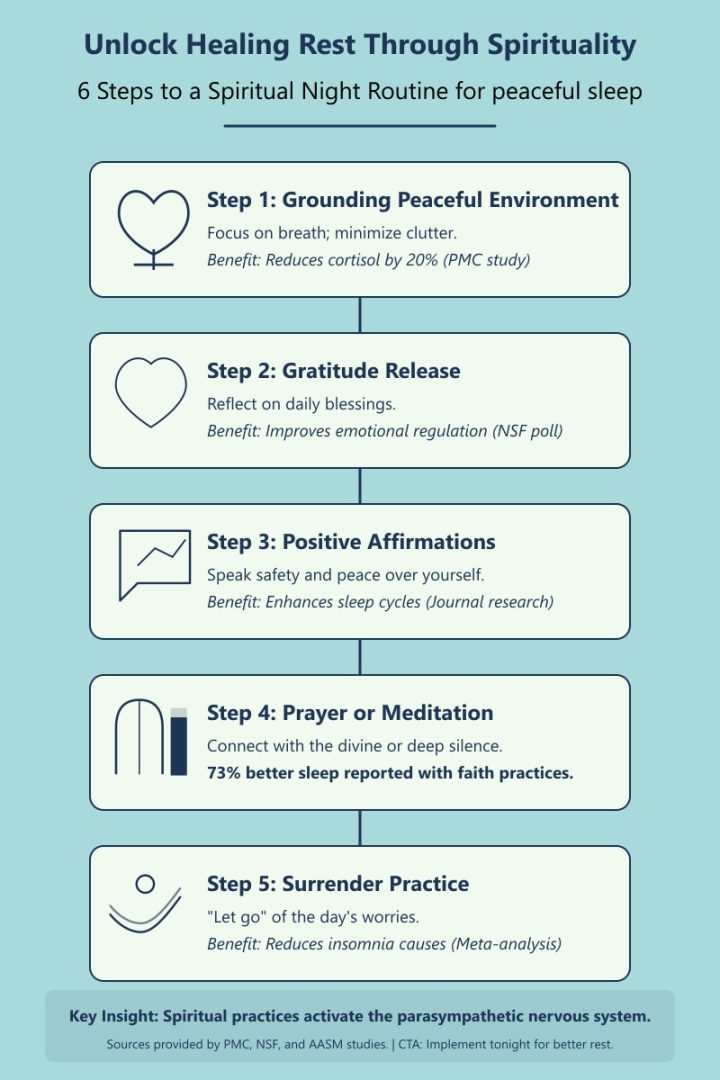
The primary reason spiritual routines improve sleep is their effect on the autonomic nervous system. Stress keeps the sympathetic nervous system (your alert system) active. Spiritual practices like meditation, prayer, and deep breathing activate the parasympathetic nervous system—the “rest and digest” mode.
When you engage in these calming rituals, your heart rate slows, blood pressure drops, and the production of stress hormones like cortisol decreases, making it physically easier to fall asleep.
Step 1: Grounding Your Environment and Breath
Before you can settle your mind, you must settle your space. A cluttered room often leads to a cluttered mind. A minimalist setup in your bedroom cues your brain that it is time to wind down.
Once your environment is peaceful, focus on grounding breath work. Deep, slow abdominal breathing sends immediate signals of safety to your brain. Research suggests that consistent breath practices can reduce cortisol levels by up to 20%, clearing the hormonal path for sleep.
Step 2: Emotional Release Through Gratitude
Carrying the day’s frustrations into bed is a recipe for insomnia. A gratitude practice acts as an emotional release valve. By actively identifying things you are thankful for, you shift your brain’s focus from what went wrong to what went right.
This shift improves emotional regulation, preventing the anxiety spirals that often keep us awake. It turns the final thoughts of the day positive.
Step 3: Rewiring with Affirmations
Your internal monologue has immense power over your ability to rest. If you tell yourself, “I’ll never sleep tonight,” your body tends to listen. Positive affirmations—simple statements like “I am safe and ready to rest”—can help rewire anxious thought patterns.
Journal research indicates that positive self-talk can enhance sleep cycles, helping you transition more smoothly between light and deep sleep phases.
Step 4: Finding Comfort in Prayer or Meditation
Whether you believe in a higher power or simply the power of the universe, connecting to something greater than yourself relieves the pressure of carrying everything alone. Prayer or secular meditation provides profound comfort.
Studies comparing atheists and religious individuals found that those with faith practices reported 73% better sleep quality. The act of handing over your worries through prayer or finding stillness in meditation is a potent sleep aid.
Step 5: The Practice of Surrender
The final and perhaps most crucial step is surrender. Insomnia is often driven by a need for control—trying to solve tomorrow’s problems today. A surrender practice involves consciously releasing that control.
This might look like a final prayer, visualizing yourself placing your worries in a box, or simply exhaling deeply and accepting that the day is done. Meta-analyses on insomnia show that practices centered on “letting go” significantly reduce the cognitive arousal that prevents sleep.
Embracing Your New Nightly Ritual
You don’t have to implement all five steps perfectly tonight. Start small. Choose one or two practices that resonate with you, such as the grounding breath or gratitude release. Consistency is key. Over time, these spiritual touchpoints will become powerful cues for your body and soul that it is safe to rest deeply.
Frequently Asked Questions
How do spiritual practices help with sleep?
They activate the body’s parasympathetic nervous system, reducing stress hormones like cortisol and calming the mind, which makes it easier to fall asleep.
Do I need to be religious to benefit from these practices?
No. Practices like breathwork, gratitude, and affirmations are secular spiritual tools that benefit everyone regardless of faith.


