
Decoding Insomnia: Your Comprehensive Guide to Restoring Sleep

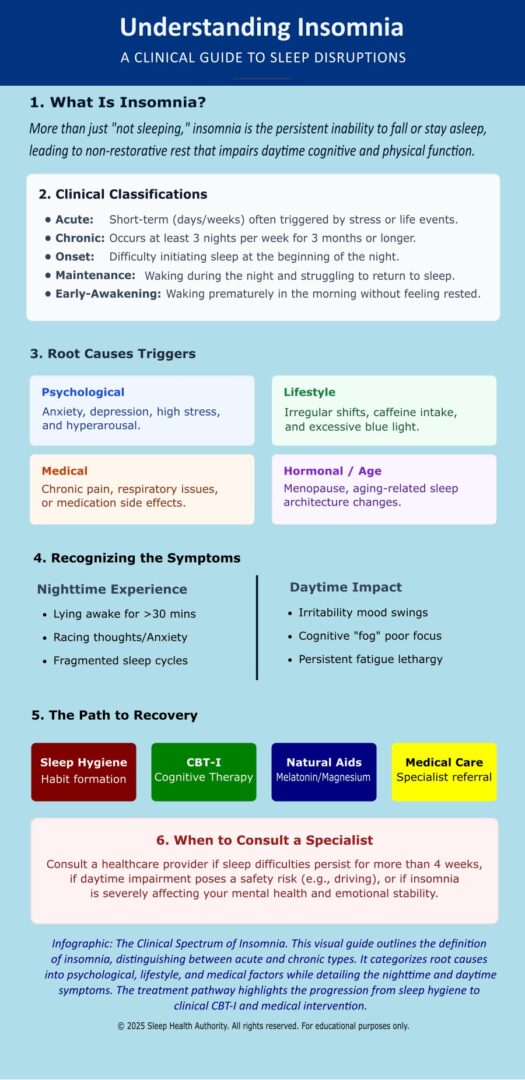
At ZenSleepZone, we understand that true wellness begins with restorative sleep. Yet, for millions worldwide, the night brings not peace, but a frustrating battle with insomnia. It’s more than just a bad night here and there; it’s a persistent inability to achieve the deep, restful sleep your body and mind desperately need. This guide, paired with our detailed infographic, aims to demystify insomnia and empower you with knowledge to reclaim your nights.
What Exactly Is Insomnia?
Many of us have experienced a sleepless night before a big presentation or during a stressful period. That’s a normal human response. However, insomnia transcends these temporary bouts. It’s defined by a consistent difficulty falling asleep, staying asleep, or waking too early and being unable to return to sleep, resulting in significant daytime impairment. When sleep becomes consistently non-restorative, every aspect of your life—from mood and focus to physical health—begins to suffer.
Understanding the Types of Insomnia
Insomnia isn’t a monolithic condition; it presents in various forms, each with its own characteristics:
- Acute Insomnia: A short-term struggle, typically lasting days or weeks. Often linked to identifiable stressors like job loss, grief, or sudden illness. It usually resolves once the stressor passes.
- Chronic Insomnia: The more pervasive form, diagnosed when sleep difficulties occur at least three nights per week for three months or longer. It often has complex underlying causes.
- Onset Insomnia: Characterized by significant difficulty initiating sleep at the start of the night.
- Maintenance Insomnia: Involves waking up multiple times during the night and struggling to fall back asleep.
- Early-Morning Awakening Insomnia: Occurs when you consistently wake up much earlier than desired and cannot return to sleep, feeling unrefreshed.
Common Contributors to Sleepless Nights
Identifying the root cause is crucial for effective treatment. Insomnia often stems from a combination of factors:
- Psychological Factors: Anxiety, depression, chronic stress, and hyperarousal are potent sleep disruptors. A restless mind rarely allows for a restful body.
- Lifestyle Choices: Irregular sleep schedules (especially shift work), excessive caffeine or alcohol, late-night meals, and exposure to blue light from screens before bed can all wreak havoc on your circadian rhythm.
- Medical Conditions: Chronic pain, acid reflux, asthma, sleep apnea, thyroid issues, and certain medications (e.g., antidepressants, blood pressure drugs) can directly interfere with sleep.
- Hormonal & Age-Related Changes: Menopause often brings hot flashes and hormonal shifts that disrupt sleep. As we age, our sleep architecture naturally changes, leading to lighter, more fragmented sleep.
Recognizing the Impact: Symptoms Beyond the Night
While nighttime struggles are the most obvious sign, insomnia’s true cost is felt during the day:
- Nighttime Experience: Lying awake for what feels like hours, racing thoughts, frequent awakenings, and a general sense of frustration and helplessness when attempting to sleep.
- Daytime Impact: Persistent fatigue, irritability, mood swings, difficulty concentrating (“brain fog”), impaired memory, reduced productivity, and increased risk of accidents dueonslumber to drowsiness.
Your Pathway to Restorative Sleep
Fortunately, insomnia is treatable. The journey often involves a structured approach:
- Optimize Sleep Hygiene: Start with foundational habits. This includes maintaining a consistent sleep schedule, creating a dark, quiet, cool bedroom environment, and avoiding stimulants close to bedtime.
- Embrace CBT-I: Cognitive Behavioral Therapy for Insomnia is the gold standard treatment. It helps you identify and modify sleep-disturbing thoughts and behaviors, offering long-term solutions without medication reliance.
- Consider Natural Aids: Under professional guidance, supplements like melatonin or magnesium may offer temporary support, particularly for individuals with specific deficiencies or circadian rhythm imbalances.
- Seek Medical Care: If self-help and CBT-I aren’t sufficient, a sleep specialist or physician can explore underlying medical conditions, review medications, or discuss prescription sleep aids.
When to Consult a Professional
While some sleep disturbances are fleeting, it’s crucial to know when to seek help. If your sleep difficulties persist for **more than four weeks**, if your **daytime functioning is severely impaired** (e.g., affecting work, relationships, or safety while driving), or if insomnia is **significantly impacting your mental and emotional well-being**, please reach out to a healthcare professional. A doctor or sleep specialist can accurately diagnose and guide you toward personalized, effective solutions.
At ZenSleepZone, we believe everyone deserves the gift of good sleep. By understanding insomnia, its causes, and its treatments, you’re taking the first vital step towards reclaiming your nights and revitalizing your days. Explore our resources and begin your journey to a more peaceful, well-rested you.
*ZenSleepZone: Empowering your journey to optimal rest.*


