
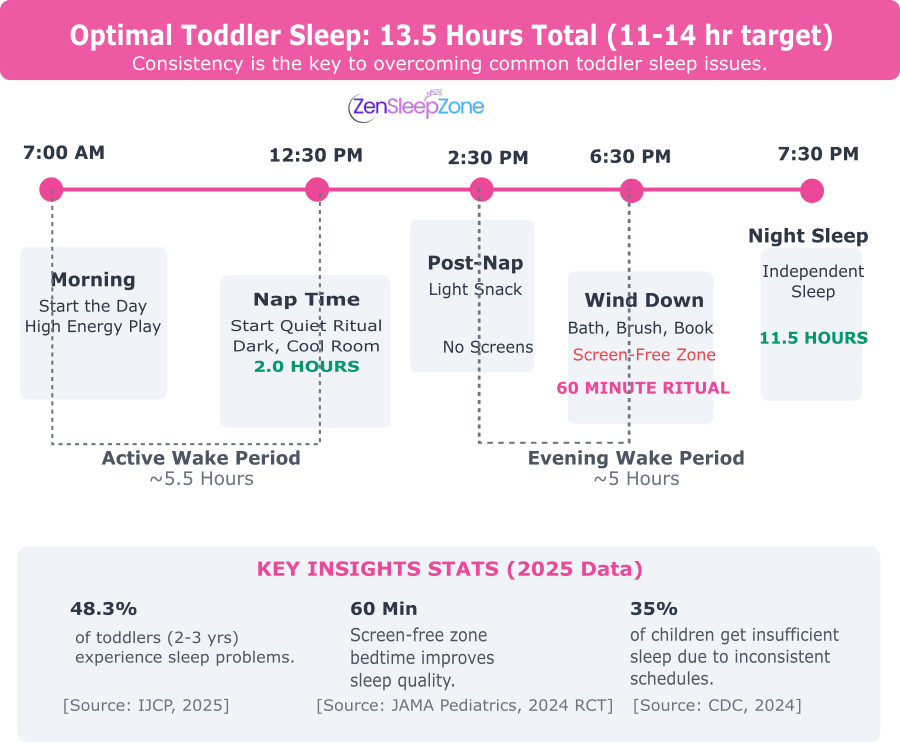
Overcoming Toddler Sleep Issues: The Optimal 13.5-Hour Schedule
If you are a parent pacing the hallway at 2:00 AM, you are far from alone. According to 2025 data from the International Journal of Clinical Practice (IJCP), a staggering 48.3% of toddlers aged 2-3 years experience sleep problems. Navigating toddler sleep issues can feel like an endless cycle of exhaustion for both the child and the caregivers. However, science and developmental psychology point to a singular, powerful solution: strict consistency within a structured daily timeline.
Achieving the optimal toddler sleep schedule requires looking at the entire 24-hour clock, not just the hour before bed. To build a strong foundation, it helps to start by understanding sleep needs across different life stages, ensuring your approach is developmentally appropriate for a growing two or three-year-old. Let’s break down the optimal 13.5-hour total sleep target and how you can reclaim your evenings and your toddler’s rest.
The Science of Toddler Sleep: Hitting the 11-14 Hour Target
The general medical consensus sets an 11-14 hour target for toddler sleep, with an optimal sweet spot hitting exactly 13.5 hours total per day. This total is typically split between one midday nap and a long stretch of consolidated nighttime sleep. When children fall short of this target, behavioral challenges, mood swings, and cognitive delays often surface.
Why are so many children missing this mark? A 2024 report by the CDC found that 35% of children get insufficient sleep due to inconsistent schedules. When weekends look drastically different from weekdays, the body’s internal clock becomes confused. By maintaining regular sleep and wake times, you are actively supporting your child’s natural circadian rhythms, making it much easier for them to fall asleep and stay asleep.
Morning Routine and the Active Wake Period (7:00 AM – 12:30 PM)
To solve nighttime toddler sleep issues, you must start the minute they wake up. The ideal schedule begins at 7:00 AM. This morning block is designed to burn physical energy and stimulate their rapidly developing brains. High-energy play—whether that means running in the yard, climbing at the park, or active indoor games—is non-negotiable.
This timeframe represents the first half of the day’s toddler wake windows. Between 7:00 AM and 12:30 PM, your child experiences an active wake period of roughly 5.5 hours. During this stretch, sleep pressure (the biological drive to sleep) steadily builds. If this active wake period is too short, they will fight their nap; if it stretches too long, they will become overtired and wired, leading to meltdowns.
The 2-Hour Nap Time Reset (12:30 PM – 2:30 PM)
By 12:30 PM, that built-up sleep pressure needs a release valve. This brings us to the midday nap. A common pitfall for parents is misjudging the ideal toddler nap time length. For optimal daytime recovery, aim for exactly 2.0 hours. Any less, and they may be cranky; much more, and they will almost certainly fight their evening bedtime.
Pro Tip: To facilitate a smooth nap transition, start a quiet ritual about 15 minutes before naptime. Move the child to a dark, cool room to signal to their brain that it is time to rest.
If your child is struggling to settle down for this crucial midday rest, you might need to look at their surroundings. It is often highly beneficial to focus on optimizing your toddler’s bedroom sleep environment setup, ensuring blackout curtains and appropriate room temperatures are utilized effectively.
The Post-Nap and Evening Wake Period (2:30 PM – 6:30 PM)
Once your toddler wakes at 2:30 PM, the second half of the day begins. This initiates the evening wake period, which should last approximately 5 hours before the bedtime ritual begins. Upon waking, offer a light snack to stabilize blood sugar levels, which helps prevent late-afternoon mood crashes.
The most critical rule during this afternoon block? No screens as bedtime approaches. While early afternoon TV might be acceptable in some households, screen time must be aggressively curtailed as the afternoon turns to evening. The blue light emitted by tablets and televisions inhibits the natural production of melatonin, directly causing many common toddler sleep issues.
If you are feeling overwhelmed by scheduling, you can easily reference our visual guide to toddler sleep cycles and issues to keep this daily timeline fresh in your mind.
The 60-Minute Screen-Free Wind Down (6:30 PM – 7:30 PM)
At 6:30 PM, the environment in your home should shift dramatically. This is the start of the 60-minute ritual that will make or break your night. A randomized controlled trial (RCT) published in JAMA Pediatrics in 2024 definitively proved that a 60-minute screen-free zone before bedtime dramatically improves sleep quality.
A predictable toddler bedtime routine provides immense psychological comfort to a young child. They cannot read a clock, but they can read a sequence of events. The classic “Bath, Brush, Book” sequence remains the gold standard:
- Bath: Warm water lowers the core body temperature afterward, which biologically triggers sleepiness.
- Brush: A non-negotiable hygiene step that firmly anchors the routine in the bathroom.
- Book: Reading in a dimly lit room provides connection, lowers the heart rate, and creates a screen-free wind down experience.
Achieving Independent Night Sleep (7:30 PM Onward)
By 7:30 PM, the wind-down ritual is complete, and it is time for lights out. The ultimate goal here is establishing independent sleep for toddlers, resulting in a solid 11.5 hours of uninterrupted rest. If your toddler relies on you being in the room to fall asleep, they will likely need you to return when they naturally wake up between sleep cycles in the middle of the night.
If you previously used gentle methods during their infancy, transitioning from baby sleep training techniques into toddler-appropriate boundary setting (like the “return to bed” method or a toddler clock) is the logical next step. Establishing these boundaries with love and firm consistency is how you conquer toddler sleep issues for good.
Solving Family-Wide Exhaustion
When a toddler isn’t sleeping, nobody is sleeping. The stress of inconsistent sleep schedules can elevate parental anxiety and strain household dynamics. It is important to remember that addressing these issues requires a holistic approach that supports everyone’s mental and physical health.
If parental exhaustion has reached a breaking point, parents should also consult a comprehensive sleep solutions guide for the whole family to ensure caregivers are recovering from the prolonged sleep debt. You cannot pour from an empty cup; securing your own rest is vital to maintaining the consistency your toddler needs.
Ready to Fix Your Toddler’s Sleep Schedule?
Every child is unique, and sometimes general schedules need minor adjustments based on specific behavioral triggers or developmental leaps.
Take our free toddler sleep assessment to identify specific sleep issues


