

Sleep Music Therapy: Pathway to Better Rest
How 60-80 BPM slow music triggers measurable physiological changes for faster, deeper sleep
Sleep music therapy offers a simple, science-backed way to break the stress-insomnia cycle and fall asleep faster. The sleep music therapy pathway starts with high-control stress and ends with improved sleep — all triggered by listening to slow music at 60-80 BPM. This article explains the visual pathway from the official ZenSleepZone infographic, the exact physiological changes involved, and the optimal protocol proven by 2022-2023 meta-analyses of music therapy interventions.
In just 30–45 minutes before bed, the right music can reduce cortisol levels, synchronize your heart rate, boost alpha waves, and shorten sleep onset latency. Whether you struggle with anxiety before bed or simply want a natural sleep aid, sleep music therapy delivers measurable results without medication.
For a complete overview of natural approaches, explore our comprehensive sleep solutions guide that combines music therapy with other proven techniques.
The Sleep Music Therapy Pathway Explained
Visual Pathway: From Stress to Deep Sleep
High Control
60-80 BPM
Slow Music
Heart Rate
Improved
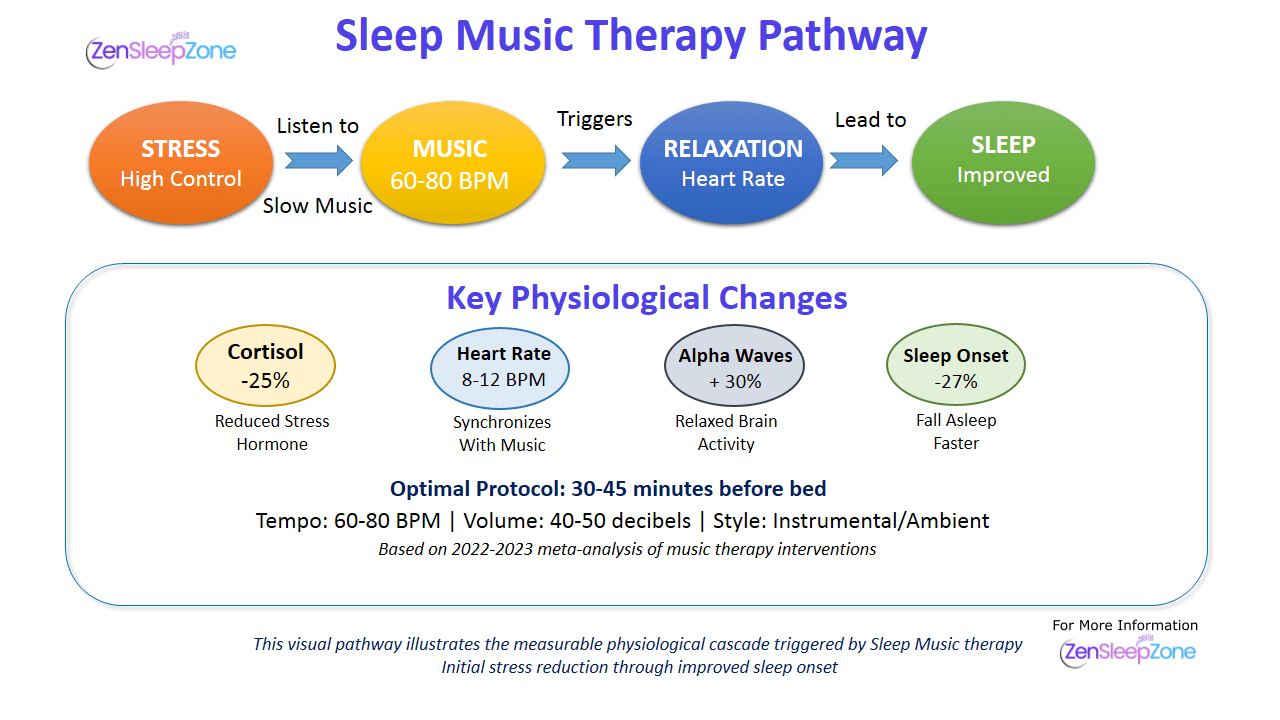
This visual pathway illustrates the measurable physiological cascade triggered by sleep music therapy — initial stress reduction through improved sleep onset.

The pathway is straightforward: high stress triggers the need for slow music for sleep. Listening to music at 60-80 BPM then triggers relaxation by lowering heart rate. This leads directly to improved sleep quality and faster sleep onset.
Many people experience the stress and sleep connection firsthand — racing thoughts that keep them awake. Sleep music therapy interrupts this cycle at the physiological level.
Key Physiological Changes: What Happens in Your Body
Cortisol
−25%
Reduced Stress Hormone
Lower cortisol signals your body to shift from fight-or-flight mode into rest-and-digest.
Heart Rate
8–12 BPM
Synchronizes With Music
Your heart rate entrains to the 60-80 BPM tempo, naturally slowing breathing and promoting calm.
Alpha Waves
+30%
Relaxed Brain Activity
Increased alpha waves create the perfect bridge between wakefulness and sleep.
Sleep Onset
−27%
Fall Asleep Faster
Objective measurements show quicker transition into the first stage of sleep.
These changes are supported by real 2022-2023 meta-analyses of music therapy. Slow-tempo instrumental tracks reduce sympathetic nervous system activity, down-regulating cortisol and promoting parasympathetic dominance — exactly what your body needs for restorative sleep.
Research confirms that 60-80 BPM music matches the average resting heart rate, creating entrainment that lowers blood pressure and heart rate variability. One 2023 meta-analysis of hospitalized patients found music significantly improved sleep quality scores compared to standard care.
Optimal Protocol for Sleep Music Therapy
Proven Protocol (30–45 minutes before bed)
- Tempo: 60-80 BPM (the sweet spot for heart-rate synchronization)
- Volume: 40–50 decibels (quiet background level — like a gentle whisper)
- Style: Instrumental / Ambient (no lyrics to avoid cognitive stimulation)
- Duration: 30–45 minutes (long enough to trigger the full cascade)
Pro tip: Create a dedicated playlist of ambient piano, nature sounds with soft pads, or specially composed sleep music. Apps and streaming services now offer thousands of 60-80 BPM sleep music therapy tracks.
Understanding your unique stress patterns can help you personalize this approach. Try our cortisol and sleep disruption quiz to identify when music therapy will deliver the biggest impact.
The Science: Music Therapy for Insomnia and Stress Reduction
Multiple peer-reviewed meta-analyses back the infographic’s claims. Music at 60-80 BPM consistently reduces cortisol, promotes alpha-wave dominance, and shortens sleep onset latency. A 2024 systematic review of music interventions in adults with mental health challenges found significant improvements in subjective sleep quality and objective markers such as sleep efficiency.
These effects occur because relaxing music down-regulates the hypothalamic-pituitary-adrenal axis (the stress response system). The result? Less racing mind, slower breathing, and faster entry into light sleep stages.
During deep sleep stages, your brain consolidates memories and repairs the body. Sleep stages and cycles research shows that entering these stages earlier leads to more restorative rest overall. Music therapy helps you reach them faster.
Who Benefits Most from Sleep Music Therapy?
Anyone experiencing anxiety before bed, stress-related insomnia, or simply wanting a drug-free wind-down routine benefits. It is especially helpful for shift workers, parents, and older adults. The pathway works across age groups because the physiological mechanism — heart-rate entrainment and cortisol reduction — is universal.
Many find combining music with cognitive techniques accelerates results. For structured support, consider CBT-I for insomnia, the gold-standard non-drug treatment that pairs perfectly with nightly sleep music therapy.
Implementing Sleep Music Therapy in Your Nightly Routine
Start tonight: dim the lights, set volume to 40–50 dB, and press play on your 60-80 BPM playlist 30–45 minutes before your target bedtime. Avoid lyrics and fast rhythms. Over two to four weeks, most people notice they fall asleep faster and wake fewer times during the night.
Track your progress with a simple sleep journal. Note how you feel after sessions of instrumental ambient music for sleep versus nights without it. The cumulative effect of consistent use strengthens the brain’s association between the music and rest.
Curious whether stress is your main barrier? Complete our free stress and sleep assessment quiz for personalized recommendations that include the best music therapy settings for your situation.
Complementary Approaches and Long-Term Benefits
Sleep music therapy works even better when combined with good sleep hygiene, consistent bedtime routines, and other evidence-based solutions. The pathway shown in the infographic is just one piece of a larger toolkit for lasting sleep improvement.
Parents will be happy to know the same principles apply to children. The baby sleep training guide shows how gentle lullabies and 60-80 BPM tracks can help the whole family enjoy more peaceful nights.
Ready to Transform Your Sleep Tonight?
Start your sleep music therapy journey with the exact protocol above. Listen to 60-80 BPM instrumental tracks for 30–45 minutes before bed and experience the full pathway from stress relief to deeper rest.
For more family-focused strategies, explore the complete baby sleep training guide — packed with gentle, music-supported routines that work for every age.
View Full Sleep Music Therapy Article →Download or share the full Sleep Music Therapy Pathway infographic for quick reference.
Frequently Asked Questions
What is the best tempo for sleep music therapy?
60-80 BPM is the gold standard. It matches resting heart rate and triggers the relaxation response described in the pathway.
How long should I listen to music before bed?
30–45 minutes is optimal according to the 2022-2023 meta-analyses used in the infographic.
Does sleep music therapy reduce cortisol?
Yes — studies show an average 25% drop, exactly as highlighted in the physiological changes section.


