
Baby Sleep Training Methods Comparison: Cry It Out vs Ferber vs Chair Method
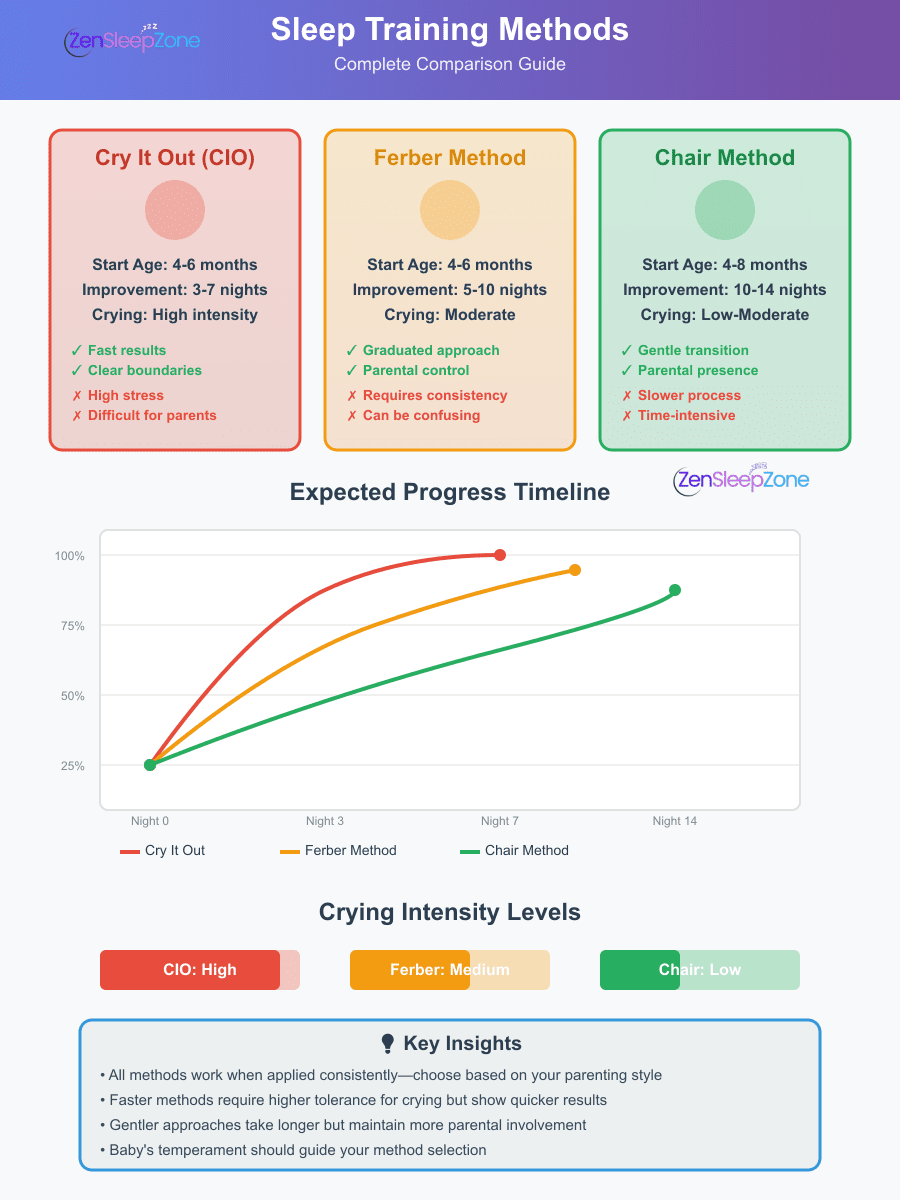
Our complete Baby Sleep Training methods comparison infographic breaks down the three most popular approaches with timelines, crying intensity, pros/cons and expected progress so you can choose the perfect baby sleep training method for your family.
If you’re exhausted from sleepless nights and searching for clarity, this Baby Sleep Training methods comparison is exactly what you need. The ZenSleepZone infographic visually compares Cry It Out (CIO), the Ferber Method, and the Chair Method — three proven Baby Sleep Training methods — so parents can make an informed, confident choice based on age, tolerance for crying, and lifestyle.
Every method works when applied consistently, but the right one depends on your baby’s readiness and your parenting style. Let’s walk through the infographic step by step and discover which approach might transform your nights.
Before diving into the details, parents often benefit from a broader foundation. Our complete baby sleep training guide provides the full context that makes this sleep training methods comparison even more powerful.
Why a Baby Sleep Training Methods Comparison Matters
With so much conflicting advice online, a clear visual sleep training methods comparison cuts through the noise. The infographic highlights three core factors: recommended start age, nights to see improvement, and crying intensity. These details help match the method to your baby’s temperament and your emotional comfort level.
Breaking Down the 3 Baby Sleep Training Methods
1. Cry It Out Method (CIO)
Start Age: 4-6 months
Improvement: 3-7 nights
Crying: High intensity
✅ Fast results • Clear boundaries
❌ High stress • Difficult for many parents
The CIO approach places baby in the crib awake and allows self-soothing without intervention (after safety checks and age-appropriate feeds). It is the quickest path to independent sleep but requires the highest parental tolerance for crying.
2. Ferber Method (Graduated Extinction)
Start Age: 4-6 months
Improvement: 5-10 nights
Crying: Moderate
✅ Graduated approach • Parental control
❌ Requires strict consistency • Can feel confusing at first
Also known as graduated extinction, the Ferber Method uses timed check-ins with increasing intervals. Parents offer brief reassurance without picking up or feeding, striking a balance between comfort and teaching self-soothing baby skills.
3. Chair Method (Gradual Retreat)
Start Age: 4-8 months
Improvement: 10-14 nights
Crying: Low-Moderate
✅ Gentle transition • Parental presence
❌ Slower process • Time-intensive
The Chair Method keeps a parent sitting near the crib, gradually moving the chair farther away each night until outside the room. It offers maximum reassurance while slowly building independent sleep.
Understanding the Expected Progress Timeline
The infographic’s line graph makes the Baby Sleep Training timeline crystal clear. Starting at Night 0 (25% progress), CIO (red line) reaches nearly 100% by Night 7. The Ferber Method (orange) follows closely behind, hitting 95% around Night 10. The Chair Method (green) moves more gradually, reaching about 90% by Night 14.
This visual Baby Sleep Training methods comparison shows exactly why faster methods often involve higher crying intensity — they accelerate self-soothing baby development. Choose based on how quickly you need results versus how much parental presence you prefer.
Crying Intensity Levels in Baby Sleep Training
The infographic clearly labels crying intensity: CIO = High, Ferber = Medium, Chair = Low. Faster methods require higher tolerance for crying but deliver quicker results. Gentler approaches take longer but keep parental involvement higher, which many families prefer.
When to start sleep training baby remains key — the infographic recommends 4-6 months for CIO and Ferber, extending to 4-8 months for the Chair Method.
Key Insights from the Sleep Training Methods Comparison Infographic
- All methods work when applied consistently — choose based on your parenting style and baby’s temperament.
- Faster methods require higher tolerance for crying but show quicker results.
- Gentler approaches take longer but maintain more parental involvement.
- Baby’s temperament should guide your sleep training methods comparison decision.
If your baby is slightly older or you’re dealing with ongoing issues, the toddler sleep issues solutions build directly on these foundations.
How to Use This Baby Sleep Training Methods Comparison in Real Life
Print or screenshot the infographic and compare it against your baby’s age, your emotional comfort with crying, and how much time you can dedicate. Many parents start with the Ferber Method as a middle-ground option in the sleep training methods comparison.
Whichever path you choose, consistency and a supportive sleep environment remain the biggest predictors of success. For broader strategies that complement any method, explore our sleep solutions guide.
Want even more personalization? Try our interactive Baby Sleep Training method finder quiz that scores your answers and recommends the best fit from four proven approaches, including the Pick Up Put Down method.
Ready to Choose Your Baby Sleep Training Method?
Use this sleep training methods comparison infographic as your starting point, then dive deeper into implementation with expert guidance.
Start Your Baby Sleep Training Journey Today →📊 Evidence-based • Parent-tested • Takes minutes to decide
The sleep training methods comparison infographic removes the guesswork so you can move forward with confidence. Whether you choose the fast-track Cry It Out, balanced Ferber, or gentle Chair Method, better sleep is within reach for your whole family.


