
The Cortisol Sleep Cycle: Why You Wake Up at 3 AM and How to Fix It
By the ZenSleepZone Editorial Team | Updated for 2026 Mental Health
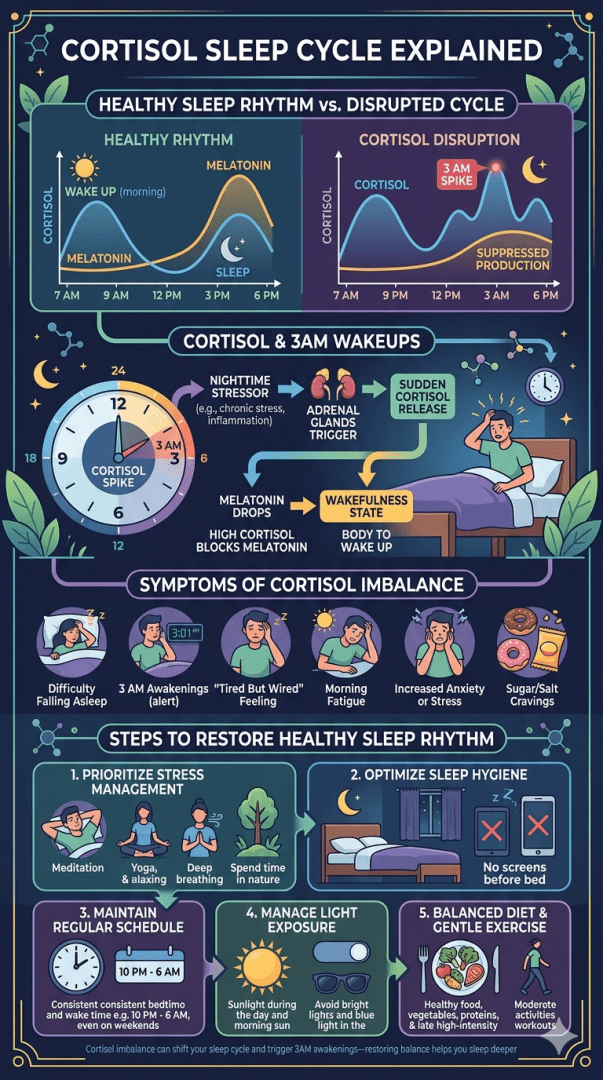
If you find yourself staring at the ceiling at exactly 3:00 AM, heart racing and mind spinning, you aren’t alone. This isn’t just a “bad night”—it is a specific physiological signal. As illustrated in our Cortisol and Sleep Disruption Cycle guide, this awakening is the result of a hormonal tug-of-war between stress signals and your body’s natural drive for rest.
Understanding the stress and sleep cycle is the first step toward reclaiming your nights. When your internal clock is functioning correctly, cortisol remains low during the night. However, when a disruption occurs, your adrenal glands may fire early, essentially “tricking” your brain into thinking it is time to start the day in the middle of the night.
The Science of the 3 AM Cortisol Spike
Our infographic highlights a crucial distinction: Healthy Rhythm vs. Disrupted Cycle. In a balanced system, melatonin (the hormone of darkness) peaks around midnight, while cortisol (the hormone of action) stays at a baseline level, only beginning its ascent as dawn approaches.
When you experience common insomnia causes, such as chronic inflammation or psychological stress, this rhythm flips. High cortisol levels act as a melatonin antagonist. Because high cortisol blocks melatonin, your “sleep gate” closes prematurely. This results in the “Tired but Wired” sensation depicted in our symptom chart—you are physically exhausted, yet your nervous system is in a state of high alert.
Did you know? 3 AM awakenings are often accompanied by a sudden surge of worry. This is because cortisol prepares the body for a “fight or flight” response, making it nearly impossible to access the logical, calm parts of the brain without specific tools like anxiety at night relief.
Recognizing Cortisol Imbalance Symptoms
How do you know if cortisol is the culprit? Beyond the clock hitting 3:01 AM, look for these key indicators:
- Morning Fatigue: Feeling like you need a “jumpstart” despite sleeping 7 hours.
- Sugar and Salt Cravings: Your body seeking quick energy to manage the cortisol rollercoaster.
- Hyper-Alertness: Feeling wide awake the moment you open your eyes at night.
For those struggling with chronic patterns, utilizing CBT-I for insomnia has proven highly effective in retraining the brain to ignore these midnight alerts.
5 Steps to Restore Your Healthy Sleep Rhythm
According to the recovery blueprint in our infographic, restoring balance requires a multi-faceted approach to “re-anchor” your circadian rhythm.
1. Prioritize Stress Management
Engaging the parasympathetic nervous system before bed is non-negotiable. Techniques such as mindfulness for sleep can lower baseline cortisol levels, making the 3 AM spike less likely to occur.
2. Optimize Sleep Hygiene
Your environment dictates your biology. Adhering to sleep hygiene basics—such as maintaining a cool room (18°C) and eliminating blue light—ensures that melatonin production isn’t interrupted by external factors.
3. Manage Light Exposure
To fix the 3 AM wakeup, you must fix your 8 AM routine. Sunlight exposure in the morning helps set the “timer” for melatonin release 14 hours later. Conversely, reducing bright lights in the evening prevents the suppression of sleep hormones.
4. Maintain a Regular Schedule
Your body thrives on predictability. Going to bed and waking up at the same time every day—even on weekends—stabilizes the hormonal peaks shown in the “Healthy Rhythm” graph of our infographic.
5. Balanced Diet & Gentle Exercise
Blood sugar crashes at night can actually trigger cortisol spikes. Ensuring a balanced evening meal with complex carbohydrates and proteins can help keep you stable through the night. Avoid high-intensity workouts late in the evening, as these can artificially inflate cortisol levels right before bed.


