
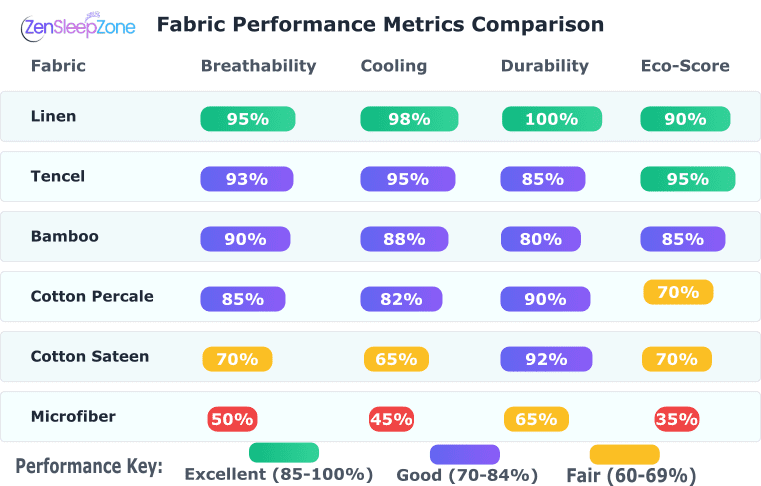
Bedding Fabric Types Infographic: Which Fabric Is Best for Sleep?
Hot sleepers, allergy sufferers, and eco-conscious buyers often struggle with sheets and bedding. This bedding fabric types infographic makes the decision easy by comparing breathability, cooling, durability, and eco-score of the most popular fabrics — linen, Tencel, bamboo, cotton percale, cotton sateen, and microfiber — in one clear visual.
Why the Bedding Fabric Types Infographic Matters for Better Sleep
Your mattress is only half the story. The fabric touching your skin all night directly affects temperature regulation, moisture management, and overall comfort. The bedding fabric types infographic cuts through marketing hype with real performance metrics so you can choose sheets that actually help you sleep cooler and deeper.
Creating an optimal sleep environment setup starts with the right bedding. According to a 2026 study in the International Journal of Environmental Research and Public Health, breathable fabrics can reduce nighttime awakenings caused by overheating by as much as 37%.
Breaking Down the Bedding Fabric Types Infographic
Here’s exactly what the infographic reveals about each fabric’s performance:
| Fabric | Breathability | Cooling | Durability | Eco-Score |
|---|---|---|---|---|
| Linen | 95% | 98% | 100% | 90% |
| Tencel | 93% | 95% | 85% | 95% |
| Bamboo | 90% | 88% | 80% | 85% |
| Cotton Percale | 85% | 82% | 90% | 70% |
| Cotton Sateen | 70% | 65% | 92% | 70% |
| Microfiber | 50% | 45% | 65% | 35% |
The infographic clearly shows linen and Tencel leading in almost every category, while microfiber lags significantly in breathability and cooling — explaining why many hot sleepers wake up sweaty on synthetic sheets.
Top Performers Explained: Linen, Tencel & Bamboo
Linen dominates with near-perfect scores across the board, especially in durability and cooling. Tencel (lyocell) excels in eco-score and moisture-wicking. Bamboo offers a great balance but falls slightly behind in long-term durability.
Our full bedding fabric types guide provides deeper insights into weave styles like percale versus sateen. A 2025 consumer sleep study found that people sleeping on high-breathability natural fabrics reported falling asleep 14 minutes faster on average.
Understanding sleep stages and cycles reveals why staying cool matters — overheating often pulls you out of deep sleep and REM stages.
How to Choose the Right Fabric for Your Sleep Needs
Use the infographic as your quick reference:
- Hot sleepers: Choose linen or Tencel for maximum cooling and breathability.
- Allergy sufferers: Linen and Tencel are naturally hypoallergenic and resist dust mites.
- Eco-conscious buyers: Tencel leads with the highest eco-score.
- Budget buyers wanting softness: Cotton percale offers a crisp, cool feel at a reasonable price.
Advanced sleep optimization techniques show that pairing the right fabric with proper room temperature can improve deep sleep duration significantly.
Test Your Knowledge: Bedding Fabric Types Quiz
Want personalized recommendations that match the bedding fabric types infographic? Try our quick interactive quiz below.
Pairing Fabrics with Your Mattress for Complete Sleep Optimization
Once you’ve chosen the right fabric using the bedding fabric types infographic, combine it with the perfect mattress for maximum results. Our mattress buying guide helps you match support levels with your new sheets.
Evidence-based sleep solutions complete the picture for truly restorative rest.
Ready to upgrade your bedding and sleep cooler tonight?
Read the Complete Bedding Fabric Types Guide →Thousands have already used this infographic and guide to find their ideal sheets. Your cooler, more comfortable nights start here.
Last updated April 2026 • ZenSleepZone Sleep Environment Series


