
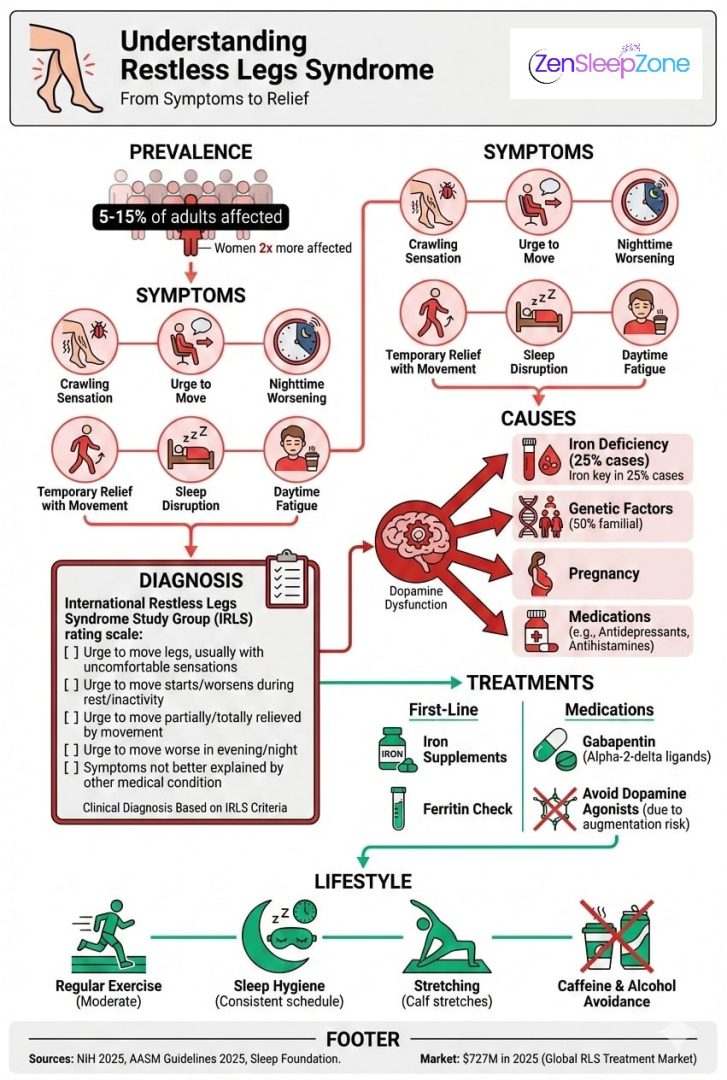
Restless Legs Syndrome: From Symptoms to Relief in 2026
If you’ve ever felt that overwhelming urge to move your legs while trying to relax in the evening, especially when it’s time for bed, you’re not alone. Restless Legs Syndrome (RLS), sometimes called Willis-Ekbom Disease, affects millions worldwide. It’s that creepy-crawly feeling deep in your legs that just won’t quit until you get up and walk around. As we move into 2026, new guidelines from sleep experts are changing how doctors approach treatment, focusing on safer, long-term options.
How Common Is RLS and Who Does It Affect?
Studies show RLS impacts about 5-10% of adults, though some estimates go up to 15% in certain groups. It’s more common in women—roughly twice as likely compared to men—and tends to worsen with age. Severe cases can really disrupt sleep, leading to daytime tiredness, mood issues, and even higher risks for things like heart problems. The global market for RLS treatments was around $727 million in 2025, reflecting growing awareness and better options.
What Does RLS Feel Like?
The classic signs are hard to ignore:
- An strong urge to move your legs, often with odd sensations like crawling, tingling, or aching.
- Symptoms kick in or get worse when you’re resting or sitting still.
- Things improve temporarily when you move, stretch, or walk.
- It usually flares up in the evening or at night, making it tough to fall asleep.
- Many people also have involuntary leg twitches during sleep, adding to the exhaustion the next day.
What’s Behind RLS?
Experts believe it’s tied to how the brain handles dopamine and iron. Low iron levels in the brain (even if blood tests look normal) can disrupt dopamine signals that control movement.
- Iron deficiency plays a role in many cases, especially during pregnancy or with certain health conditions.
- Genetics are a big factor—family history is common in up to half of cases or more.
- Triggers can include some medications, caffeine, or underlying issues like diabetes.
How Is RLS Diagnosed?
Diagnosis is mostly based on your description of symptoms, using standard criteria from sleep experts. Doctors often check blood tests for ferritin levels (a marker of iron stores) and may use a severity scale to gauge how bad it is.
Latest Treatments: What’s New in 2026?
The big update comes from the American Academy of Sleep Medicine’s 2025 guidelines. They’ve shifted away from long-term use of dopamine agonists (like pramipexole) because of risks like symptom worsening over time (called augmentation). Instead:
- First-line: Check and treat low iron with supplements or IV if needed.
- Medications: Alpha-2-delta drugs like gabapentin or pregabalin are now strongly recommended—they calm nerve signals without the same risks.
- Lifestyle tips: Regular moderate exercise, evening leg stretches, good sleep habits, and cutting back on caffeine or alcohol.
Many people find real improvement by addressing iron early and combining meds with habits. Talk to a sleep specialist for a plan tailored to you.
At ZenSleepZone.com, we’re dedicated to sharing science-backed info on sleep disorders like RLS. Check our site for more tips and resources.
Sources: American Academy of Sleep Medicine (AASM) 2025 Guidelines, NIH, Sleep Foundation, recent studies on RLS prevalence and treatments.
