
The Science-Backed Yoga Nidra Benefits for Sleep Optimization
If you have been struggling to fall asleep or stay asleep, you are likely searching for a sustainable, science-backed solution. Recent data reveals that the Yoga Nidra benefits extend far beyond basic relaxation, acting as a powerful tool to rewrite your nighttime biology. This unique practice of non-sleep deep rest creates measurable physiological changes for sleep that fundamentally shift how your body transitions from wakefulness to slumber.
To fully grasp how this impacts your overall rest, it helps to explore our comprehensive spirituality and sleep complete guide, which places these ancient practices into a modern clinical context.
How Yoga Nidra Rewires the Nervous System
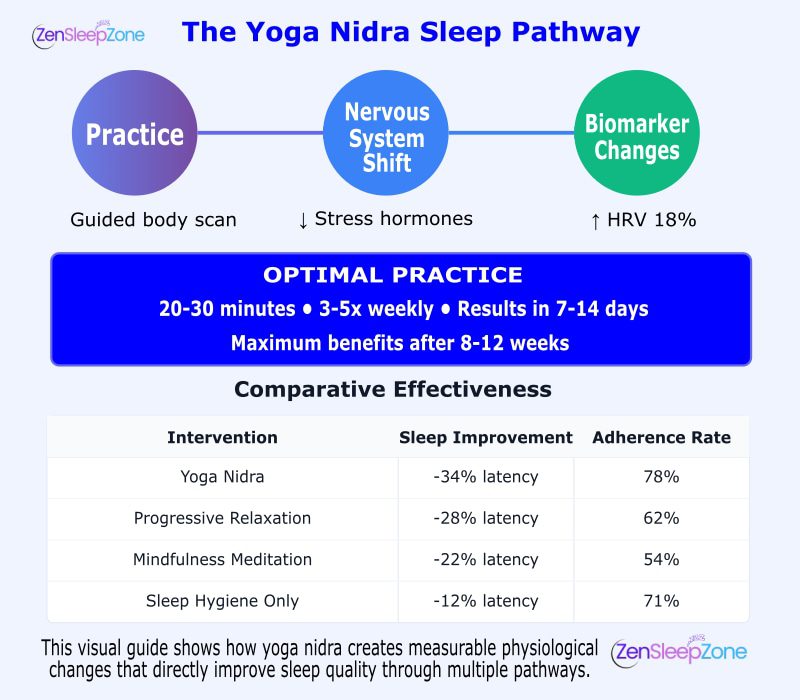
The core mechanism of this practice is known as the Yoga Nidra Sleep Pathway. It is not just about lying still; it is a strategic process that alters your internal chemistry. The practice typically begins with a guided body scan, which forces the mind to step away from racing thoughts and focus entirely on physical sensation. This single-pointed awareness triggers a profound deep sleep nervous system shift, moving the body from a sympathetic (fight-or-flight) state into a parasympathetic (rest-and-digest) state.
Research shows this shift effectively helps to lower stress hormones. High levels of arousal chemicals are a primary driver of insomnia, a concept explored deeply in our analysis of how cortisol and sleep disruption cycle feed into one another. Furthermore, regular practice has been shown to increase HRV (Heart Rate Variability) by an impressive 18%. A higher HRV is a critical biomarker indicating robust nervous system resilience and improved cardiovascular recovery during rest.
Comparative Effectiveness: Yoga Nidra vs. Other Techniques
While many relaxation techniques exist, clinical data highlights why Yoga Nidra stands out, particularly regarding sleep latency reduction (the time it takes to fall asleep) and adherence rates. Let’s look at the numbers.
| Intervention | Sleep Improvement (Latency) | Adherence Rate |
|---|---|---|
| Yoga Nidra | -34% latency | 78% |
| Progressive Muscle Relaxation | -28% latency | 62% |
| Mindfulness Meditation Comparison | -22% latency | 54% |
| Sleep Hygiene Only | -12% latency | 71% |
As the data shows, Yoga Nidra outperforms traditional progressive muscle relaxation and even general mindfulness meditation in both effectiveness and user retention. It provides a massive 34% reduction in the time it takes to drift off. For a deeper understanding of how these rapid sleep-onset techniques influence your nightly brainwaves, check out our guide on the science of REM vs deep sleep stages.
Your Optimal Yoga Nidra Practice Routine
To harness the maximum Yoga Nidra benefits, consistency and correct dosing are vital. You cannot do it once and expect permanent physiological changes. Based on biomarker studies and sleep pathway tracking, here is the blueprint for an optimal yoga nidra practice:
The 4 Pillars of Practice
- Duration: Aim for 20 to 30 minutes per session to allow the nervous system shift to fully anchor.
- Frequency: Practice 3 to 5 times weekly. Daily practice is excellent, but this frequency ensures high adherence without burnout.
- Initial Milestones: Most practitioners report noticeable sleep latency reduction and calmness within 7 to 14 days.
- Peak Optimization: The maximum cumulative benefits, including sustained HRV improvements, solidify after 8 to 12 weeks of consistent practice.
If you are struggling to build a routine that sticks, you might want to visualize the exact scientific process at play. Our visual guide on how yoga nidra rewires your brain for deep rest provides an excellent snapshot of these timelines and physiological triggers.
Measurable Physiological Changes for Better Rest
The beauty of Yoga Nidra is that it does not rely on subjective feelings alone; it creates measurable physiological changes for sleep. By systematically dropping brain wave frequencies from Beta to Alpha, and eventually to Delta (similar to deep sleep), it acts as a simulator for rest. This makes it an incredibly potent tool in any broader comprehensive sleep solutions guide, bridging the gap between mental anxiety and physical exhaustion.
For those dealing with chronic wakefulness, integrating this non-sleep deep rest protocol can be life-changing. If you are navigating more severe sleep difficulties, you can see how relaxation protocols fit into broader treatments by reviewing our natural insomnia treatment guide.
Ready to see how this ancient practice can be tailored to your specific nighttime struggles? Take our interactive Yoga Nidra personalized plan assessment to build a routine that fits your lifestyle.


