
Wake Up at 3AM With Anxiety? Causes + 3AM Plan
Visual breakdown of nighttime anxiety triggers and exactly how to fall back asleep.
You jolt awake. The house is completely quiet, but your mind is running a marathon. If you frequently wake up at 3am with anxiety, you already know the frustration of being “tired but wired.” This middle-of-the-night anxiety isn’t just a random occurrence; it’s a well-documented physiological response rooted in how our brain processes sleep stages and stress.
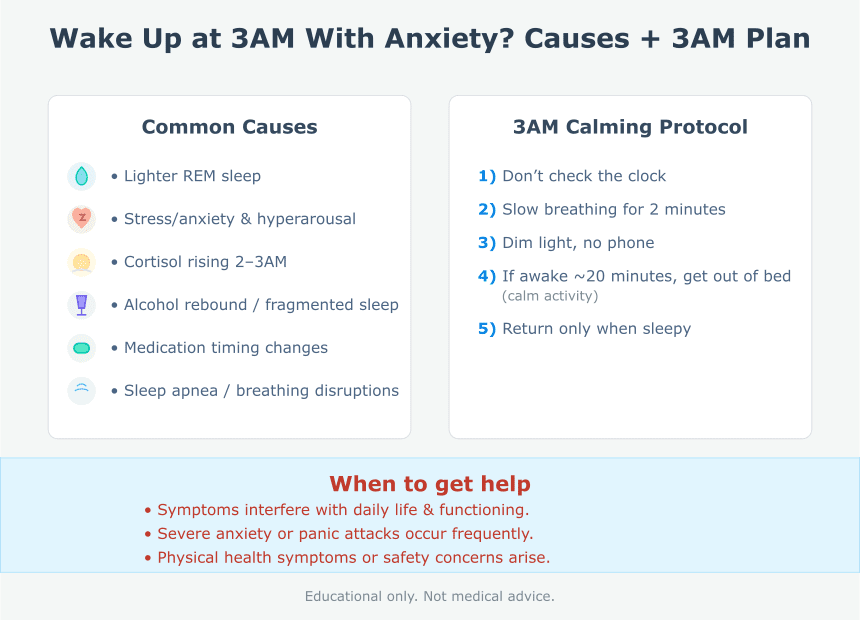
To help you break this cycle, we’ve developed the Wake Up at 3AM With Anxiety Infographic. Let’s deconstruct the science behind why this happens and map out a concrete protocol to get your rest back on track.
Why Do I Wake Up at 3AM With Anxiety?
When you ask search engines, “why do I wake up at 3am heart racing anxiety?” the answer usually points to a collision of natural circadian rhythms and daytime stressors. Here are the common culprits:
- • Lighter REM Sleep: As the night progresses, we spend more time in Rapid Eye Movement (REM) sleep. This stage is physically lighter, making it easier to wake up. If you suffer from anxiety before bed, those unresolved worries often bleed into your dreams, pulling you out of lighter sleep cycles.
- • Stress, Anxiety & Hyperarousal: Chronic daytime stress activates your sympathetic nervous system. Even while sleeping, your HPA axis can remain hyperactive, triggering a sudden fight-or-flight response. This nocturnal panic leaves you with a racing heart at night.
- • Cortisol Rising 2–3 AM: Your body naturally begins to release cortisol (the stress hormone) in the early morning hours to prepare you for waking up. If your baseline stress is already high, this normal cortisol awakening response can hit your system like a shot of adrenaline.
- • Alcohol Rebound: While a nightcap might help you fall asleep, as alcohol metabolizes, it causes severe sleep fragmentation and suppresses melatonin, often waking you up exactly halfway through the night.
- • Medication & Breathing: Medication timing changes, or physical issues like sleep apnea (breathing disruptions), force the brain to wake you up to restore oxygen flow, which the body interprets as an anxiety-inducing emergency.
The 3AM Calming Protocol
If you wake up at 3am and can’t go back to sleep, lying in the dark dwelling on racing thoughts at night will only reinforce conditioned arousal. Here is your immediate, step-by-step action plan based on stimulus control and CBT-I (Cognitive Behavioral Therapy for Insomnia) principles:
Is it normal to wake up at 3am with anxiety every night?
Occasional 3am anxiety is a very common human experience. However, waking up at 3am every night anxious for no reason points to a dysregulated nervous system. If you want a deeper dive into specific community questions regarding this, check out our comprehensive 3AM Anxiety Q&A Hub where we address nocturnal panic and racing thoughts in detail.
When to Get Professional Help
While the infographic provides an educational framework, it is not medical advice. You should consult a healthcare provider if:
- Symptoms interfere with your daily life, mood, and functioning.
- Severe anxiety or full-blown panic attacks occur frequently at night.
- You suspect physical health symptoms (like sleep apnea) or have safety concerns.
Ready to Reclaim Your Sleep?
Stop letting middle-of-the-night anxiety dictate your days. Read our complete, in-depth guide on overcoming nighttime awakenings, or find out exactly what’s triggering your specific sleep disruptions.


