
The Complete Sleep Apnea Guide: Symptoms, Diagnosis, and Every Treatment Option Explained
Sleep apnea guide: Sleep apnea is a condition where breathing repeatedly stops and restarts during sleep, lowering oxygen levels and fragmenting rest. It affects all ages, body types, and sexes — and 80–90% of cases go undiagnosed.
In short: You are not imagining the exhaustion. This guide gives you the science, the diagnosis pathway, and a clear treatment plan — in plain language.
You Wake Up Exhausted — and Something Feels Wrong
You went to bed at a reasonable hour. You slept for seven, maybe eight hours. And yet you woke up feeling like you never slept at all. “I wake up more tired than when I went to bed” — that sentence is typed into search engines hundreds of thousands of times every month. If it sounds familiar, you are not alone, and you are not imagining it.
Perhaps your partner has started sleeping in another room because of the snoring. Perhaps someone has told you — with genuine alarm — “you stopped breathing last night.” Maybe the brain fog has crept so far into your days that you can barely finish a sentence without losing your train of thought. These are not signs of aging, laziness, or anxiety. They are signs that something is interrupting your breathing while you sleep.
That something has a name. Sleep apnea is one of the most common chronic conditions on earth, affecting an estimated 83.7 million US adults alone — nearly one in three — according to a 2025 systematic review in Respiratory Medicine. Yet between 80 and 90 percent of those people have never been diagnosed. This is a condition hiding in plain sight, disguised as tiredness, mood problems, or just “the way things are.” It does not have to stay that way.
This guide — part of the ZenSleepZone Sleep Disorders resource library — will walk you through everything: what sleep apnea actually is, how to recognize it in yourself or someone you love, how to get a proper diagnosis, what your test results mean, and every treatment option available in 2026. Many people notice the fog lifting just from finally understanding what is happening — so let’s start there.
Could This Be Sleep Apnea? Check Your Symptoms
Sleep apnea affects nearly 1 in 3 adults — and most don’t know they have it. Tick any symptom below that applies to you or someone you sleep with.
- Loud snoring most nights, or snoring that others have commented on
- Waking up gasping, choking, or feeling like you stopped breathing
- Feeling exhausted after a full night of sleep
- Morning headaches, dry mouth, or a sore throat on waking
- Someone has witnessed you pause or stop breathing during sleep
- Difficulty concentrating, memory problems, or unexplained mood changes during the day
If you ticked 2 or more, speak to your doctor about a sleep evaluation. This guide will help you understand exactly what to expect.
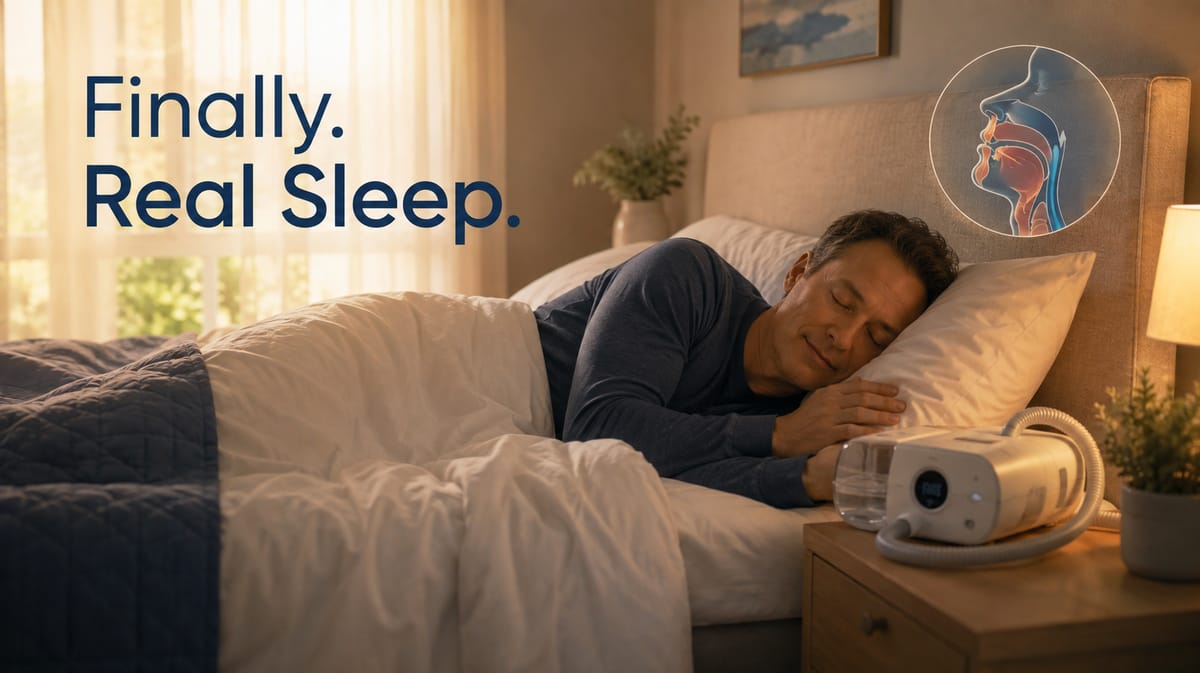
The most dangerous part of sleep apnea isn’t the snoring — it’s what your heart is silently enduring every single night.
This guide is written for educational purposes and does not substitute for a medical evaluation — if you recognise these symptoms, please speak with a qualified healthcare professional.
What Is Sleep Apnea? Types, Mechanisms, and Who It Affects
Now that you know this experience has a real, physiological explanation, the next question is: why is this happening in your body specifically? Understanding that requires knowing which type of sleep apnea you’re dealing with — because they are not all the same condition, and they don’t all respond to the same treatment.
Sleep apnea is a form of sleep-disordered breathing in which breathing is repeatedly interrupted during sleep — not just reduced, but fully or partially stopped. Each interruption is called an apnea (complete stop) or a hypopnea (partial reduction in airflow). Your brain detects the oxygen drop, triggers a micro-arousal to restart breathing, and the cycle repeats — sometimes hundreds of times per night — without you ever fully waking. That constant fragmentation is why you feel so destroyed in the morning despite technically being “asleep” all night.
Why is this happening to you? Because at some point during sleep, the control systems that keep your airway open — or the neurological signals that drive breathing — are failing. Which system fails tells you which type you have.
Obstructive vs Central vs Complex Sleep Apnea: Key Differences
There are four clinically distinct subtypes, and the distinction matters enormously — both for what your sleep study will show and for which treatments will actually work.
Obstructive sleep apnea is fundamentally a mechanical problem — a structural collapse of the pharyngeal airway under the reduced muscle tone of sleep. Think of it like trying to breathe through a kinked garden hose. The effort is there; the passage is not.
This distinction is one of the most important blind spots in popular understanding of sleep apnea. Central sleep apnea is not a severe version of obstructive sleep apnea. It is a different disease with a different mechanism, and treating it with standard CPAP pressure alone can actually worsen it in some cases.
UARS deserves particular attention because so many patients with it are told their sleep study is “normal” and dismissed. The exhaustion, the brain fog, the non-restorative sleep — it is all real. It simply requires a more sensitive diagnostic lens.
Airway collapse or absent brain signal → breathing stops repeatedly during sleep
Nocturnal hypoxemia + sleep fragmentation → exhaustion, cardiovascular stress, cognitive impairment
Subtype determines treatment — OSA, CSA, and UARS require distinct clinical approaches
🔗 Knowing which subtype applies to you is the single most important step before choosing any treatment path.
Sleep Apnea Subtype Comparison: OSA, CSA, CompSAS, and UARS
The table below maps each subtype across the key dimensions your clinician will use to distinguish them — so you can follow that conversation when it happens.
| Subtype | Mechanism | Key Symptoms | Diagnosis | First-Line Treatment |
|---|---|---|---|---|
| Obstructive Sleep Apnea (OSA) | Pharyngeal collapse — airway physically blocks | Loud snoring, witnessed apneas, gasping, excessive daytime sleepiness | PSG or HSAT — AHI ≥5 with symptoms | CPAP / APAP; oral appliance for mild–moderate |
| Central Sleep Apnea (CSA) | Absent brain signal — no effort to breathe | Less snoring, witnessed apneas, insomnia, poor sleep quality | PSG required — central apnea index ≥5/hour | Treat underlying cause; ASV or BiPAP-ST; supplemental O₂ |
| Complex Sleep Apnea (CompSAS) | OSA + CPAP-emergent central apneas | Persistent symptoms despite CPAP; fatigue continuing after therapy start | PSG on CPAP revealing central events | Adaptive servo-ventilation (ASV); pressure adjustment |
| Upper Airway Resistance Syndrome (UARS) | Increased airway resistance — partial narrowing, no full apnea | Fatigue, insomnia, headaches, no loud snoring; normal AHI but elevated RDI | Full PSG with esophageal pressure monitoring; RDI ≥5 | CPAP at low pressure; positional therapy; oral appliance |
🔗 Most people reading this have OSA — but the sections ahead will flag the signs that suggest a different subtype needs investigating.
Who Gets Sleep Apnea? The Stereotype Is Wrong
The mental image of a sleep apnea patient — an older, overweight man who snores loudly — is one of the most harmful misconceptions in sleep medicine. It is also one of the main reasons so many people delay diagnosis by years.
“Sleep apnea only affects overweight, middle-aged men.”
Sleep apnea affects all body types, ages, and sexes. Lean adults, women, children, and elite athletes all develop sleep apnea — often with completely different symptom presentations that are routinely missed.
“If you snore loudly, you have sleep apnea. If you don’t snore, you’re fine.”
Snoring is a risk signal, not a diagnosis. Many heavy snorers have no apnea at all. And some of the most severe OSA patients snore quietly — or not at all, especially women and those with UARS.
“CPAP cures sleep apnea permanently.”
CPAP controls sleep apnea while you use it. The moment you stop, your AHI returns to baseline. CPAP is a management tool — not a cure — unless the underlying anatomy or physiology changes through surgery or significant weight loss confirmed by a follow-up sleep study.
🔗 These misconceptions are exactly why 80–90% of cases go undiagnosed — the profile in your mind doesn’t match the person in the mirror.
The global scale of this problem is staggering. According to the landmark Lancet Respiratory Medicine study, approximately 936 million adults aged 30–69 worldwide have mild-to-severe OSA, and 425 million have moderate-to-severe OSA — figures that make it one of the most prevalent chronic conditions on the planet. For a deeper look at the numbers, see our sleep apnea statistics resource.
Nearly 1 billion people. Most of them don’t know.
Symptoms of Sleep Apnea: What to Look For (and What You’re Probably Missing)
Recognising sleep apnea is harder than it sounds — not because the symptoms are subtle, but because they scatter across so many different body systems that no single one points clearly at the airways. A cardiologist sees high blood pressure. A psychiatrist sees depression. A GP sees fatigue and prescribes iron tablets. And the person in the middle keeps going around the cycle, never quite getting better.
Classic Sleep Apnea Symptoms in Adults
The nighttime symptoms are often discovered by a partner before the person with sleep apnea even suspects a problem. Loud, disruptive snoring — particularly snoring that changes in rhythm, stops abruptly, and restarts with a gasp or snort — is a signature pattern. Witnessed breathing pauses are perhaps the most alarming presentation: a partner watches the chest stop moving and shakes the sleeper awake in genuine fear. Gasping or choking sounds on arousal, waking with a dry mouth or sore throat, and frequent trips to the bathroom at night (nocturia) are all part of the nighttime picture.
The daytime symptoms are often what finally bring people to a doctor. Excessive daytime sleepiness is the most discussed, but it is far from universal. Many people with moderate-to-severe OSA describe not so much sleepiness as a profound, unyielding fatigue — a grey exhaustion that coffee cannot touch. Brain fog, difficulty concentrating, memory lapses, and mood shifts — irritability, low mood, or a creeping anxiety — are all consequences of sleep fragmentation and nocturnal hypoxemia. Morning headaches, caused by overnight CO₂ accumulation, are a particularly useful diagnostic clue.
Knowing these numbers isn’t just reassuring — it means this is a solvable problem that the medical system sees and treats every day. You are not an unusual case; you are a very common one that simply hasn’t been found yet.
Sleep Apnea Symptoms in Women vs Men
This is where sleep medicine has failed women badly, and for decades. The classic presentation described above — loud snoring, obvious daytime sleepiness, witnessed apneas — describes how sleep apnea tends to present in men. Women with OSA frequently present in an entirely different way.
Women with sleep apnea are more likely to report insomnia, depression, anxiety, chronic fatigue, and morning headaches. They are less likely to report loud snoring. Their OSA events are often shorter and more frequent, occurring more in REM sleep than NREM sleep. As a result, women are significantly more likely to receive a first diagnosis of depression, hypothyroidism, or chronic fatigue syndrome — and the average diagnostic delay for women with OSA is 6 to 10 years longer than for men. Understanding sleep and mental health connections is crucial — because mood symptoms in women with undiagnosed OSA are not a primary psychiatric disorder. They are a consequence of disordered breathing.
Many women with OSA describe being told for years that they were “just stressed” or “probably perimenopausal” — while struggling with exhaustion so deep it affected their jobs and relationships. The snoring was quiet. The sleep study came back years later showing severe apnea.
Aggregate voice — reflects a common diagnostic pattern in women with OSAThe symptom profile in women matters because it changes who needs to ask for a sleep study. If you are a woman experiencing persistent fatigue, mood symptoms, or frequent morning headaches — even without loud snoring — sleep apnea belongs on the differential diagnosis list.
Pediatric Sleep Apnea: Signs Parents Often Miss
Children with sleep apnea do not present like adults. They are often not obviously sleepy during the day — in fact, the opposite can happen. Sleep fragmentation in children frequently manifests as hyperactivity and behavioural problems that mirror ADHD. Parents and teachers notice a child who cannot sit still, cannot focus, and who is acting out — not a child who looks tired. Other common signs in children include mouth breathing, bedwetting (enuresis) in a previously dry child, unusual sleeping positions (such as hyperextending the neck), and snoring that sounds laboured rather than just loud.
The most common cause in children is enlarged tonsils and adenoids, not obesity. Adenotonsillectomy — surgical removal — resolves OSA completely in the majority of pediatric cases and often produces rapid, dramatic improvements in behaviour, school performance, and bedwetting. If your child shows these signs, speaking to a paediatrician about a referral for a sleep evaluation is far more productive than adjusting their diet or behaviour plan. For broader context on childhood sleep challenges, our guide on toddler sleep issues covers the developmental picture.
The diagnostic threshold difference is worth noting — children are classified as having OSA at a much lower event rate than adults, reflecting how sensitive the developing brain and cardiovascular system are to sleep-disordered breathing.
Causes and Risk Factors: Why Airway Collapse Happens
Sleep apnea does not happen randomly. There are specific anatomical, physiological, and behavioural factors that make the airway vulnerable during sleep — and understanding them helps explain both why you have it and which interventions are most likely to make a meaningful difference.
Anatomical and Physiological Risk Factors
For OSA, the core problem is upper airway collapsibility. During wakefulness, the throat muscles maintain tone and keep the airway patent. During sleep — particularly in NREM stage 2 and REM sleep — that muscle tone drops significantly. In people with anatomically narrow airways (due to jaw structure, tongue size, tonsillar tissue, or palate anatomy), that drop in tone is enough to cause collapse. Obesity worsens this by depositing fat around the neck and in pharyngeal tissue, further narrowing the available space.
But anatomy is not destiny. A lean marathon runner with a narrow jaw can have severe positional OSA with zero weight-related risk factors — another reason the “overweight men” stereotype is so clinically dangerous. Neck circumference greater than 40 cm in women or 43 cm in men is a recognised risk marker, but it is a population-level signal, not an individual screen. The Starling resistor model of upper airway mechanics helps explain why: the throat behaves like a collapsible tube, and any factor that lowers the critical closing pressure — lying on your back, alcohol, sedatives, reduced muscle tone — can push a vulnerable airway into collapse.
Obstructive sleep apnea affects 39.1% of adult men and 26.0% of adult women in the United States — a significant gap driven partly by anatomy and hormones, but also partly by underdiagnosis in women whose symptoms present differently.
Source: Respiratory Medicine (Sönmez et al., 2025) · C1Hormonal factors also play a meaningful role. Oestrogen and progesterone are thought to offer some protective effect on upper airway muscle tone — which helps explain why women’s OSA risk rises significantly after menopause, and why pregnancy dramatically increases risk (addressed in the special populations section).
Lifestyle and Modifiable Risk Factors
Obesity is the single most modifiable risk factor for OSA. The relationship is bidirectional and self-reinforcing: excess weight increases OSA severity, and OSA worsens obesity through its effects on the leptin/ghrelin appetite hormone axis. Sleep-deprived bodies produce more ghrelin (appetite stimulant) and less leptin (satiety signal), creating a physiological drive to overeat. Treating sleep apnea can meaningfully support weight management efforts — not because CPAP burns calories, but because properly restorative sleep restores normal appetite regulation.
Alcohol consumption is a frequently underestimated trigger. Alcohol relaxes pharyngeal muscles and suppresses arousal threshold — meaning the brain is less likely to wake you when oxygen drops. Even moderate drinking before bed can significantly worsen AHI in someone with borderline OSA. Our resource on alcohol and sleep covers this relationship in detail.
Sleeping position matters more than most people realise. Positional OSA — where AHI is at least twice as high in the supine (back-sleeping) position as in lateral (side-sleeping) positions — accounts for a substantial proportion of OSA cases. For these patients, positional therapy is a clinically validated, first-line treatment option. Most people with positional OSA never hear about it.
Other modifiable risk factors include nasal congestion (which increases airway resistance upstream), sedative medications, and smoking (which causes airway inflammation). The connection between anxiety before bed and sleep quality is also relevant — anxiety disrupts sleep architecture in ways that can worsen OSA severity, and OSA can trigger or amplify anxiety in a bidirectional loop.
The transition from “why is this happening” to “what it is doing to your body” is where the stakes become impossible to ignore — and where many people finally decide to act.
Health Consequences: What Untreated Sleep Apnea Does to Your Body
If someone you love has ever shaken you awake because you stopped breathing, you know the fear in that moment. That fear is appropriate — not to cause panic, but because untreated sleep apnea is not just a sleep problem. It is a cardiovascular problem, a metabolic problem, a neurological problem, and a mental health problem. The good news — and this is genuinely good news — is that treatment works, and the damage is largely reversible with consistent therapy.
Can I actually improve this? Every piece of evidence says yes. But first you need to understand what you are dealing with.
Sleep Apnea and Heart Disease: What the Evidence Says
Every time your airway collapses and oxygen drops, your sympathetic nervous system fires an emergency response. Heart rate surges. Blood pressure spikes. Stress hormones flood the system. This happens not once a night, but potentially hundreds of times. Night after night, year after year, this pattern exerts cumulative damage on the cardiovascular system that rivals the impact of smoking or hypertension.
The numbers are stark. Untreated OSA patients are five times more likely to develop new-onset hypertension compared to CPAP-treated patients with the same severity of apnea. [Abbasi et al., 2017] The relationship is not coincidental — intermittent hypoxia and autonomic nervous system activation are direct drivers of vascular injury.
The link between sleep apnea and atrial fibrillation is particularly clinically significant. Untreated OSA doubles the risk of AF relapse after cardioversion — the procedure used to restore normal heart rhythm. If you or someone you know has atrial fibrillation that keeps coming back, untreated sleep apnea may be the reason. The connection between sleep disorders and cardiovascular disease is one of the most robustly evidenced relationships in modern medicine.
Consistent CPAP use (≥4 hours per night) is associated with a 31% reduction in the risk of major adverse cardiovascular events (MACE) in OSA patients with established cardiovascular disease — a result comparable to many pharmaceutical interventions.
Source: JAMA (Labarca et al. IPD meta-analysis, 4,186 patients) · C3That 31% reduction is not a given — it is conditional on adherent use, which is why the adherence section later in this guide is one of the most important parts you will read.
Sleep Apnea, Brain Fog, and Mental Health
The brain is extraordinarily sensitive to oxygen deprivation. The glymphatic system — the brain’s overnight waste-clearance mechanism — functions primarily during deep, slow-wave sleep. When sleep apnea fragments deep sleep and creates repeated episodes of nocturnal hypoxemia, glymphatic clearance is impaired. The metabolic waste products that accumulate with normal brain activity — including amyloid-beta, a protein implicated in Alzheimer’s disease — are not cleared efficiently. Long-term, this is a genuine concern that researchers are actively investigating.
In the shorter term, the cognitive consequences of untreated OSA are measurable and significant. Neurocognitive impairment — poor working memory, slowed processing speed, difficulty sustaining attention — is well documented in OSA populations. These are not personality traits or signs of aging. They are physiological consequences of fragmented sleep and hypoxemia, and they improve meaningfully with treatment.
The relationship between sleep apnea and depression or anxiety deserves careful framing. Sleep apnea can cause depressive symptoms through its effects on sleep architecture and neurochemistry — and depression can worsen sleep quality and apnea severity. This bidirectional relationship means treating the sleep apnea often produces surprising improvements in mood, even without changes to psychiatric medication. If you’ve been navigating stress and sleep difficulties alongside your apnea symptoms, addressing both simultaneously produces the best outcomes.
Sleep Apnea, Type 2 Diabetes, and Metabolic Health
Intermittent hypoxia — the cycling between low and normal oxygen that happens with each apnea — directly impairs insulin sensitivity through multiple mechanisms, including oxidative stress and inflammatory pathway activation. OSA is independently associated with type 2 diabetes even after controlling for obesity, and the relationship is dose-dependent: higher AHI correlates with worse glycaemic control. For people already managing diabetes, untreated sleep apnea is a significant complicating factor that undercuts the effectiveness of everything else they are doing.
Diagnosis: Sleep Studies, AHI Scores, and How to Get Tested
Getting tested for sleep apnea is less daunting than most people expect — but understanding what the tests are measuring, and why the choice of test matters, is essential context before you walk into your doctor’s office.
HSAT vs Polysomnography: Which Test Is Right for You?
Two main diagnostic pathways exist: the home sleep apnea test (HSAT) and in-laboratory polysomnography (PSG). They are not equivalent, and choosing the wrong one for your situation can lead to a misleading result.
| Factor | Home Sleep Apnea Test (HSAT) | Polysomnography (PSG) |
|---|---|---|
| Setting | Your own bed — device worn overnight | Sleep laboratory — attended overnight study |
| What it measures | Airflow, respiratory effort, oxygen saturation, heart rate | All HSAT + brainwave activity (EEG), eye movements, muscle tone, full sleep staging |
| AHI denominator | Recording time (not sleep time) — systematically underestimates AHI | Actual sleep time — true AHI |
| Accuracy | Adequate for high-probability, uncomplicated OSA; can under-report by 30–50% | Gold standard — detects OSA, CSA, UARS, REM behaviour disorder, PLMs |
| UARS detection | Poor — misses RERAs without esophageal pressure monitoring | Good with full-channel setup |
| Best for | High-probability OSA with classic symptoms; no suspected comorbid sleep disorders | Diagnostic uncertainty; suspected CSA/UARS/CompSAS; HSAT negative with ongoing symptoms |
| Cost | Lower — usually covered by insurance for appropriate indications | Higher — typically covered when clinically indicated |
🔗 If your home sleep test came back “normal” but symptoms persist, that result may be a false negative — not a clean bill of health.
The HSAT’s critical limitation is the denominator problem. The device records for, say, eight hours — but you may have only slept for six of those hours. HSAT divides apnea events by eight, giving a lower AHI. PSG divides by actual sleep time, giving a higher — and more accurate — one. A patient who shows an AHI of 10 on HSAT may have a true PSG AHI of 15–18, shifting them from “mild” into “moderate” territory with meaningfully different treatment recommendations.
The American Academy of Sleep Medicine is clear on this point: PSG is the diagnostic gold standard; HSAT is appropriate for uncomplicated, high-probability OSA only; and a negative or inconclusive HSAT should always be followed by PSG when clinical suspicion remains. [AASM, 2017]
How to Read Your Sleep Study Results: AHI Explained
Your sleep study report will centre on one number: the apnea-hypopnea index, or AHI. This is the average number of breathing interruptions per hour of sleep. Here is what it means and what it implies for your treatment pathway.
| AHI Score | Severity Classification | Clinical Meaning | Typical Treatment Threshold |
|---|---|---|---|
| Less than 5 | Normal (adults) | Fewer than 5 events per hour — within normal range for adults | Monitor if symptomatic; investigate for UARS if symptoms persist |
| 5–14 | Mild OSA | 5 to 14 events per hour; significant symptoms or cardiovascular comorbidities may warrant treatment below 15 | Oral appliance, positional therapy, lifestyle modification; CPAP if symptomatic or comorbid CVD |
| 15–29 | Moderate OSA | 15 to 29 events per hour; treatment generally recommended regardless of symptoms | CPAP / APAP first-line; oral appliance in CPAP-intolerant mild-moderate cases |
| 30 or above | Severe OSA | 30+ events per hour; significant cardiovascular risk; treatment strongly indicated | CPAP / APAP first-line; Inspire therapy for CPAP-intolerant patients; surgical options if indicated |
🔗 An AHI of 22 — a common result that confuses many readers — places you in moderate OSA territory, where treatment is recommended regardless of how tired you feel during the day.
One critical nuance: the AHI does not tell the full story. Oxygen desaturation depth and duration are arguably stronger predictors of cardiovascular outcomes than AHI alone. A patient with an AHI of 18 whose oxygen drops to 75% during events carries substantially higher risk than someone with an AHI of 25 whose oxygen never falls below 88%. Ask your clinician about your oxygen desaturation index (ODI) alongside your AHI — this gives a much more complete picture of what your cardiovascular system experienced overnight.
Sleep Apnea Visual Breakdown
See how airway collapse, AHI scores, and treatment options connect — in one clear visual guide.
See the Visual Guide →Your Sleep Apnea Questions Answered
Specific questions about your AHI, your CPAP, or your diagnosis — answered clearly and directly.
Read the Q&A →Sleep Apnea Mind Map
See every subtype, symptom, risk factor, and treatment pathway mapped in one connected visual overview.
Explore the Mind Map →Sleep Apnea by the Numbers
Prevalence, cardiovascular outcomes, treatment efficacy — the research evidence in one place.
Research the Stats →🔗 Understanding your AHI is step one — the next chapter shows you exactly what to do with that number.
When Sleep Apnea Becomes a Medical Emergency
Most sleep apnea is not an emergency — it is a chronic condition that warrants prompt but not urgent evaluation. However, certain presentations require faster action. Seek immediate medical attention if someone has a witnessed apnea followed by prolonged unresponsiveness, oxygen desaturation with persistent confusion on waking, or a new cardiac arrhythmia in the context of known severe OSA. For anyone with moderate-to-severe OSA who is also managing heart failure, atrial fibrillation, or poorly controlled hypertension, a referral to a sleep specialist rather than a GP-initiated home test is strongly recommended. Getting a proper diagnosis is not optional at that severity level — it is part of managing your cardiovascular risk.
The step from understanding your diagnosis to choosing the right treatment is where most of the confusion lives — and it is also where most of the hope is.
Treatment Options: From CPAP to Surgery — A Complete Comparison
You are ready to act. You have a diagnosis, a number, and a growing sense that leaving this untreated is not an option. The question now is: what should I try first? And the honest answer is that the best treatment is the one you will actually use — consistently, every night, long enough to accrue the cardiovascular protection the evidence promises.
Many people arrive at this section having already tried CPAP and felt overwhelmed by it. “I’ve tried CPAP but I can’t stand wearing it” is one of the most common things sleep clinicians hear — and it is not a character flaw. It is a fixable problem. And if CPAP truly is not workable for you, the treatment landscape has expanded dramatically in the last decade.
CPAP vs APAP vs BiPAP: How to Choose
Positive airway pressure (PAP) therapy is the most effective treatment for moderate and severe OSA across all population groups. But “CPAP” is often used as a catch-all term when there are actually three meaningfully different delivery modes, each with distinct advantages.
| Device | How It Works | Pressure Delivery | Best Candidate | Key Advantage |
|---|---|---|---|---|
| CPAP (Continuous Positive Airway Pressure) |
Delivers a single fixed pressure all night — splints the airway open continuously | Fixed (e.g., 10 cmH₂O all night) | Moderate–severe OSA with stable pressure needs; highly compliant patients | Simplicity; robust evidence base; most widely covered by insurance |
| APAP (Auto-Adjusting PAP) |
Senses airway resistance breath by breath and adjusts pressure automatically — higher when needed, lower when not | Variable within a set range (e.g., 6–14 cmH₂O) | Patients whose pressure needs fluctuate with position or sleep stage; new starters needing titration | Greater comfort; handles REM-related OSA worsening; useful for titrating ideal fixed pressure |
| BiPAP (Bilevel PAP) |
Delivers higher pressure on inhalation, lower on exhalation — easing the breathing effort | Two pressures: IPAP and EPAP set separately | Patients with high CPAP pressure intolerance; CSA; obesity hypoventilation syndrome (OHS); neuromuscular disease | Easier exhalation makes higher pressures tolerable; first choice in CSA and OHS |
🔗 Most new patients start on APAP — it finds the right pressure automatically while your clinician determines your long-term therapeutic range.
Oral Appliance Therapy: Who It Works For
Mandibular advancement devices (MADs) are custom-fitted dental appliances that hold the lower jaw slightly forward during sleep, preventing posterior tongue displacement and upper airway collapse. They are a legitimate first-line option for mild-to-moderate OSA and for patients with severe OSA who cannot tolerate CPAP.
The evidence shows oral appliances are modestly less effective than CPAP on average — but compliance rates are significantly higher. A device that is worn is more effective than a device that sits on the nightstand. For the right patient, the real-world outcome of oral appliance therapy can match or exceed CPAP therapy precisely because the patient actually uses it. Effectiveness and adherence are both variables; the product of those two variables determines your actual outcome. If you are exploring options beyond PAP therapy, our overview of anti-snoring devices includes the current MAD landscape.
Positional Therapy: The Overlooked First-Line Option
If your sleep study shows positional OSA — AHI at least twice as high supine as lateral — then keeping you off your back during sleep is a clinically validated treatment, not a lifestyle tip. Positional therapy devices range from simple vibrating wearables that prompt you to turn when you roll onto your back, to specialized pillows and positional vests. For patients with purely positional OSA, positional therapy alone can normalise AHI without any additional intervention. This is a first-line clinical option that most patients never hear about.
If your sleep study report shows a significant difference between your supine AHI and your lateral AHI, ask your sleep specialist specifically whether you qualify as “positional OSA.” The classification threshold is supine AHI ≥ 2× lateral AHI. Patients who meet this threshold have the highest response rates to positional therapy.
Positional therapy works best as a standalone option in mild positional OSA, or as an adjunct to PAP therapy or oral appliances in moderate cases — reducing required pressure and improving comfort.
Inspire Therapy: Candidacy, Evidence, and What to Expect
Inspire therapy — hypoglossal nerve stimulation — is a fully implanted device that delivers mild electrical stimulation to the hypoglossal nerve, which controls tongue movement. The stimulation keeps the tongue from falling back during sleep, preventing airway collapse without any mask, hose, or external device. It is a significant engineering achievement, and the clinical results are compelling.
Clinical evidence shows Inspire therapy achieves a median AHI reduction of approximately 70% in eligible patients — outcomes comparable to compliant CPAP use, achieved in patients for whom CPAP was not working. The device is FDA-authorised in the United States and covered by major insurers; it is also available in the UK, Canada, and Australia through specialist centres.
Who qualifies? Candidacy requirements are specific: moderate-to-severe OSA (AHI 15–65), documented CPAP intolerance, BMI typically under 32 (some centres accept up to 35), absence of complete concentric collapse at the palate (assessed by drug-induced sleep endoscopy), and no anatomical features that would prevent stimulation. The procedure involves a one-to-two-hour outpatient surgery with an overnight observation in most centres. The implant is activated four to six weeks post-surgery.
| Treatment | Effectiveness (AHI reduction) | Invasiveness | Best Candidate | Insurance Coverage |
|---|---|---|---|---|
| CPAP / APAP | ~90–95% when used correctly | None | All OSA severities; first-line for moderate–severe | Universally covered |
| Oral Appliance (MAD) | ~50–60% on average; higher in positional OSA | None | Mild–moderate OSA; CPAP-intolerant moderate–severe | Covered by many insurers |
| Positional Therapy | ~60–80% in confirmed positional OSA | None | Positional OSA (supine AHI ≥ 2× lateral AHI) | Variable — often out of pocket |
| Inspire (HNS) | ~70% median; comparable to compliant CPAP | Surgical implant — low to moderate | Moderate–severe OSA; CPAP-intolerant; BMI <32–35 | Major insurers US, UK, CA, AU |
| Adenotonsillectomy (Pediatric) | Resolution in majority of pediatric cases | Surgical — moderate | Pediatric OSA with enlarged tonsils/adenoids | Covered when clinically indicated |
| Other Surgery (UPPP, MMA) | Variable — 40–80% depending on anatomy | High | Specific anatomical obstruction; failed PAP/OA | Variable |
🔗 The table above maps every option — but choosing between them depends on your severity, your anatomy, and your tolerance for each approach.
Lifestyle Interventions: What the Evidence Actually Shows
Weight loss can meaningfully reduce AHI — in some cases dramatically so. A 10% reduction in body weight is associated with approximately a 26% reduction in AHI in overweight and obese OSA patients. For patients who achieve major weight loss through bariatric surgery or GLP-1 receptor agonist therapy, OSA can improve sufficiently to reduce or eliminate PAP therapy dependency. However, “can reduce” is not the same as “will eliminate.” Even after significant weight loss, a follow-up sleep study is required to confirm any change in severity — stopping CPAP without re-testing is clinically inappropriate and potentially dangerous.
Lifestyle Co-Interventions That Support Sleep Apnea Management
These interventions do not replace PAP therapy for moderate or severe OSA — but they meaningfully reduce AHI, improve therapy tolerance, and support overall sleep quality when applied alongside clinical treatment.
Some people find these changes reduce the CPAP pressure they need — making therapy more comfortable and easier to sustain. They do not eliminate the need for a clinical diagnosis or treatment plan.
Your First Steps — Starting Tonight
- Tonight: Eliminate alcohol completely. Sleep on your side if possible. If you have a CPAP you have been avoiding, set it up and commit to wearing it for at least 2 hours — the goal is not a perfect night, it is breaking the avoidance pattern.
- Tomorrow morning: Note how many hours you wore the CPAP (if applicable) and whether you had a morning headache. These two data points are your baseline.
- This week: Book an appointment with your GP or sleep specialist. Bring the symptom list from the scanner at the top of this page. Ask specifically about a referral for a sleep study — or, if you already have results, ask what your AHI and ODI scores mean for your treatment pathway.
- Before your appointment: Read your sleep study report and find your AHI number. Use the severity table in this guide to understand which tier you are in before you walk into that room.
CPAP Adherence: The Evidence-Based Framework for Making Therapy Work
This is the section that could change your outcome more than any device choice you make. The reason most CPAP users do not get the cardiovascular protection the evidence promises is not the machine — it is how long they wear it each night. CPAP adherence — specifically the ≥4 hours per night threshold — is the variable that separates those who gain meaningful cardiovascular protection from those who don’t.
The 4-Hour Threshold: Why It Matters So Much
A 2023 JAMA meta-analysis examining individual patient data from 4,186 participants across three randomised controlled trials found that CPAP adherence of 4 or more hours per night was associated with a 31% reduction in the risk of major adverse cardiovascular events. [Labarca et al., JAMA 2023] The intention-to-treat analysis — which includes everyone who was prescribed CPAP regardless of how much they used it — showed no statistically significant benefit. Only the adherent subgroup showed the cardiovascular effect.
This is one of the most important numbers in sleep medicine: 4 hours. Not because it is a magic threshold, but because it is the minimum consistent use needed for the cardiovascular system to experience meaningful protection from untreated apnea events. Users at 3.5 hours are close but not there. Users at 5 or 6 hours receive additional benefit. The data is clear: if your CPAP data card shows consistent use below 4 hours, the machine is not protecting your heart — even though it feels like you are doing the right thing.
The CPAP Adherence Protocol
Three Modifiable Variables That Determine Whether CPAP Works for You
- Mask Fit — A poorly fitting mask is the single most common reason CPAP fails. Modern options include nasal pillows (under 50g, minimal contact, preferred by side-sleepers), nasal masks (covers nose only, good seal, lower leak rate), and full-face masks (nose and mouth, essential for mouth-breathers). Request a mask fitting session with a CPAP supplier — not just a box handed over a counter. Try at least two different mask styles. A good fitter will check seal integrity at your prescribed pressure before you leave the clinic.
- Heated Humidification — Dryness, congestion, and mouth discomfort in the morning are common complaints that cause CPAP abandonment — and they are almost entirely eliminated by a heated humidifier. Most modern CPAP machines have an integrated humidifier; setting the temperature to 27–29°C and enabling the heated tube (if available) prevents condensation while maintaining mucosal comfort. Patients who use heated humidification report significantly higher CPAP adherence at 3 and 12 months than those without.
- Pressure Optimisation — A fixed pressure set too high causes aerophagia (air swallowing) and central apneas. A pressure set too low fails to splint the airway. APAP with a clinically set range (typically 4–20 cmH₂O) automatically finds the right pressure each night. Your machine’s data — available through apps like ResMed’s myAir or Philips DreamMapper — shows you your nightly AHI, leak rate, and usage hours. If your residual AHI remains above 5 events/hour despite CPAP use, the pressure or mask needs adjustment — this is a clinical trigger, not a failure on your part.
🔗 Fixing one of these three variables — mask, humidity, or pressure — is often the difference between a CPAP that transforms your nights and one that collects dust.
Signs Your CPAP Is Working (Even Before Sleep Dramatically Improves)
- You wake up without a morning headache — CO₂ is clearing properly overnight.
- Your morning dry mouth or sore throat improves — airway pressure and humidification are stabilising the mucosal lining.
- Your partner reports you have stopped snoring or gasping — the airway is staying open.
Daytime energy improvements typically take 2–4 weeks of consistent use — progress is rarely linear, but the first signs appear in the mornings, not yet in your afternoon energy levels.
Why CPAP Therapy Fails — and How to Prevent It
The most common reason CPAP therapy does not produce results is not device quality or pressure accuracy — it is adherence below the clinical threshold. Mask discomfort drives early abandonment; an unaddressed leak rate causes residual apneas that make the therapy feel ineffective; and the absence of any feedback loop (knowing your nightly AHI from your machine’s app) removes the motivation that data-driven progress creates. The patients who succeed with CPAP almost universally describe one thing: they stopped trying to be comfortable immediately and committed to an acclimatisation period of 2–3 weeks before making judgements. The discomfort at night is real and it does lessen. The cardiovascular protection requires that you get there.
If CPAP is not working for you despite optimising these three variables — or if you have been using it at below-threshold hours for more than three months — this is a clinical conversation, not a personal failure. A sleep medicine specialist can reassess your titration, consider APAP or BiPAP, explore Inspire candidacy, or combine approaches. The CBT-I for insomnia literature also offers techniques relevant to acclimatisation — particularly for patients who experience anxiety about wearing the mask or claustrophobic reactions to the equipment.
Special Populations: Women, Children, Pregnancy, Athletes, and Older Adults
You’ve made it to this stage of the guide with a diagnosis, a treatment path, and the adherence science to make that treatment work. But sustaining progress requires one more layer of understanding — and for many readers, that layer is the one that has been missing all along: the recognition that their experience of sleep apnea looks different from the textbook case.
What if it doesn’t work the way the standard advice describes? Often, it’s because the standard advice was written for a different patient than you.
Women and Sleep Apnea: The Diagnostic Delay Problem
The average diagnostic delay for women with obstructive sleep apnea is 6 to 10 years longer than for men — a gap driven not by women having milder disease, but by a fundamentally different symptom presentation that clinicians trained on male-dominated research often fail to recognise. Women with OSA are more likely to present with insomnia, depression, fatigue, anxiety, and morning headaches. Their REM-predominant apnea pattern means a single-night study may miss peak severity. Their snoring tends to be softer. Their AHI thresholds, when using the same scoring criteria as men, may not capture the full burden of respiratory disturbance.
If you are a woman who has been told by multiple clinicians that your sleep study is “borderline” or “subclinical” but you remain symptomatic, advocate for a full PSG with RDI scoring. The evidence that women are systematically underdiagnosed is robust — and the solution is not accepting a dismissal.
The Most Dangerous Mistake in Sleep Apnea Management
Stopping CPAP therapy after significant weight loss — without a follow-up sleep study to confirm AHI improvement — is one of the most common and clinically dangerous decisions sleep apnea patients make. Weight loss can reduce AHI meaningfully, but it rarely eliminates OSA entirely. The only way to know whether you still need therapy is to repeat the sleep study. Assuming resolution and stopping CPAP is not a safe strategy for sleep apnea management.
Pregnancy and Sleep Apnea: Risks and Management
Pregnancy significantly worsens sleep apnea risk through multiple mechanisms: weight gain, hormonal fluid retention causing nasal congestion, and changes in upper airway anatomy. Gestational sleep apnea — which can emerge or worsen particularly in the second and third trimesters — is not a benign inconvenience. Untreated gestational OSA is independently linked to preeclampsia, gestational diabetes, and preterm birth. It also worsens fetal outcomes through maternal nocturnal hypoxemia.
Pregnant women with snoring, witnessed apneas, excessive fatigue, or morning headaches should be screened for sleep apnea. CPAP is safe in pregnancy and is the recommended treatment — and some women find their OSA resolves postpartum, though a confirmation sleep study is required before discontinuing therapy.
Athletes and Sleep Apnea: The High-Performance Blind Spot
Elite athletes are not immune to sleep apnea — and when OSA is present in a high-performance context, it is particularly damaging. Nocturnal hypoxemia impairs glycogen synthesis, blunts growth hormone secretion (which peaks in slow-wave sleep), and reduces the neurocognitive recovery that athletic performance depends on. A lean marathon runner with a narrow jaw and positional OSA — zero weight-related risk factors — can have severe OSA that is completely invisible on standard screening and devastating to performance.
If you are an athlete experiencing performance plateau, slow recovery, or unexplained mood changes despite optimal training and nutrition, a sleep study belongs on the investigation list. Exploring how restless legs syndrome and sleep apnea can co-occur in athletic populations is also worthwhile — both conditions disrupt sleep architecture and both respond to treatment.
Long-Term Management, Monitoring, and Prevention
Sleep apnea is a chronic condition for most people — not a one-time problem that gets fixed and forgotten. The long-term management framework focuses on three things: monitoring treatment effectiveness, watching for the comorbidities that OSA drives, and adjusting your approach as your body and circumstances change.
Monitoring Your Progress and Preventing Relapse
Your CPAP machine is a data source. Modern devices transmit nightly AHI, leak rate, and usage hours to cloud platforms that you — and your care team — can review. Aim for a residual AHI consistently below 5 events per hour and usage consistently above 4 hours per night. A residual AHI that creeps above 5 despite consistent use is a signal for clinical review — pressure reassessment, leak check, or investigation for treatment-emergent central apneas.
Annual reviews with your sleep clinician — or your GP with a sleep interest — should include a check on blood pressure, fasting glucose, and cardiovascular symptoms. These are the three comorbidity domains most directly linked to OSA severity and most sensitive to treatment progress. If your sleep study showed severe OSA, a follow-up PSG at 12 months is reasonable to confirm treatment response.
Common Relapse Pattern: The “Good Enough” Trap
Many people reach a point where they feel substantially better — say, 6–8 weeks into adherent CPAP use — and begin using the machine less consistently. Fatigue is gone. The morning headaches have stopped. The urgency fades. But the underlying anatomy has not changed. AHI returns to baseline the moment therapy is stopped. The cardiovascular risk accumulates silently. The “good enough” trap is where long-term outcomes diverge from short-term relief. Treat CPAP like blood pressure medication — you take it every day precisely because you feel normal, not because you feel unwell.
Long-Term Recovery: What to Track and When to Reassess
Recovery from sleep apnea’s effects — particularly cognitive function, blood pressure normalisation, and mood — occurs on different timelines. Blood pressure improvements are measurable within weeks of adherent CPAP use. Cognitive improvements — better memory, concentration, and processing speed — typically follow over 3–6 months. Mood improvements often track closely with sleep quality and can be rapid or gradual depending on the severity of the underlying sleep debt.
Weight loss — if it occurs as a result of improved sleep and restored appetite hormone balance — may reduce your required CPAP pressure over time. If you lose 10% or more of body weight while using CPAP, request a pressure reassessment. In some cases, APAP can adjust automatically; in others, a new titration study or repeat PSG may be warranted. For comprehensive context on the sleep disorders landscape and how OSA relates to other conditions, our sleep paralysis and sleep stages and cycles guides provide valuable context on how the different systems interact.
The goal of long-term management is not just the absence of symptoms — it is the restoration of the sleep architecture, the cardiovascular stability, and the cognitive sharpness that sustained, untreated apnea quietly eroded. That restoration is available to almost everyone who commits to consistent, adherent treatment.
- Sleep apnea is not a single condition. — OSA, CSA, CompSAS, and UARS have distinct mechanisms and require different treatments. Getting the right diagnosis means identifying the right subtype.
- 80–90% of cases are undiagnosed — and the stereotype of the “overweight, snoring man” is the primary reason. Women, children, lean adults, and athletes all develop sleep apnea with different symptom profiles.
- Your AHI score tells you your severity tier. — Mild (5–14), moderate (15–29), severe (30+). AHI from a home sleep test may be 30–50% lower than your true PSG AHI. If symptoms persist after a negative home test, request polysomnography.
- You are not stuck with CPAP if it hasn’t worked. — APAP, BiPAP, oral appliances, positional therapy, and Inspire therapy are all legitimate evidence-based options. The best treatment is the most effective one you will actually use.
- 4 hours per night is the cardiovascular protection threshold. — CPAP adherence below this level does not produce the 31% MACE risk reduction the evidence promises. Mask fit, humidification, and pressure optimisation are the three variables you can actually control.
- Untreated OSA damages your heart, brain, and metabolism — but that damage is largely reversible with consistent treatment. Starting therapy is not the end of the story; adherence is.
- You now have a clear action plan. — Identify your subtype. Get the right test. Interpret your AHI. Choose your treatment. Hit the 4-hour threshold. Annual review. This is manageable. You can do this.
🔗 The science is clear and the tools are available — what matters now is the first step you take tonight.
Quick Overview
- HSAT underestimates AHI by up to 50% → A “mild” home test result may actually be moderate — always confirm with PSG if symptoms persist.
- Women’s OSA looks like depression and insomnia → Diagnostic delay of 6–10 years is common; insist on a sleep study even without loud snoring.
- 4 hours of CPAP is the cardiovascular threshold → Below this, the 31% MACE risk reduction from JAMA 2023 does not apply to you.
- Inspire therapy is mainstream — not experimental → For CPAP-intolerant patients with moderate–severe OSA, it achieves ~70% AHI reduction with no mask required.
- OSA and obesity drive each other bidirectionally → Treating OSA restores leptin/ghrelin balance, making weight management meaningfully easier.
You Understand Your Condition — Now Take It Back
Explore our complete sleep disorders library for evidence-based guides on every condition that disrupts your sleep.
Get Your Questions Answered →Sources
- Sönmez et al., Respiratory Medicine (2025) — Estimated OSA prevalence in US adults: 83.7 million (32.4%), severity distribution 52% mild / 30% moderate / 18% severe; sex differential 39.1% male vs 26.0% female.
- Benjafield et al., The Lancet Respiratory Medicine (2019) — Global OSA prevalence: 936 million adults (mild–severe); 425 million (moderate–severe); 16-country modelling study.
- Labarca et al., JAMA (2023) — CPAP adherence ≥4 hours/night associated with 31% lower MACE recurrence risk (HR 0.69); IPD meta-analysis of 4,186 patients across 3 RCTs.
- American Academy of Sleep Medicine (2017) — Clinical practice guideline: PSG is the diagnostic gold standard; HSAT appropriate for uncomplicated high-probability OSA only; negative HSAT requires PSG follow-up.
- Abbasi et al., PMC (2017) — Untreated OSA patients are 5× more likely to develop new-onset hypertension vs CPAP-treated patients; untreated OSA doubles AF relapse risk after cardioversion.
- PMC — CPAP and Cardiovascular Risk in OSA (2025) — CPAP therapy consistently lowers blood pressure and reduces serious CVD event risk with adherent use; blood-pressure effect most pronounced in treatment-resistant hypertension.
What are the warning signs of sleep apnea?
The most common warning signs of sleep apnea are loud or disruptive snoring, witnessed breathing pauses during sleep, waking up gasping or choking, and feeling exhausted despite a full night’s rest. Morning headaches, dry mouth, brain fog, mood changes, and frequent night-time urination are also recognised indicators. Women often present with insomnia, depression, or fatigue rather than obvious snoring. If two or more of these apply, speak to your doctor about a sleep evaluation. Read more about how these symptoms compare in our sleep apnea questions answered resource.
Is sleep apnea dangerous if left untreated?
Yes. Untreated sleep apnea is independently associated with hypertension, stroke, atrial fibrillation, type 2 diabetes, and increased all-cause mortality. Patients with untreated OSA are five times more likely to develop new-onset hypertension than those receiving CPAP therapy, and untreated OSA doubles the risk of atrial fibrillation returning after cardioversion. These are not small effect sizes — they are comparable to smoking and uncontrolled blood pressure as cardiovascular risk factors. The good news is that consistent CPAP use (≥4 hours per night) is associated with a 31% reduction in major cardiovascular events.
Can you have sleep apnea without snoring?
Yes. Snoring is a risk signal, not a diagnostic criterion for sleep apnea. Many patients — particularly women, those with central sleep apnea, and those with upper airway resistance syndrome (UARS) — have significant sleep-disordered breathing without loud snoring. Some people with severe OSA snore only quietly, especially when sleeping on their side. The absence of snoring should never be used to rule out a sleep study if other symptoms are present — including chronic fatigue, morning headaches, brain fog, or witnessed breathing pauses. Explore our sleep apnea visual guide for a symptom comparison by subtype.
What does my AHI score mean — and what is a dangerous AHI?
The apnea-hypopnea index (AHI) measures average breathing interruptions per hour of sleep. Mild OSA is 5–14 events/hour, moderate is 15–29, and severe is 30 or above. Any AHI above 30 carries significant cardiovascular risk independent of other factors. However, AHI alone does not capture full severity — oxygen desaturation depth and duration are equally important. An AHI of 18 with oxygen dropping to 72% is more dangerous than an AHI of 25 with minimum oxygen of 88%. Also note: AHI from a home sleep test can be 30–50% lower than the true PSG AHI due to the denominator difference. Ask your clinician for your oxygen desaturation index alongside your AHI.
How is sleep apnea diagnosed — sleep study vs home test?
Sleep apnea is diagnosed using either a home sleep apnea test (HSAT) or in-laboratory polysomnography (PSG). PSG is the gold standard — it measures brain activity, oxygen levels, airflow, and full sleep staging. HSAT is appropriate for uncomplicated, high-probability OSA but cannot detect UARS or central sleep apnea reliably, and systematically underestimates AHI by dividing events by recording time rather than actual sleep time. If your HSAT comes back normal or borderline and symptoms persist, request a full PSG. The AASM clinical guideline is explicit: a negative HSAT should be followed by PSG when clinical suspicion remains. See our sleep apnea questions answered hub for more on navigating the diagnostic process.
How do you fix sleep apnea without CPAP?
There are several clinically validated alternatives to CPAP for sleep apnea. Oral appliances (mandibular advancement devices) are first-line for mild-to-moderate OSA and produce good outcomes in CPAP-intolerant patients. Positional therapy is effective for confirmed positional OSA (where supine AHI is at least double lateral AHI). Inspire therapy — hypoglossal nerve stimulation — is a surgically implanted device that achieves approximately 70% AHI reduction in eligible moderate-to-severe OSA patients who cannot tolerate CPAP. It is now covered by major insurers in the US, UK, Canada, and Australia. Weight loss, nasal treatment, and alcohol elimination reduce severity but rarely eliminate OSA without confirmation from a follow-up sleep study.
Does sleep apnea affect women differently than men?
Yes — significantly. Women with sleep apnea are more likely to present with insomnia, depression, anxiety, fatigue, and morning headaches rather than loud snoring and obvious daytime sleepiness. Their apnea events tend to be shorter, more frequent, and concentrated in REM sleep. This atypical presentation leads to systematic underdiagnosis — women with OSA are commonly misdiagnosed with depression, hypothyroidism, or chronic fatigue syndrome first, with an average diagnostic delay of 6–10 years longer than for men. Women who suspect sleep apnea should request a full PSG with RDI scoring, particularly if previous testing was inconclusive. Read more on our sleep apnea statistics page, which covers the sex prevalence data in detail.
Can children have sleep apnea — and how does it present?
Yes. Pediatric sleep apnea is a distinct condition from adult OSA — caused primarily by enlarged tonsils and adenoids rather than obesity. It presents very differently: children often show hyperactivity, ADHD-like behaviour, poor school performance, bedwetting, mouth breathing, and unusual sleeping positions rather than obvious daytime sleepiness. The diagnostic threshold in children is an AHI of just 1 event per hour — far lower than in adults. Adenotonsillectomy resolves OSA in the majority of pediatric cases and frequently produces rapid improvements in behaviour, academic performance, and sleep quality. If your child snores, mouth-breathes, or shows unexplained behavioural changes, ask your paediatrician specifically about a sleep evaluation.