
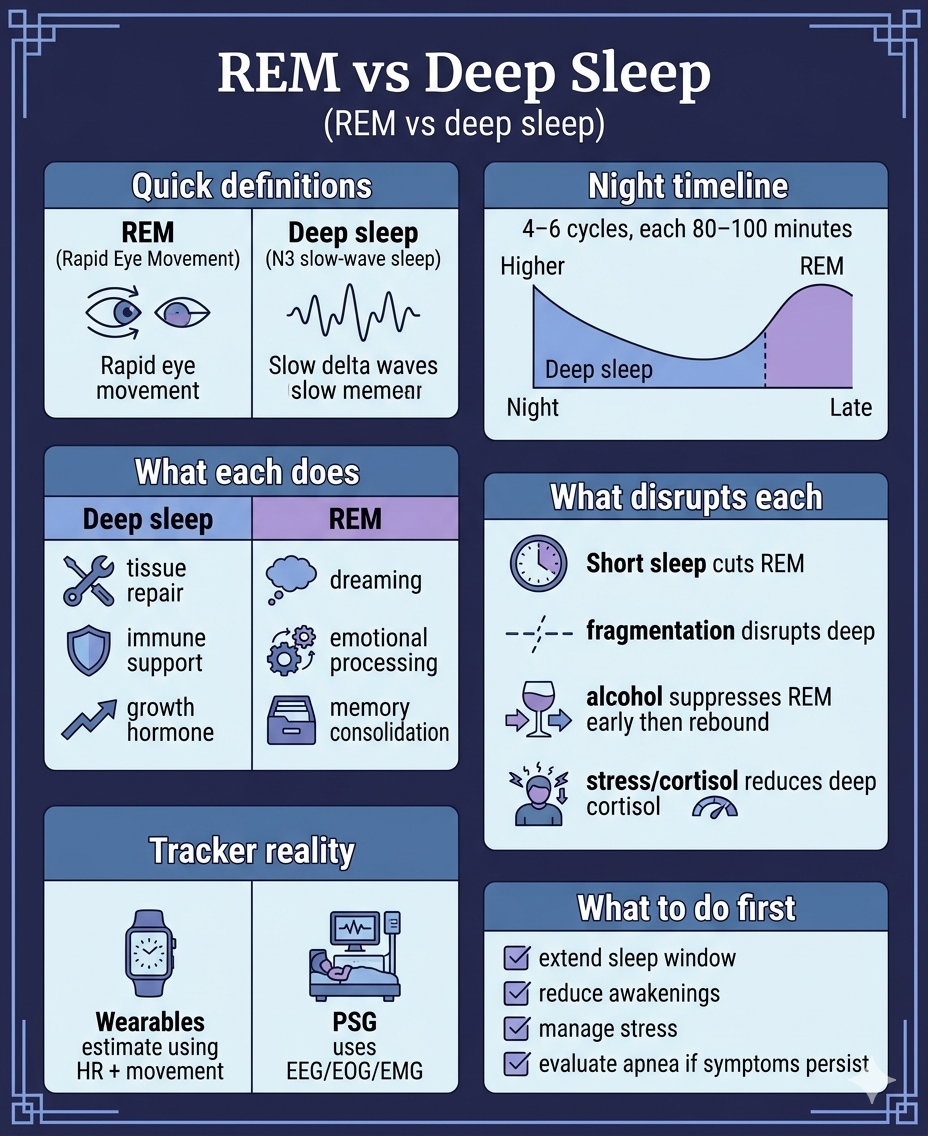
The REM vs deep sleep tool helps you compare your sleep tracker numbers against age-appropriate ranges and identify whether REM sleep, deep sleep, or both may be contributing to persistent fatigue. It is designed for people who sleep 7–9 hours but still wake up feeling exhausted.
This assessment tool is for informational purposes only and does not constitute medical advice, clinical diagnosis, or treatment recommendations. Consult a qualified healthcare professional for any personal sleep health concerns.If the tool returns OPTIMAL, your REM and deep sleep are within the expected range for your age group. LOW REM suggests protecting the final sleep cycle, LOW DEEP points toward improving sleep continuity and reducing late caffeine, while BOTH LOW means overall sleep habits should be addressed before stage-specific optimisation. For more, visit the REM vs deep sleep — common questions answered.
How This Tool Works, Step by Step
Walking through each step helps you enter accurate sleep tracker data and understand why the result changes. The tool evaluates both your stage percentages and the lifestyle factors that commonly influence REM and deep sleep quality.
Choose Your Age Group
Start by selecting the age bracket that best matches you. This matters because deep sleep naturally declines with age, while REM sleep also tends to decrease later in life. A deep-sleep percentage that is concerning in a 25-year-old may be completely normal in someone over 60.
Set Your Total Nightly Sleep Time
Use the slider to enter your average nightly sleep duration. Total sleep time is the foundation of the calculation because REM and deep sleep percentages become much less reliable when you consistently sleep fewer than six hours per night.
Enter Your REM Sleep Minutes
Check your sleep tracker and enter the REM value it reports. Healthy adults generally spend about 20–25% of total sleep in REM, and this stage is closely associated with memory consolidation, emotional regulation, and cognitive processing.
Enter Your Deep Sleep Minutes
Enter the number of minutes your tracker labels as Deep, N3, or Slow-Wave Sleep. Deep sleep is the body’s primary physical restoration stage and is linked to growth hormone release, immune support, and recovery from exercise.
Select Your Wake Events Per Night
Choose whether you typically wake up zero times, one to two times, or three or more times each night. Frequent awakenings can fragment sleep cycles and reduce the long, uninterrupted periods of deep sleep that normally occur earlier in the night.
Alcohol Within 3 Hours of Bed
Indicate whether you consumed alcohol close to bedtime. Alcohol often suppresses REM sleep during the first half of the night and can create a rebound effect later, leading to more fragmented sleep and less stable sleep architecture overall.
Caffeine Within 6 Hours of Bed
Select whether you had caffeine within six hours of going to sleep. Late caffeine intake is associated with reduced total sleep time and can suppress both deep sleep and REM sleep, making it a useful clue when interpreting unexpectedly low tracker readings.
Wake-Time Consistency
Choose whether your wake time stays the same every day or varies by one hour or more. A consistent wake time helps anchor your circadian rhythm and improves the timing of the REM-rich sleep cycles that occur later in the night.
Review Your Personalized Result
The final screen compares your REM and deep sleep percentages with age-adjusted ranges and assigns one of five outcomes: OPTIMAL, LOW REM, LOW DEEP, BOTH LOW, or DATA CAUTION. It then explains which stage is most likely deficient and suggests the next action to take.
Late alcohol use or an early alarm cuts the REM-rich final sleep cycle.
You may wake feeling mentally exhausted despite sleeping a seemingly adequate number of hours.
Protect the last 90 minutes of sleep and avoid alcohol within 3 hours of bed.
Sources & References
Turn Your Sleep Tracker Data Into Action
You now know whether your REM or deep sleep is likely below range and what to target first. Browse everything in our sleep science library.
Read the Full Guide