
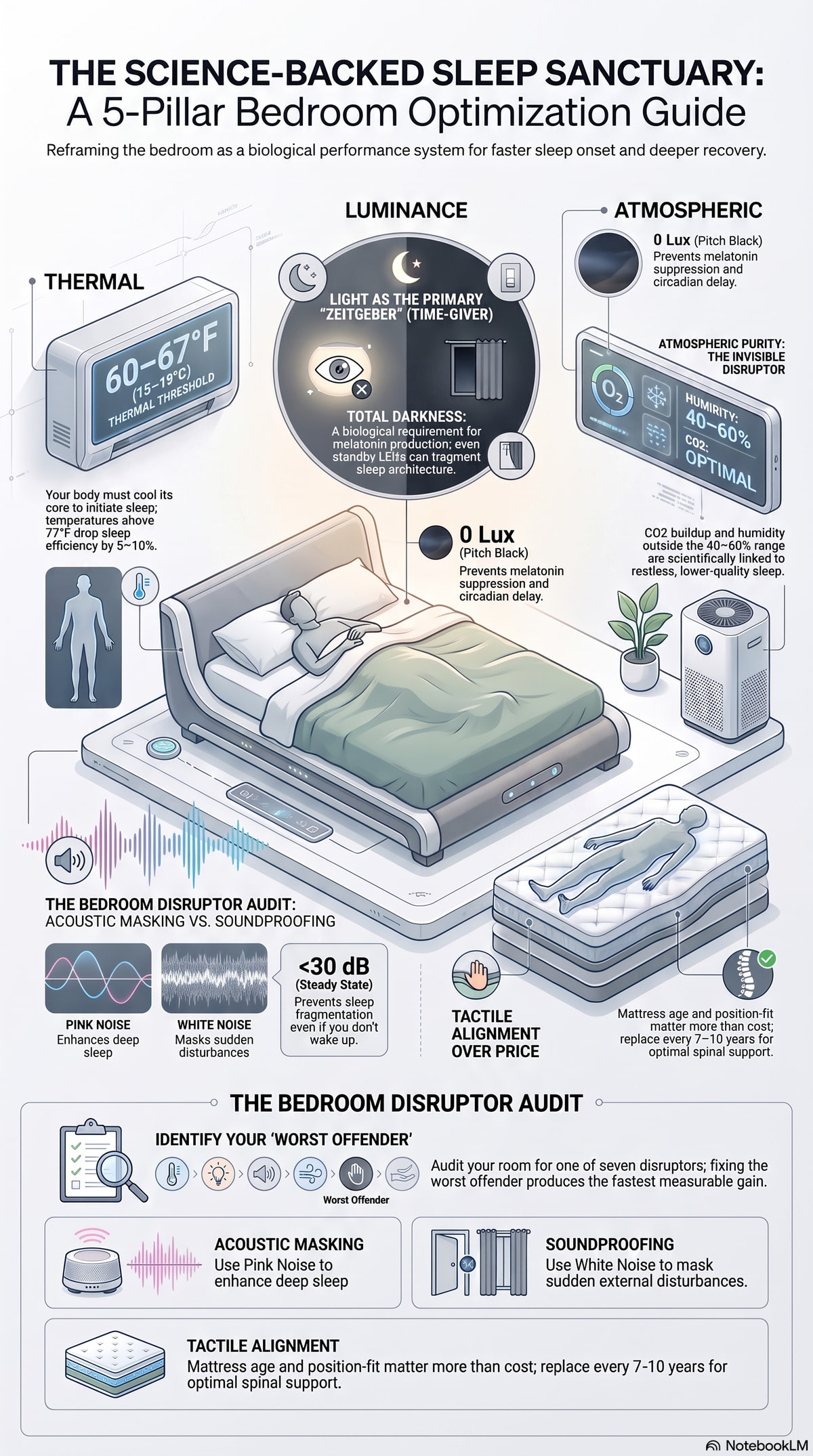
Sleep environment setup can be the missing piece when your bedroom feels fine but your sleep still feels poor. Temperature, light, noise, air, bedding and evening stimulation can all work together. Instead of changing everything at once, use the Bedroom Disruptor Priority Matrix to find the factors worth fixing first.
Quick Answer
Sleep environment setup means optimizing bedroom conditions such as temperature, darkness, noise, air quality, bedding and evening stimulation so the sleep space better supports natural sleep timing and stable rest.
Tap the cards that best match your bedroom, and the priority profile updates as you go. Your result is most useful when you treat the highest-ranked factor as your first experiment rather than trying to redesign the entire bedroom in one night. For quick answers to common bedroom questions, explore the sleep environment questions answered.
The result is not a diagnosis. It is a practical way to turn a vague feeling—“my room seems fine, but I sleep badly”—into a short list of environmental factors you can actually test.
Temperature
Temperature matters because the body normally changes its heat balance as sleep begins. A room that feels pleasantly warm while you are awake may become too warm for comfortable sleep later in the night. Choose the option that best describes your bedroom after lights out. If temperature ranks highly, the sleep environment setup guide can help you adjust the wider room rather than relying on the thermostat alone.
Darkness
Light is more than a comfort issue: it is a major signal for the circadian system. Street lighting, screens, LEDs and changing light can make a bedroom less consistent with nighttime biology. Select the level that most closely matches your actual sleeping conditions. The cards keep the choice simple so you can judge the room as it really is, not as you wish it were. Learn more about circadian rhythms.
Why This Tool Matters
A bedroom can feel comfortable while one or two environmental factors remain poorly matched to the body’s normal sleep conditions.
The result may be harder sleep onset, more disturbance during the night, overheating, unwanted alertness or a bedroom that never quite feels restful.
Identify the strongest environmental friction first, make one practical change, then reassess instead of changing every variable simultaneously.
Noise
Noise becomes especially important when it is unpredictable: traffic, doors, voices, pets or a partner moving around can repeatedly pull attention toward the environment. Choose the pattern you experience after lights out. You do not need absolute silence for every sleeper; consistency can matter too. If noise emerges as a priority, compare it with the wider evidence in the sleep stages and cycles guide.
Air Quality
Bedroom air can be easy to overlook because poor indoor conditions are not always obvious while you are awake. Stuffy air, irritation or an uncomfortable morning can make this factor worth investigating. Select the description that best matches your room and how you feel after sleeping there. If it ranks highly, start with ventilation and obvious irritants before assuming you need another sleep product.
Humidity
Humidity is a supporting environmental factor rather than a magic sleep number. Very dry or damp conditions can feel uncomfortable and may interact with your bedding, ventilation and personal comfort. If you know your room’s humidity, use that knowledge; otherwise select the option based on how the room feels. This makes the tool useful even when you do not own an indoor humidity monitor.
Mattress
Your mattress affects the physical experience of spending several hours in one position. Sagging, pressure points or a surface that no longer feels supportive can become more important than small bedroom optimizations. Choose the condition that best matches your current mattress. If this becomes one of your top priorities, use the mattress buying guide before replacing anything.
Pillow & Bedding
Pillows and bedding influence support, pressure, comfort and heat retention. A sleeper who overheats under heavy bedding may experience the room very differently from someone who sleeps cold. Select the option that reflects your current setup, including whether the materials feel breathable. If bedding ranks highly, the bedding fabric guide can help you compare materials before spending money.
Pre-Bed Screens
The final hour before bed can shape the transition from active attention to sleep. Screens may combine bright light with stimulating content, notifications and prolonged mental engagement. Choose what normally happens during your final hour rather than what happens on an ideal night. The tool uses this input as an environmental-and-behavioural signal, not as proof that screens are the sole cause of poor sleep.
Bedroom Stimulation
Your bedroom can remain visually and mentally active even after the lights go out. Multiple devices, notifications, work materials and clutter can keep attention connected to daytime tasks. Select the level that best represents what surrounds your bed. If this factor ranks highly, try removing one obvious source of stimulation tonight rather than attempting a complete room makeover.
Sleep Environment Questions Answered
Get clear answers to common questions about bedroom temperature, darkness, noise, humidity, air quality and other sleep-environment factors.
Read the answers →Sleep Environment Setup Guide
Go deeper into the science and practical decisions behind temperature, light, noise, bedding, air quality and bedroom design.
Read the guide →Sources
- Baniassadi et al., 2023 — Sleep efficiency was highest around 20–25°C and declined as temperature increased.
- Sleep Foundation, 2024 — A commonly recommended bedroom temperature range is about 65–68°F.
- Sleep Foundation, 2023 — Light is a major circadian cue, making bedroom darkness important at bedtime.
- American Academy of Sleep Medicine, 2023 — Light and noise were prominent environmental sleep disruptors reported by adults.
Last reviewed September 2026. ZenSleepZone updates this content as relevant sleep research and evidence develop.