
Jet lag recovery can feel strangely personal: you are exhausted, yet your body refuses to sleep when you need it. After a long flight, generic tips can leave you even more confused. The reason is simple: your body clock has to shift, and the direction, distance and timing of your journey all matter. This tool helps you find your starting protocol.
This tool provides general educational guidance based on circadian sleep science and does not replace medical advice. Speak with a qualified healthcare professional before using melatonin or making changes that may affect a medical condition or medication.
Quick Answer
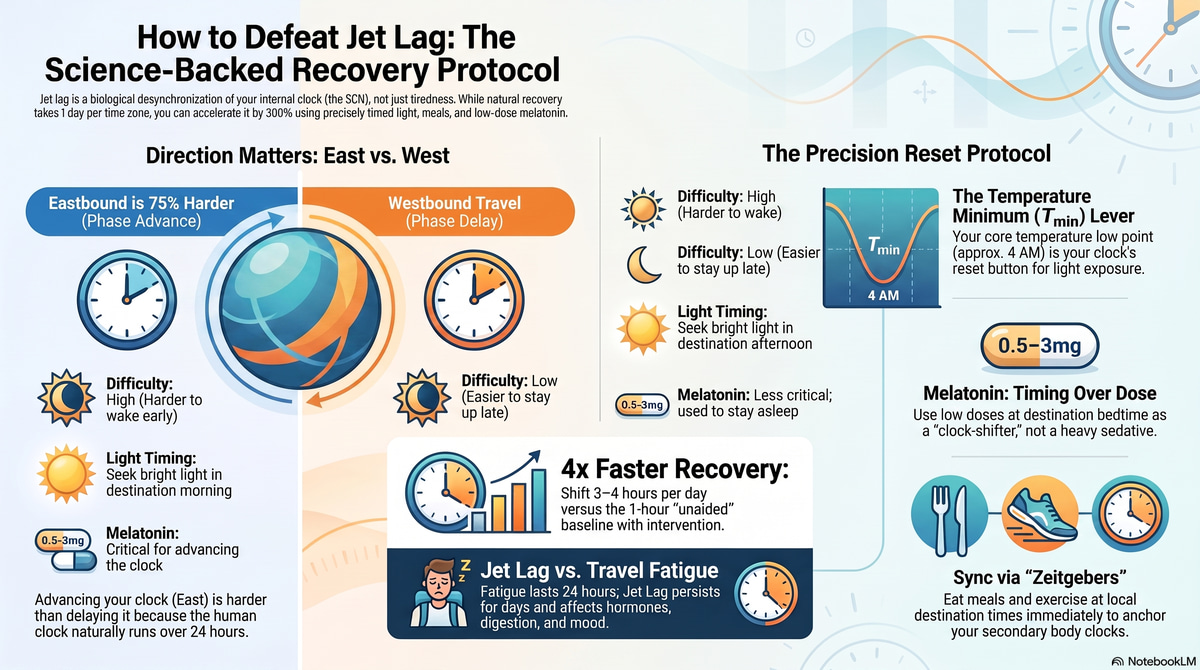
Jet lag recovery means helping the circadian clock adjust to destination time. Travel direction, time zones crossed, arrival time, sleep timing, chronotype and trip length all influence the most useful recovery strategy.
Use the Jet Lag Recovery Navigator by moving through the three stages and selecting the cards or options that match your trip. Your final timeline turns those choices into a practical recovery protocol you can use from arrival through the first days. For common jet-lag questions beyond your personal plan, explore the jet lag questions answered.
Travel Direction
Choose eastbound or westbound travel first because your circadian clock responds differently to each direction. Eastbound travel usually requires an earlier biological schedule, while westbound travel requires a later one. The distinction affects when light and sleep should be used. This is the first reason a generic jet lag routine can fail.
Time Zones Crossed
Enter the number of time zones crossed to give the protocol a sense of the size of the clock shift. A one-zone journey is very different from crossing six or more zones. More substantial shifts generally create greater circadian misalignment and may require several days of consistent timing rather than one aggressive reset attempt.
Why This Tool Matters
Your internal clock can still be aligned with home time while daylight, meals, activity and bedtime have already moved to a new time zone.
That mismatch can leave you wide awake at local bedtime, sleepy during important daytime hours, and physically out of rhythm.
This navigator identifies the direction and scale of the shift, then turns your profile into a destination-time recovery sequence.
Arrival Local Time
Arrival time tells the tool where your first destination-day window begins. Landing in the morning creates a different challenge from landing late at night. The first hours can influence sleep pressure, light exposure and whether a nap helps or interferes. Enter local arrival time rather than the time shown by your departure city.
Trip Duration
Trip length changes the goal of recovery. On a very short trip, completely adapting your body clock may not always be the practical objective. On a longer stay, full alignment becomes more valuable. Your selection helps the protocol balance adaptation against the amount of destination time you actually have available.
Age Group
Age is included because sleep timing, sleep continuity and circadian adaptation can differ across life stages. It does not diagnose your ability to recover or predict an exact number of days. Instead, it gives the navigator another context signal when shaping a general recovery strategy. The result remains educational rather than individually medical.
Body Clock Profile
Select whether you naturally function more like a morning or evening type. Chronotype describes your preferred timing of sleep and alertness and can make an imposed schedule feel easier or harder to follow. The cards keep this choice simple: pick the pattern that feels closest to your normal rhythm, not the schedule you wish you had.
Travel Purpose
Your reason for travelling changes what matters most. A business traveller may need reliable daytime alertness, while a leisure traveller may have more flexibility. Athletic travel can make timing and recovery especially important around performance. Choosing the closest purpose lets the protocol emphasise the outcome that matters during your actual trip.
Current Sleep Disruption
Tell the navigator how disrupted your sleep is now. Mild tiredness, repeated unusual awakenings and severe exhaustion are not the same starting point. This input helps distinguish a relatively manageable adjustment from a more demanding recovery situation. If sleep disruption is severe, the tool should guide your next steps without pretending to replace clinical assessment.
Pre-Trip Schedule Shift
Some travellers shift their sleep before departure, while others leave home on their normal schedule. That preparation can change the starting point of the circadian adjustment. Select the option that best reflects what actually happened. The goal is not to reward preparation; it is to make the recovery timeline more representative of your current biological timing.
What Is Most Important Right Now?
Choose the outcome that matters most today: sleeping tonight, staying alert during the destination day or protecting peak performance. This turns the tool from a generic jet lag checklist into a priority-based protocol. The choice matters because the best immediate strategy can depend on whether your next important window is sleep, work, or performance.
Preferred Destination Bedtime
Enter the bedtime you want to use at your destination. A clear local sleep anchor gives the protocol something concrete to work around instead of relying on vague advice such as “sleep earlier.” Keep the time realistic for your trip. A consistent destination schedule is easier to follow than an ideal bedtime that your itinerary makes impossible.
Likely Nap Pattern
Choose the nap pattern you are most likely to follow after arrival. Naps can sometimes help manage overwhelming sleepiness, but long or poorly timed daytime sleep can make nighttime adjustment harder. This final selection helps the navigator account for your real behaviour rather than assuming perfect compliance. If you need a nap, think strategically about timing and duration.
Jet Lag Recovery Questions Answered
Get clear answers to common questions about jet lag, melatonin, light exposure, naps, recovery time and sleeping after international travel.
Read the answers →Jet Lag Recovery: The Complete Guide
Go deeper into circadian rhythm science, eastbound versus westbound travel, light timing, melatonin, meals, naps and personalised recovery strategies.
Read the guide →Sources
- Cleveland Clinic, 2024 — Jet lag is a circadian rhythm sleep disorder caused by rapid travel across multiple time zones.
- Sleep Foundation, 2025 — Correctly timed light and melatonin can accelerate circadian adjustment.
- PubMed/NIH, 2024 — Light, melatonin and meal timing are important evidence-based jet lag interventions.
- PubMed, 2025 — Melatonin timing matters when it is used for jet lag.
Last reviewed September 2026. ZenSleepZone updates this content regularly as new research becomes available.