
Quick answer
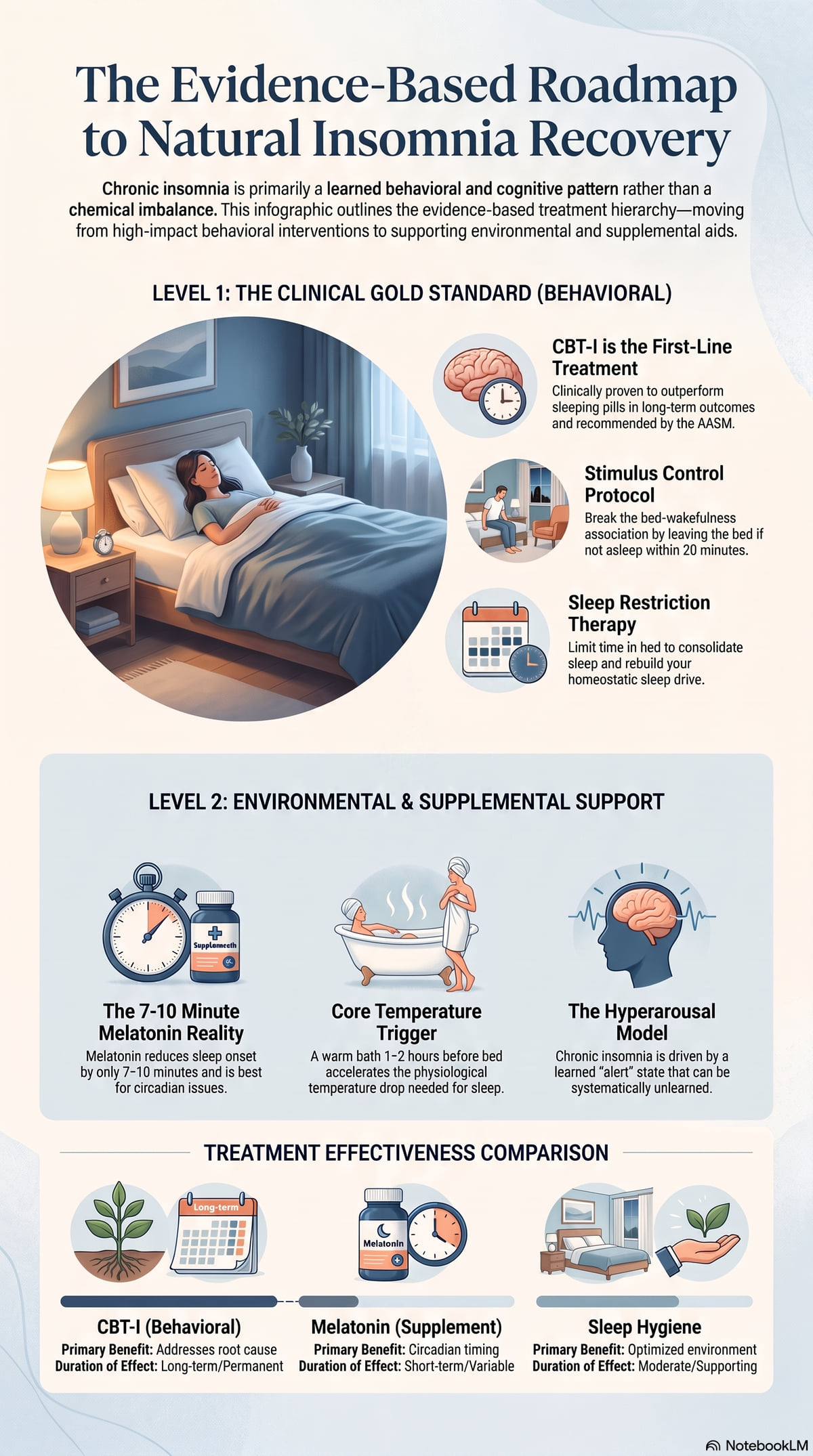
Natural Insomnia Treatment: Most people with new, short-term sleeplessness should start with sleep hygiene and circadian cues; most people with insomnia that has lasted a month or more should start with CBT-I’s behavioral core — stimulus control and sleep restriction. Answer 7 questions below to see which starting point, and which safety checks, fit your situation.
This tool is educational and matches your answers to general natural-treatment starting points from this guide — it is not a diagnosis and does not replace a doctor’s evaluation.
Tap a card to answer, then hit Next — the dots above track your progress. After question 7, your recommended starting point appears with a short "My Plan" you can copy, print, or save.
How the "Which Natural Treatment Should You Start With?" tool works, step by step
How long you've been having trouble sleeping
Duration is the single biggest fork in the decision framework: acute insomnia (under about 4 weeks) often resolves with consistency and environmental changes alone, while insomnia lasting a month or more usually needs a structured behavioral protocol. See the full decision framework and starting plan.
Which sleep pattern describes most of your nights
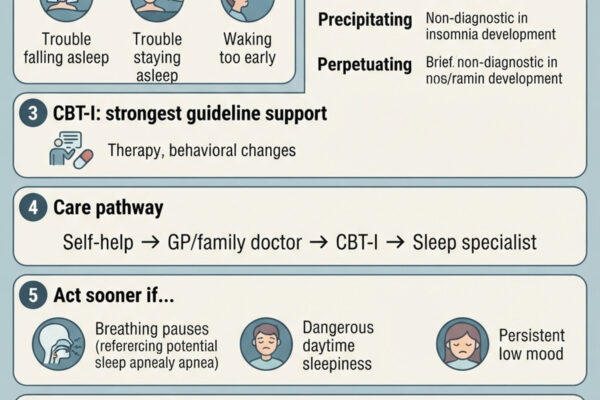
Trouble falling asleep, waking during the night, and waking too early are scored the same way in the tool, but they point to slightly different emphasis within CBT-I — stimulus control targets onset trouble most directly, while sleep restriction targets fragmented, maintenance-type nights.
Whether you've already tried stimulus control consistently
This question checks whether you're starting from zero or have already put in real effort. Answering "consistent for 8+ weeks, not working" is itself a red flag in the guide's decision framework — it signals a referral is the appropriate next step, not more of the same.
Whether anxiety or racing thoughts are the main driver
Sleep anxiety and hyperarousal are a distinct mechanism from simple sleep-drive problems. If racing thoughts are what's actually keeping you up, the tool adds relaxation and cognitive techniques on top of the same behavioral core, rather than treating this as a different problem entirely.
Whether any red-flag symptoms apply to you
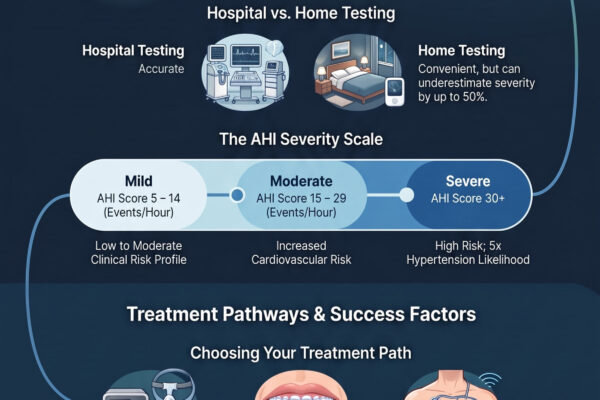
Loud snoring and breathing pauses, restless-leg sensations, and significant mood changes are each associated with a different underlying condition that natural insomnia treatment alone isn't designed to fix. See the full red-flag list.
Current prescription medication or regular supplement use
This isn't about whether natural treatment can work for you — it's about supplement safety. Several sleep supplements interact with anticoagulants, CNS depressants, immunosuppressants, and other psychoactive medications, so this answer determines whether the tool tells you to check with a pharmacist before adding anything.
Your main goal right now
Your goal doesn't change which safety checks apply, but it shapes the emphasis of your plan and the chip summary shown with your result — falling asleep faster leans on stimulus control, staying asleep leans more on sleep restriction and a consistent wake time.
Most people try random natural remedies in whatever order they hear about them, without matching the remedy to what's actually driving their specific sleep pattern.
Overwhelmed by conflicting advice — melatonin, valerian, sleep hygiene, CBT-I — with no way to know which one to try first for your situation.
A short set of questions that sorts your specific pattern into the one evidence-based starting point that fits it, instead of a generic list of "things that might help."
What your result means
Medical Evaluation Needed, Not Self-Treatment
Your answers included at least one symptom — breathing pauses, restless legs, or a mood-related red flag — or 8+ weeks of consistent CBT-I without improvement. Both are explicit signals in the decision framework to bring in a clinician rather than adjusting the self-treatment plan further. See when to stop self-treating and see a doctor.
Supplement Caution — Check Interactions First
You're on regular prescription medication, so the tool holds back on supplement suggestions until you've checked interactions with a pharmacist or physician — the behavioral steps (diary, stimulus control) are safe to start immediately regardless.
Start with CBT-I's Behavioral Core
Your sleep trouble has lasted long enough, and without a dominant anxiety driver or medication concern, that the first-line evidence-based approach — stimulus control and sleep restriction — is the right starting point. See what the evidence actually says about CBT-I.
Anxiety-Focused Path: CBT-I Plus Relaxation
Because racing thoughts are your main driver, your plan keeps the same behavioral core but adds a nightly relaxation technique and a way to offload rumination before bed, matching the relaxation and mind-body chapter of the full guide.
Sleep Hygiene + Circadian Alignment First
Your trouble is recent and you haven't tried structured behavioral changes yet, so starting with lighter environmental and circadian adjustments is a reasonable first step before moving to full sleep restriction — consistent with the guide's acute-vs-chronic distinction.
Questions about this tool
Does this tool diagnose what's causing my insomnia?
No. It's a decision-matching tool, not a diagnostic instrument — it matches your answers to a starting point from this guide's decision framework. Only a clinician can diagnose an underlying sleep, mood, or breathing condition.
What if my situation seems to fit more than one result?
The tool checks answers in a fixed safety order: red-flag symptoms and stalled treatment come first, then medication interactions, then anxiety, then duration. That's deliberate — safety checks always outrank treatment preference, so you'll only ever see one result.
Can my result change if I retake this later?
Yes, and it should. Once you've started a sleep diary and tried stimulus control for a couple of weeks, your "tried" and "duration" answers will change, which can move you into a different starting point — usually the core CBT-I path.
Why does a natural-treatment tool ask about my medications?
Purely for supplement safety. "Natural" doesn't mean "non-interacting" — several common sleep supplements can interact with blood thinners, sedatives, immunosuppressants, and other psychoactive drugs, so this question exists to flag that before any supplement is suggested.
I got the "sleep hygiene first" result but this has been going on for months — did I answer wrong?
Double-check your answer to question 1. The hygiene-first result only appears when trouble has lasted under about 4 weeks and you haven't tried stimulus control yet — if it's been longer than that, question 1 should reflect the real duration, which will route you to the CBT-I core instead.
Turn your result into tonight's plan
Whichever starting point you landed on, the next move is the same: pick that one path and stick with it for at least two weeks before judging it. The full reasoning behind every step is in the Natural Insomnia Treatment guide, and there's more on this theme in Sleep Disorders.
Build my full plan →A few quick questions · about a minute · nothing is sent anywhere
Sources
- American Academy of Sleep Medicine, 2026 — behavioral-psychological therapies including CBT-I are a primary treatment for chronic insomnia disorder in adults
- Mayo Clinic, 2023 — CBT-I is generally the first treatment recommended for long-term sleep problems, unlike sleeping pills, which do not address root causes
- CDC National Center for Health Statistics, 2025 — in 2024, 15.4% of US adults had trouble falling asleep most days or every day
Last reviewed: September 2026 · Next review: September 2027