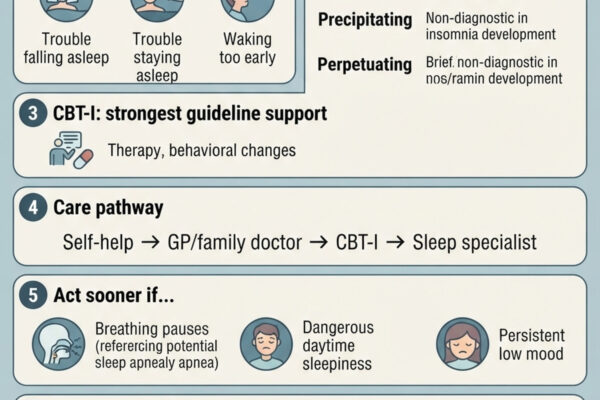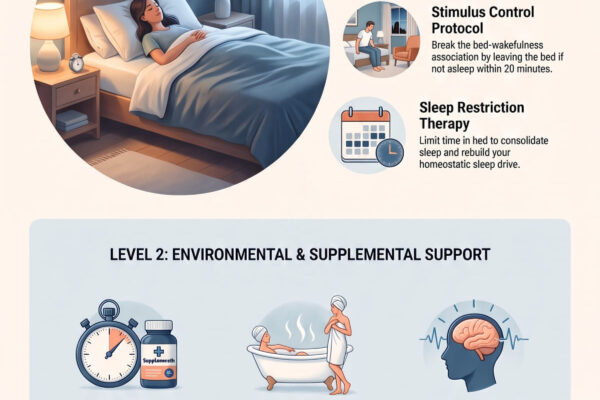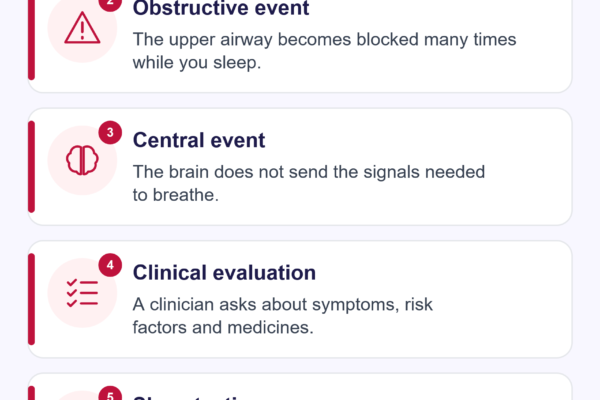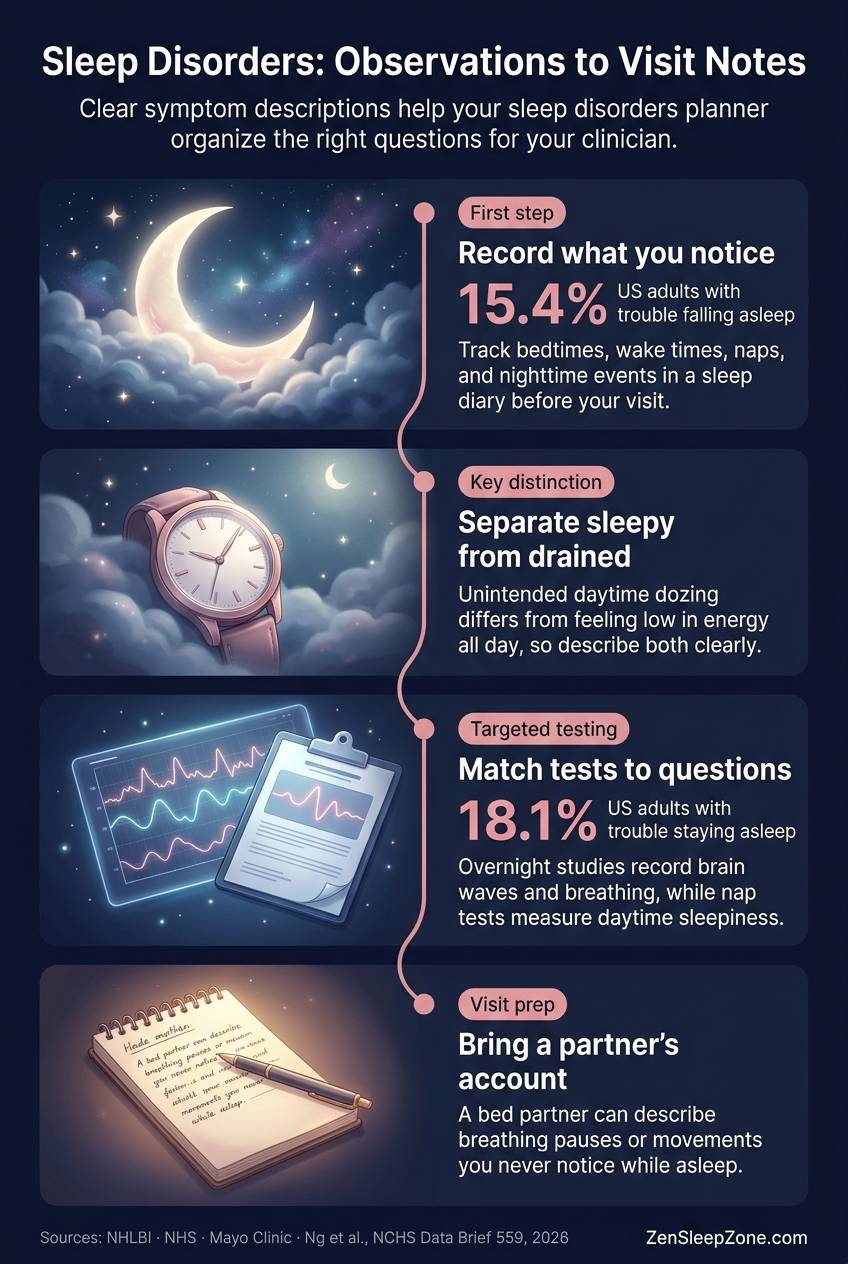

Our sleep disorders planner turns your nighttime and daytime symptoms into clear notes you can bring to a clinical visit. Sleep disorders disturb normal sleep patterns and affect daytime functioning, yet vague descriptions often leave patients feeling dismissed. Use the infographic to see how observations guide testing, then organize your personal notes below.
This page provides an educational picture and planning tool, not a diagnosis or medical advice. Do not drive when you feel sleepy, and arrange another way to travel.
How to use the Sleep Disorders Planner
You will leave with organized, printable visit notes and targeted questions for your clinician in about one minute.
- Pick your main nighttime observations — choose what happens when you try to sleep or during the night so your clinician sees clear events rather than general frustration.
- Separate daytime sleepiness from feeling drained — tell the tool whether you unintentionally doze off or feel low in energy, since clinicians evaluate those experiences differently.
- Add extra context you have noticed — mark whether you take medicines or supplements, use naps, or have a bed partner who noticed breathing pauses or movements.
- Copy or print your visit notes — keep the structured summary for your appointment, along with the right ZenSleepZone guide to read next.
Bring any recent bedtimes, wake times, naps, and current medicines if you know them. Talk to a clinician promptly if your breathing stops and starts during sleep, you often fall asleep unintentionally during the day, or sleepwalking raises injury concerns, and discuss any prescribed medicines before stopping them.
Free visit-prep planner
Sleep Disorders Planner: Build Your Visit Notes
Organize your sleep observations and clinical questions in about one minute.
Safety first: Do not drive when you feel sleepy, and arrange another way to travel. Do not stop prescribed medicines without discussing changes with your clinician first.
The live tool needs JavaScript. The examples below show each possible result.
Select at least one nighttime or daytime observation above to assemble your visit notes.
Showing an example. Change any answer to make it yours.
Example: if you select breathing pauses or gasping at night
Your Visit Notes: Breathing and Daytime Alertness
What your map highlights: The diagram lights up Breathing, Daytime, Duration so you can bring structured observations rather than a diagnosis.
- Nighttime observations: Breathing pauses, gasping, or loud snoring (3 months or longer).
- Daytime impact: Unintentionally dozing off or struggling to stay awake.
- Context to mention: Bed partner account available; review medicines and supplements.
- Questions to ask: Ask whether a home breathing test or an overnight laboratory sleep study fits your health history, and what happens if a home test is negative.
Open next: Read the Sleep Apnea Assessment Guide →
Example: if you select trouble falling or staying asleep
Your Visit Notes: Sleep Continuity and Contributors
What your map highlights: The diagram lights up Falling/Staying, Daytime, Duration to organize your sleep pattern and potential contributors.
- Nighttime observations: Trouble falling or staying asleep (3 months or longer).
- Daytime impact: Feeling drained or low in energy without dozing.
- Context to mention: Review medicines, supplements, and available time for sleep.
- Questions to ask: Ask whether structured therapy for chronic insomnia (CBT-I) is appropriate, and whether other conditions or medicines could be contributing.
Open next: Explore CBT-I for Chronic Insomnia →
Example: if you select unintended daytime dozing without breathing pauses
Your Visit Notes: Daytime Wakefulness and Sleep History
What your map highlights: The diagram lights up Daytime Dozing, Duration, Context to separate true sleepiness from general low energy.
- Nighttime observations: No breathing pauses ticked (3 months or longer).
- Daytime impact: Unintentionally dozing off or struggling to stay awake.
- Context to mention: Note whether naps refresh you and how easy it is to wake up.
- Questions to ask: Ask how your clinician evaluates repeated daytime sleepiness, and whether an overnight study followed by a daytime nap test is relevant.
Open next: Compare Sleepiness vs. Fatigue Questions →
Example: if you select leg urges, unusual nighttime events, or body-clock timing
Your Visit Notes: Specific Nighttime Patterns and Timing
What your map highlights: The diagram lights up Nighttime Pattern, Daytime, Context to distinguish awake urges, sleep behaviors, and body-clock shifts.
- Nighttime observations: Urge to move legs when resting, unusual nighttime events, or body-clock timing (3 months or longer).
- Daytime impact: Feeling drained or unrefreshing mornings.
- Context to mention: Describe whether leg urges happen while awake, any injury risks, and current medicines.
- Questions to ask: Ask whether iron blood tests (for leg urges), bedroom safety steps, or body-clock timing approaches apply to your observations.
Open next: Check Care Routes in Your Country →
Example: if you select daytime fatigue or mixed observations without a specific nighttime category
Your Visit Notes: General Sleep Opportunity and Daytime Energy
What your map highlights: The diagram lights up Daytime Energy, Context so you can discuss sleep opportunity, habits, and broader health contributors.
- Nighttime observations: No specific nighttime event ticked (Duration not specified).
- Daytime impact: Feeling drained or unrefreshing mornings.
- Context to mention: Track bedtimes, wake times, and medicines for a week before your visit.
- Questions to ask: Ask whether limited time in bed, other medical conditions, or medicines could explain your daytime symptoms, and whether a one-week sleep diary would help.
Open next: Use the Sleep Disorders Compass →
What your result means and what to do next
Your result card organizes your own observations under clinical headings so you can hand a clear summary to your doctor without assigning yourself a label. Each card highlights the nighttime pattern, daytime impact, and context you selected, paired with focused questions about which sleep tests answer which clinical questions.
For example, imagine selecting breathing pauses at night, unintended daytime dozing, and a bed partner’s account. Your notes group those details together and prompt you to ask whether a home apnea test or an overnight laboratory sleep study (polysomnography) fits your health history. Even if you select few boxes or feel unsure, this check cannot rule out any condition, so bring persistent symptoms to a clinician.
Sleep disorders at a glance: from observations to care
Clear symptom descriptions help your clinician match the right assessment and sleep test to what is actually happening.
- Record what you notice — Track bedtimes, wake times, naps, and nighttime events in a sleep diary before your visit. This gives your doctor concrete patterns instead of vague guesses.
- Separate sleepy from drained — Unintended daytime dozing differs from feeling low in energy all day (NHS, n.d.). Naming both helps clinicians tell excessive daytime sleepiness apart from general fatigue.
- Match tests to questions — Overnight studies record brain waves, breathing, and movements, while nap tests measure daytime sleepiness (Mayo Clinic Staff, 2024). No single test detects every condition.
- Bring a partner’s account — A bed partner can describe breathing pauses or movements you never notice while asleep. Pairing their notes with your medicine list speeds up assessment.
For a wider look at how symptoms, sleep opportunity, and treatments connect, explore the sleep disorders mind map or check care routes in your country.
The rules behind this tool
| If you… | The tool shows… | Because… |
|---|---|---|
| Select breathing pauses, gasping, or loud snoring | Breathing and Daytime Alertness notes + assessment alert | Breathing stops and starts during sleep warrant medical evaluation (NHS, 2026), and full health history determines whether home or lab testing fits (Kapur et al., 2017). |
| Select trouble falling or staying asleep (without breathing pauses) | Sleep Continuity and Contributors notes | Assessment starts with sleep history, contributors, and medicines (NHLBI, n.d.), while structured therapy (CBT-I) is recommended for chronic insomnia (Edinger et al., 2021). |
| Select unintended daytime dozing (without breathing pauses or insomnia) | Daytime Wakefulness and Sleep History notes + driving safety alert | Repeated unintended daytime sleep differs from general fatigue and calls for clinical evaluation and driving caution. |
| Select leg urges, unusual nighttime events, or body-clock timing | Specific Nighttime Patterns and Timing notes | Awake leg urges, dream enactment or sleepwalking, and body-clock shifts require distinct clinical questions and bedroom safety steps. |
| Select only general fatigue, duration, or background context | General Sleep Opportunity and Daytime Energy notes | Feeling drained can reflect limited time for sleep, medicines, or other health conditions rather than one primary sleep disorder. |
This planner organizes your observations for discussion and cannot diagnose any condition or prescribe treatment schedules. Seek prompt medical care if you experience breathing pauses during sleep, frequent unintended daytime sleep, persistent insomnia affecting daily life, or nighttime behaviors that risk injury.
Compare sleep symptoms with population numbers
See how common trouble falling asleep and staying asleep are in our sleep disorders statistics. More in Sleep Disorders.
See the numbers →Sources
- NHLBI — Sleep Deprivation and Deficiency Diagnosis (n.d.). Supports: sleep diary tracking, sleep history assessment, and reviewing medicines and substances.
- NHS — Excessive daytime sleepiness (hypersomnia) (n.d.). Supports: distinguishing unintended daytime sleepiness from feeling tired all the time and seeking assessment.
- Mayo Clinic Staff — Sleep disorders: Diagnosis and treatment (2024). Supports: overnight sleep studies, daytime nap tests, and partner observations.
- NHS — Sleep apnoea (2026). Supports: arranging medical assessment when breathing stops and starts during sleep.
- Kapur et al. — Journal of Clinical Sleep Medicine (2017). Supports: polysomnography follow-up after negative or inconclusive home apnea testing and matching test type to patient health history.
- Edinger et al. — Journal of Clinical Sleep Medicine (2021). Supports: multicomponent CBT-I as recommended treatment for adult chronic insomnia.
- NHS — Insomnia (2024). Supports: avoiding driving when sleepy and seeking assessment for persistent insomnia.
- NHS — Sleepwalking (2025). Supports: clearing floor trip hazards, seeking medical advice for injury risk, and not stopping prescribed medicines without GP discussion.
- Ng et al. — NCHS Data Brief 559 (2026). Supports: US adult prevalence of trouble falling asleep (15.4%) and trouble staying asleep (18.1%).
Sources checked · Next review
How we made this page: infographic and tool rules built from the sources above, drafted with AI assistance and edited by Aamir Bashir, Founder & Editor. Read our editorial policy.