
Stress Insomnia Cycle: 3 Breakpoints to Stop It
We have all been there. You have a massive presentation tomorrow, or perhaps bills are piling up, and your brain refuses to shut down. You lie in bed staring at the ceiling, feeling your heart race. This is the classic stress insomnia cycle. But what happens when the stressor is no longer that presentation or those bills, but the act of sleeping itself?
When short-term stress ruins a few nights of rest, it is normal. However, for millions of people, a dangerous shift occurs: they begin to dread the night. This transition from “stressed about life” to “stressed about sleep” is the foundation of chronic insomnia.
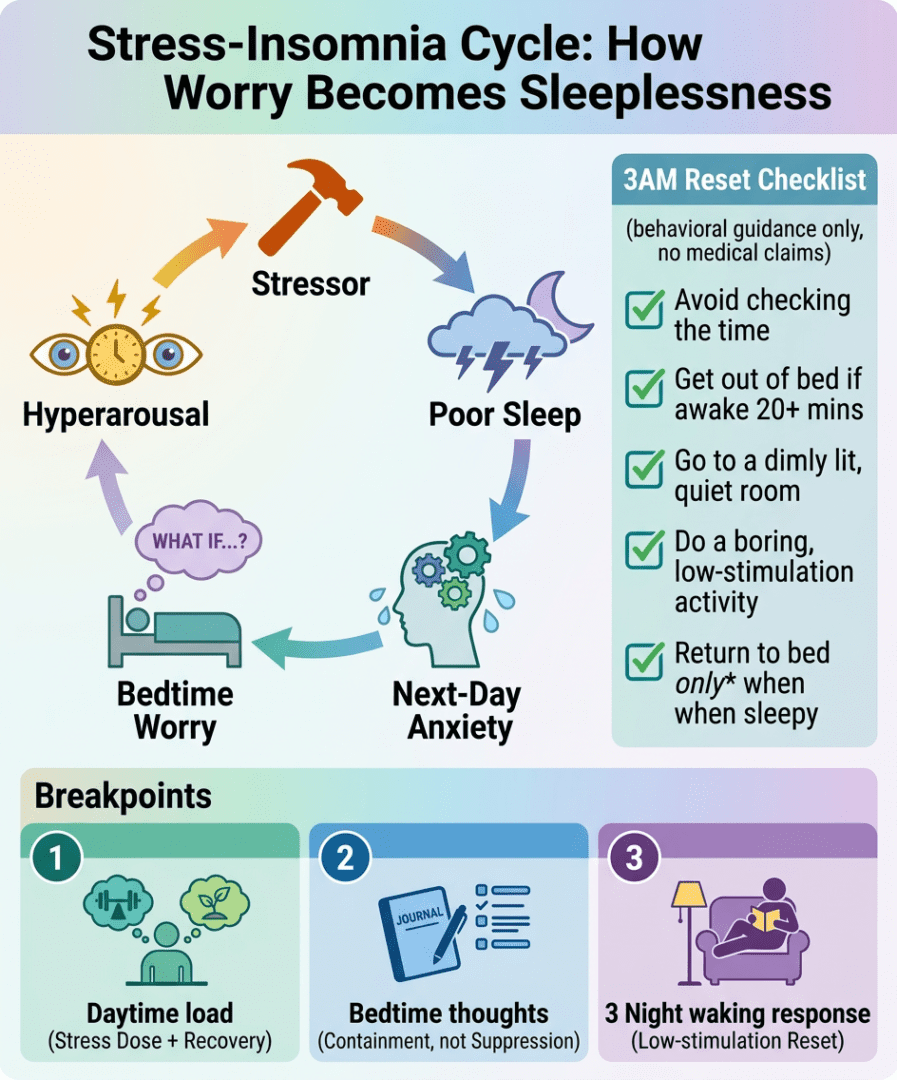
To help you visualize and defeat this invisible enemy, we have created a comprehensive visual guide. Explore our detailed Stress Insomnia Cycle: 3 Breakpoints to Stop It infographic to see exactly how this trap is laid.
Anatomy of the Stress and Insomnia Loop
To understand the vicious cycle of insomnia, we have to look at how our brain handles pressure. Stress activates your sympathetic nervous system (the fight-or-flight response) and sparks the HPA axis (hypothalamic-pituitary-adrenal axis). This biological alarm system floods your body with stress hormones, primarily cortisol and adrenaline.
In ancestral times, this kept us safe from predators. In the modern world, it just leaves you with racing thoughts at night.
When this happens repeatedly, a psychological shift occurs. Psychologists call this learned insomnia or conditioned insomnia. Your brain begins to associate your bed not with rest, but with struggle, frustration, and survival.
If you want to dive deeper into the neurological connection between tension and restless nights, read our complete guide on stress and sleep.
Why Am I Exhausted But Can’t Fall Asleep?
Have you ever asked yourself, “Why am I exhausted but can’t fall asleep?” This exact paradox is driven by hyperarousal. Your physical body is craving rest, your sleep drive is high, but your nervous system is convinced there is a threat nearby.
The Role of Bedtime Anxiety
As the sun goes down, a specific type of dread begins to brew. Bedtime anxiety is the fear that tonight will be another repeat of yesterday’s tossing and turning. You begin to worry about sleep itself. This psychological pressure spikes your cortisol levels right when they should be at their lowest according to your circadian rhythm.
To understand how these chemical shifts directly destroy your biological clock, check out our breakdown of cortisol and sleep disruption.
The Dreaded 3AM Awakening
The loop doesn’t just stop you from falling asleep; it actively wakes you up. Many people experience a sudden 3AM awakening. At this hour, your biological defenses are at their lowest. When you wake up and immediately panic about how many hours are left before your alarm goes off, you trigger the fight-or-flight response all over again.
If you are constantly battling pre-sleep dread, explore our resource on managing anxiety before bed.
How to Break the Stress Insomnia Cycle: 3 Breakpoints
The good news is that because this is a loop, breaking it at just *one* point can cause the whole system to collapse. Our infographic highlights three scientifically backed breakpoints. Let’s look at how to break the stress insomnia cycle practically:
Breakpoint 1: Cognitive Restructuring (Stopping the Worry)
Why does worrying about sleep make insomnia worse? Because it reinforces the idea that wakefulness is a disaster. To break this, you must change your relationship with sleeplessness.
- Stop clock-watching: Turn your clock around. Knowing it is 3:14 AM does nothing but spike your adrenaline.
- Practice constructive worry: Journal your stressful thoughts two hours before bed, not while lying in it.
Breakpoint 2: Stimulus Control (Retraining the Brain)
If you are lying in bed awake, you are training your brain that the bed is a place to be awake. You need to break this conditioned response.
- The 20-minute rule: If you are not asleep after about 20 minutes, get out of bed. Go to another room and do something calm and boring in dim light (like reading a physical book). Only return when you are sleepy.
- Reserve the bed: The bed should only be used for sleep and intimacy. No working, eating, or scrolling social media.
Breakpoint 3: Deactivating Hyperarousal (Calming the Body)
To transition from a state of being wired but tired to peaceful rest, you must actively cue your parasympathetic nervous system.
- Mindfulness-based therapy: Simple breathing exercises, like the 4-7-8 method, physically slow your heart rate and signal safety to your brain.
- Sleep restriction: Paradoxically, limiting the time you are allowed to spend in bed can increase your sleep drive and consolidate your rest. This is a core component of CBT-I (Cognitive Behavioral Therapy for Insomnia).
For a comprehensive roadmap on managing chronic sleep issues, refer to our complete insomnia guide.
Quick Answers to Your Sleep Anxiety Questions
How to sleep with a racing mind?
How to stop dreading bedtime?
What to do when you wake up at 3am with anxiety?
Take Control of Your Nights Today
You do not have to live at the mercy of a racing mind. Understanding the mechanics of your sleep anxiety is the very first step toward conquering it. We have compiled the ultimate directory of solutions, community discussions, and expert advice to help you break free.
Still have highly specific questions? Visit our dedicated Stress Insomnia Cycle Q&A Hub to get expert answers tailored to your situation. Explore more resources in our mental health center to continue your journey to peaceful nights.


