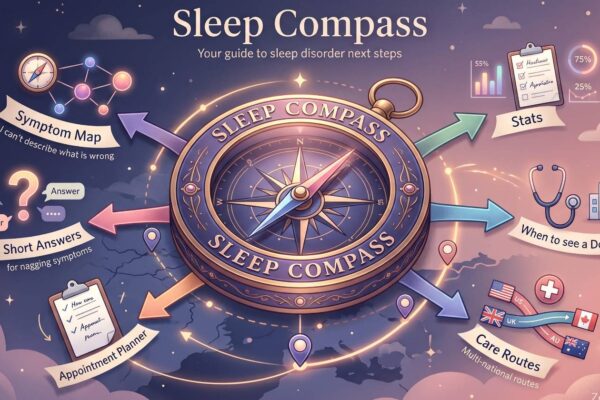

The short answer
Sleep environment setup for beginners starts with the room problem you notice most. A comfortable sleeping space should be dark, quiet and comfortable, without ignoring your temperature preferences or safety needs. You don’t need to buy everything at once. Pick what you need below and go straight to the page that fits.

Sleep environment setup for beginners: where should you start?
Choose what is bothering you right now. You’ll go straight to the page that best fits your situation.
Every starting point
If you don’t know what to fix first
Find the bedroom change that matters to you
Starting with the disruption you notice keeps your sleep environment setup manageable. You can choose a relevant change without committing to a complete bedroom makeover.
Sleep environment checklist Match your biggest bedroom disruption with a feasible change and understand your starting options.If you want to make a room-change plan
Organize changes around your real bedroom
A change record helps you keep track of the disruption, your chosen adjustment and what you notice later. It also makes room for rental limits and different household preferences.
Room Change Planner Organize your room changes and compare your own observations in a printable plan. Review your room changes Find the change record and see how to review your observations.If you have one specific bedroom question
Get an answer without reading everything
You might be unsure about white noise, pink noise, room equipment or a rental restriction. Find an answer that addresses your particular question.
Sleep environment answers Find practical answers about sound, equipment, bedroom comfort and common setup questions. Common bedroom questions Read answers about alarms, curtain gaps, bedding, humidity and mattress replacement.If you want to understand the numbers
Understand what bedroom measurements mean
Temperature, humidity and lighting figures can describe different things. Sound research also needs careful context. The statistics page separates recommendations from study findings.
Sleep environment statistics Explore bedroom measurements, recommended ranges and the limits of sound research. Understand bedroom noise See what sound masking can do and what the research does not establish.If you want to see how everything connects
See the bigger picture of bedroom comfort
Your room has several connected conditions, from light and household noise to bedding, temperature and air. A mind map helps you explore these connections without treating every issue separately.
Sleep environment mind map Explore the connections between bedroom conditions, household limits and sleep-related decisions. Shared bedroom solutions Understand how room changes fit shared, rented and multipurpose bedrooms.Quick questions
Do I need to buy anything before I start?
No. You can begin by looking at the conditions already affecting your sleep. Light, noise, temperature and bed comfort are separate concerns. Your first choice can use resources you already have. Optional equipment comes later, if it fits your needs and budget.
Do I need to read the whole bedroom guide?
No. You can start with the one issue that affects you most. Choose the relevant room condition or use the answers page for a specific question. If several conditions overlap, the mind map can help you see their connections before choosing your next page.
How do I turn my bedroom into a sleep sanctuary?
Start with the room condition you can identify and change. A comfortable bedroom does not require expensive furniture or every available sleep product. Your choices should fit your space, household needs, temperature preferences and ability to make changes.
Sources
-
Official adult shift-work guidance supports a dark sleeping room and identifies practical ways to reduce unwanted light.
-
Public healthy-sleep guidance recommends keeping the bedroom quiet, cool and dark, while recognizing individual needs.
-
A systematic review examined auditory stimulation and sleep. Its findings do not establish a universal benefit from background sound.
-
Public guidance identifies persistent insomnia and difficulty coping with daily life as reasons to arrange a GP appointment.
This Compass helps you find the right information. It can’t diagnose you or replace care from a clinician who knows your health. Sources checked . Researched from the sources above, drafted with AI assistance and edited by Aamir Bashir, Founder & Editor (editorial policy).