
The Ultimate Guide to Anti-Snoring Devices: Matching Solutions to Your Sleep Profile
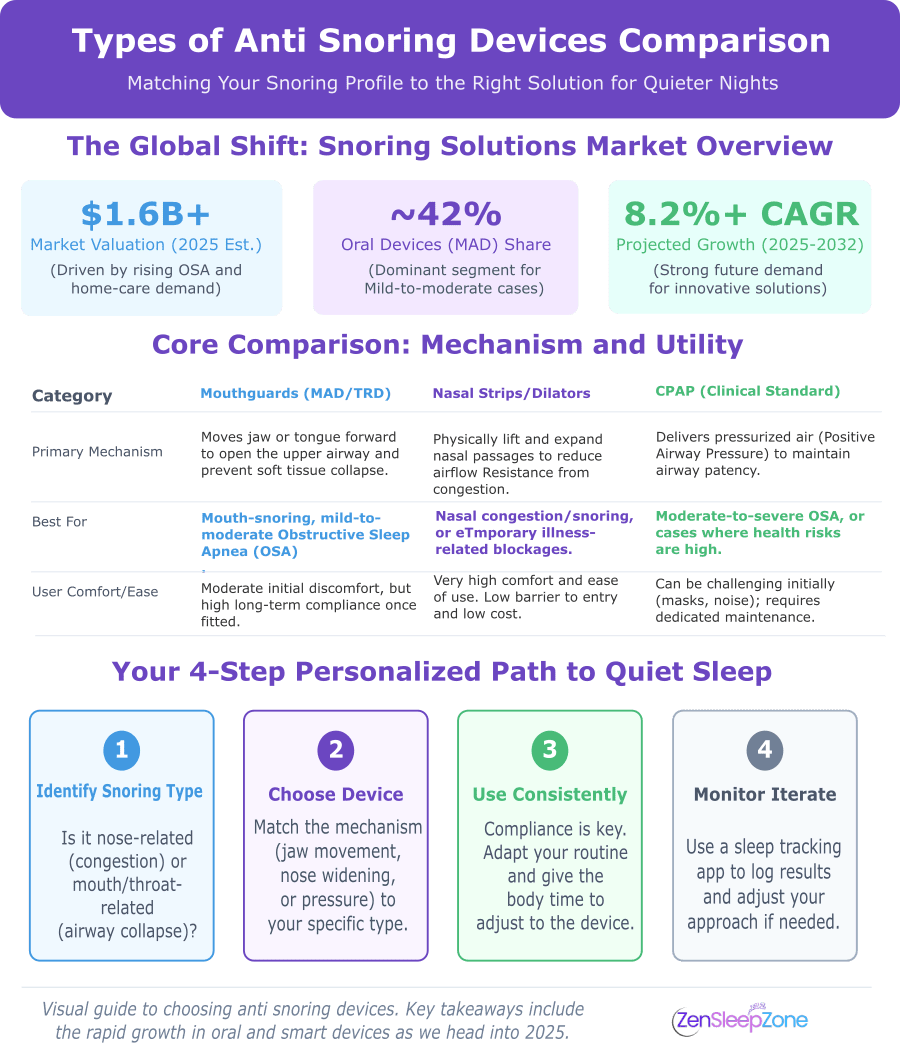
Snoring is often dismissed as a bedtime annoyance, yet it serves as a critical indicator of respiratory efficiency. As we look at the global shift in health technology, the market for anti-snoring devices is projected to grow at a CAGR of 8.2% through 2032. This surge is driven by a growing awareness of sleep health and a demand for non-invasive home-care solutions. Discover more about our comprehensive sleep solutions guide to understand how modern technology integrates with daily rest.
Understanding the Snoring Mechanism: Why We Sound the Alarm
Snoring occurs when air flows past relaxed tissues in the throat, causing them to vibrate during inhalation. The intensity of this vibration is dictated by the degree of airway narrowing. Whether it is a result of anatomy, weight, or temporary illness, the goal of any intervention is to reduce airflow resistance. Learn how respiratory interruptions affect sleep stages and cycles to see why even “mild” snoring can prevent you from reaching deep, restorative rest.
Research Insight: Studies indicate that approximately 42% of the snoring solutions market is now dominated by oral devices (MADs), which are specifically effective for mild-to-moderate cases.
Comparing Core Anti-Snoring Devices
Selecting a device requires matching the mechanism (jaw movement, nasal widening, or air pressure) to your specific physiological needs. View our visual comparison of anti-snoring devices for better sleep for a side-by-side look at user comfort and efficacy.
| Category | Primary Mechanism | Best For |
|---|---|---|
| Mouthguards (MAD) | Moves jaw forward to open the upper airway. | Mouth-snoring & mild-to-moderate OSA. |
| Nasal Strips | Physically lift and expand nasal passages. | Congestion and nose-related snoring. |
| CPAP | Delivers continuous pressurized air (Positive Airway Pressure). | Moderate-to-severe OSA. |
While nasal strips offer high comfort and a low barrier to entry, they cannot address the tissue collapse associated with managing sleep apnea symptoms, which requires more robust clinical intervention.
Your 4-Step Personalized Path to Quiet Sleep
Transitioning to a quieter night is a process of identification and iteration. Most users fail because they choose a device based on price rather than their snoring profile.
- Identify Snoring Type: Determine if your snoring is nose-related (congestion) or throat-related (airway collapse).
- Choose Device: Match the mechanism—jaw movement, widening, or pressure—to your type. Take our free sleep disorders assessment to narrow down your specific profile.
- Use Consistently: Compliance is key. Give your body time to adjust to the presence of a mouthpiece or nasal dilator.
- Monitor & Iterate: Use a sleep tracking app to log results and adjust your approach if symptoms persist.
The Interplay of Mental Health and Airway Patency
There is a profound bidirectional relationship between respiratory health and mental well-being. Sleep interruptions caused by airway resistance can trigger the body’s “fight or flight” response, leading to nocturnal cortisol spikes. Understand the science behind waking up at 3am with anxiety and how breathing-related wakefulness plays a hidden role in this cycle.
Research Insight: Improving airway patency through appropriate devices can reduce nighttime heart rate variability and lower systemic inflammation.
Furthermore, if you find that physical restlessness accompanies your snoring, it may be beneficial to evaluate your symptoms with our RLS severity assessment tool to ensure a holistic approach to your sleep health.
Environment and Lifestyle Adjustments
While anti-snoring devices are powerful, their efficacy is amplified when the sleep environment is optimized. Factors like air humidity and pillow loft can drastically change how your airway behaves. Explore our guide on sleep environment setup to create a bedroom that supports silent breathing.
For those who prefer a more natural or spiritual approach to relaxation before bed, incorporating mindfulness for sleep can help lower the muscle tension that often exacerbates throat-based snoring.
Conclusion: Reclaiming Your Nights
As we move into an era of personalized sleep medicine, the barrier to finding a solution has never been lower. By identifying your snoring type and selecting the correct mechanism—whether it be a simple nasal dilator or a sophisticated CPAP machine—you protect both your long-term health and your relationships. Assess your REM vs deep sleep quality to see how much your snoring has been holding you back.
Ready to End the Nightly Concert?
Don’t let snoring steal another night of vitality. Get our expert recommendations on the most effective anti-snoring devices and start waking up refreshed.
View the Anti-Snoring Device Guide →

