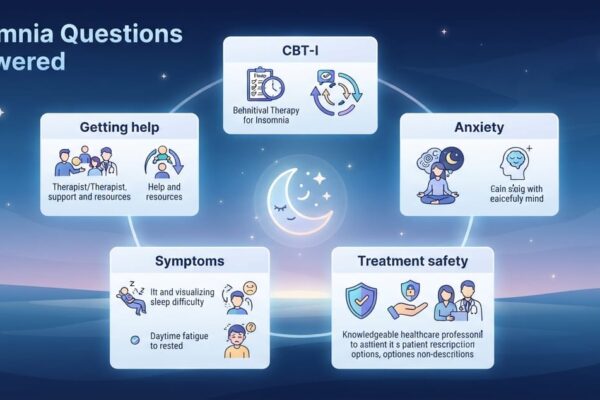

Anxiety before bed questions matter when you’re tired, but your thoughts or body won’t settle. This Answer Hub covers racing thoughts, physical symptoms, bedtime worries, relaxation, treatment, medication and finding support. You’ll find short answers for tonight and longer-term concerns, with practical next steps for adults. The full explanation lives in our Anxiety Before Bed guide.
Not sure where to start? The Anxiety Before Bed Sleep Compass points you toward a manageable next step.
These answers explain anxiety before bed for general education. They can’t diagnose you or replace care from a clinician who knows your health.

Understanding anxiety before bed and its symptoms
Recognize the thoughts, feelings and physical changes that can appear when you’re preparing for sleep.
What does anxiety before bed feel like?
Anxiety before bed can affect your thoughts, feelings and physical comfort. You might feel nervous, restless or afraid of another difficult night. Your thoughts may jump between tomorrow’s tasks and worries about sleep. Your muscles may feel tight, and your heart may beat faster. You may also find it hard to relax.
Sleep anxiety describes fear or stress about falling asleep or staying asleep. These experiences can overlap with wider anxiety symptoms, but they don’t identify one specific cause.
What physical symptoms can anxiety cause at night?
Anxiety can cause physical sensations that become more noticeable when you’re trying to sleep. These may include a racing heartbeat, sweating, shaking, dizziness, stomach discomfort and breathlessness. Muscle tension and headaches can also occur. The symptoms vary between people and don’t automatically establish that anxiety is responsible.
The NHS lists both physical and mental signs of anxiety. These include chest discomfort and trouble relaxing. New, severe or unusual symptoms need proper medical checks. Do not assume anxiety explains every symptom.
Why do I get anxious when I go to bed?
Bedtime can make anxiety more noticeable because fewer distractions compete for your attention. Your thoughts may return to unfinished tasks, difficult experiences or tomorrow’s responsibilities. Fear about not sleeping can also become another source of worry. Over time, the bed itself may become associated with anxious feelings.
Sleep anxiety and sleep difficulties can reinforce each other. Understanding this connection can help you choose a useful next step. The anxiety and sleep mind map connects these different patterns.
Can anxiety affect concentration the next day?
Yes, anxiety can make it harder to concentrate during everyday activities. Persistent worries may keep returning when you’re working, studying or talking with someone. Poor sleep can add another challenge, especially when you’re already tired. The effects differ depending on the person’s symptoms and circumstances.
Healthdirect lists trouble concentrating as one possible effect of anxiety. If this affects your daily tasks, speak with a healthcare professional. Explain how often it happens and how it affects your life.
Can I have sleep anxiety without GAD?
Yes, you can experience sleep anxiety without having generalized anxiety disorder. Sleep anxiety describes fear surrounding sleep, while GAD involves persistent anxiety that interferes with everyday life. Someone may worry mainly about falling asleep rather than many different areas of life. These experiences are not interchangeable diagnoses.
A clinician considers your wider symptoms, their duration and their effect on daily life. You don’t need to decide which condition applies before discussing your concerns.
When does everyday worry become a reason to seek help?
Worry deserves attention when it becomes difficult to control or disrupts everyday life. You might feel distressed, avoid activities or spend much of your day thinking about possible problems. Occasional worry is common, but persistent distress can deserve professional support. The effect on your life matters more than one difficult evening.
Healthdirect recommends speaking with a doctor or mental health professional when worries affect life on most days. You can discuss what happens and how it changes your usual activities.
How do I know when physical symptoms need urgent help?
Chest pain accompanied by sweating, sickness, light-headedness or shortness of breath needs emergency medical assessment. Don’t assume these symptoms are caused by anxiety, even when you’ve experienced panic before. A clinician must assess potentially serious physical symptoms. When in doubt about an emergency, contact your local emergency service.
The NHS specifically identifies these chest-pain combinations as reasons to call 999 in the UK. People elsewhere should use their country’s emergency number.
Can anxiety cause nightmares?
Nightmares can occur alongside some anxiety-related and trauma-related difficulties. Healthdirect lists nightmares and sleep difficulties among possible features of trauma-related conditions. However, this does not establish that ordinary bedtime worry directly causes nightmares. Recurring disturbing dreams can have several possible explanations.
If nightmares keep affecting your sleep or daytime wellbeing, speak with a healthcare professional. Trauma-related symptoms may need a different check from ordinary worries about tomorrow.
What to do when anxiety starts before sleep
Find a comfortable response without turning bedtime into another task you must complete perfectly.
What can I do about anxiety before bed tonight?
Choose one small, comfortable action instead of trying to eliminate every anxious thought. Write down one practical concern and its next action, or try gentle breathing without forcing it. You could also listen to something soothing or allow yourself to rest quietly. Go to bed when you feel sleepy.
Different approaches suit different situations. A written plan helps organize a practical worry, while a comfortable settling activity may help you pause. Neither guarantees sleep tonight.
Try this tonight: Pick the option that requires the least effort. Your next step should feel manageable, not like another performance test.
Where should I start with anxiety before bed?
Start with the problem that feels most important right now. If your body feels tense, choose a comfortable settling practice. If a practical worry keeps returning, write down an action. If you’re frightened about sleep itself, explore the pattern and consider additional support.
You don’t need to solve every part of the problem tonight. The Sleep Compass helps match your current concern with a suitable next step.
Why do breathing exercises help briefly but my thoughts return?
Breathing exercises can offer a pause without resolving the worry behind your thoughts. You may feel more settled temporarily, then remember the same unfinished problem. This doesn’t mean you failed or performed the exercise incorrectly. Different concerns can require different responses.
Try to separate a real problem from a fear about what might happen. If you can act on the problem, choose one useful step. If anxiety keeps returning and affects daily life, consider professional support.
Does meditation help with anxiety before bed?
Meditation may help you notice anxious thoughts without immediately reacting to them. You can listen to guided audio or gently return your attention to something comfortable. You don’t need to force your mind to become completely quiet. Some people prefer another settling activity.
The NHS lists meditation as one possible way to support sleep. The VA/DOD guideline says there is not enough evidence for or against mindfulness meditation as a treatment for long-term insomnia. These are two different questions. One concerns ways to cope, while the other concerns treatment.
How do I stop worrying about tomorrow in bed?
Write tomorrow’s concern down and decide whether there’s an action you can take. A practical problem might need a phone call, reminder or prepared item. A hypothetical fear may not have a useful action tonight. Recognizing that difference can reduce repeated attempts to solve everything.
The NHS worry-tree approach separates solvable problems from worries outside your control. If action must wait, choose a suitable time to revisit it. Your Worry-to-Action Planner organizes those choices.
Can I make a plan for the worry that keeps returning?
Yes, a written plan can organize a worry that keeps coming back. Record the concern, decide whether an action is possible and choose what you want to do. If you cannot act now, record when you might revisit it. Leave genuinely uncontrollable concerns without inventing solutions.
The plan is a record of your own decisions, not a diagnosis or treatment schedule. Use the editable worry planner to organize your concern and chosen next step.
What should I do if self-help is not helping?
Consider professional support when your own efforts aren’t making the problem manageable. You don’t have to keep repeating a relaxation exercise that feels uncomfortable or ineffective. Persistent worry, poor sleep and problems with everyday activities deserve a closer look.
The NHS advises seeking medical help when anxiety remains difficult to cope with or self-help efforts aren’t helping. A clinician can discuss your symptoms and suitable treatment options.
How can I prepare to talk to a doctor about anxiety?
Write down what happens, when it began and how it affects your daily life. Include the thoughts, physical sensations and sleep difficulties you’ve noticed. Mention what you’ve tried and whether anything seems to make the problem worse. You don’t need a perfect explanation before making an appointment.
These details can help a clinician understand your concerns. The NIMH also describes symptom history, frequency and everyday impact as useful parts of an anxiety assessment.
What if trying to calm down becomes another thing to worry about?
You don’t need to control every thought or feel completely calm before resting. Turning relaxation into a strict test can add another demand to an already difficult evening. You can stop an exercise, change activities or simply allow some uncertainty to remain.
Worries cannot all be eliminated, and everything cannot be controlled. Choose a comfortable response rather than judging yourself by how quickly your thoughts disappear.
Sleep habits and things that can make bedtime anxiety harder
Understand the role of wakefulness, daily habits, alcohol and supplements without assuming one cause fits everyone.
What should I do if I am anxious and cannot sleep?
If you’re awake and increasingly frustrated, you don’t have to remain in bed forcing sleep. Insomnia treatment guidance includes leaving bed when unable to sleep and returning when sleepy. Choose a quiet, comfortable activity instead of repeatedly checking the time.
This method is part of stimulus control, which is used in structured insomnia treatment. Leaving bed may need changes if you have trouble moving around. Nighttime falls and other health concerns also matter. Discuss safe changes with your clinician.
Which daytime and evening habits are worth changing?
Regular daily habits can support sleep, even though they don’t treat every cause of anxiety. Consider a consistent getting-up time, regular daytime activity and a comfortable wind-down. Reading, soothing music or a warm bath may suit your evening. Avoid turning these examples into a strict checklist.
Caffeine, alcohol, nicotine and some medicines can make sleep harder. Their effects differ from person to person. Look at possible causes instead of assuming every difficult night has the same reason.
Will alcohol help me sleep when I am anxious?
Alcohol may make you feel sleepy initially, but it can disrupt sleep later. Sleep may become lighter, and you may wake more often during the night. This means initial drowsiness should not be mistaken for better-quality sleep.
The National Heart, Lung, and Blood Institute describes these effects in its insomnia guidance. Alcohol is not a dependable way to manage bedtime anxiety or recurring sleep problems.
Will melatonin or magnesium treat my sleep anxiety?
These sources do not establish melatonin or magnesium as treatments for bedtime anxiety. Melatonin has not been established as an effective general insomnia treatment in the cited NHLBI guidance. The VA/DOD guideline finds insufficient evidence to recommend for or against magnesium for chronic insomnia.
These findings do not cover every possible medical use or nutrient shortage. Talk with a qualified healthcare professional before changing supplements or medicines. Also discuss any health concerns you already have.
Can worry make me avoid everyday activities?
Yes, persistent anxiety can lead some people to avoid activities that trigger worry. You might put off responsibilities, social plans or situations that feel difficult. Avoidance can also interfere with ordinary routines and relationships. The pattern depends on the person and the problem.
Healthdirect identifies avoidance as one possible feature of excessive worry. If anxiety is narrowing your daily life, discuss the pattern with a mental health professional.
Can someone close to me help with bedtime anxiety?
Yes, someone you trust can offer support when anxiety makes bedtime difficult. You might ask them to listen, help organize a practical concern or simply spend some time with you. Explain what feels useful instead of expecting them to solve every worry.
The NIMH encourages people with anxiety symptoms to speak openly with someone they trust. Support from another person can help alongside professional care. This matters when anxiety starts affecting everyday life.
Therapy, medication and what happens when anxiety continues
Understand different treatment approaches, online options, individual needs and how to discuss progress with a provider.
Do I need CBT for anxiety or CBT-I?
CBT and CBT-I address related but different problems. CBT for anxiety works with unhelpful thoughts and behaviors linked to anxiety. CBT-I is structured therapy for insomnia and addresses sleep-related worries and behaviors. Some people experience both problems and may need an assessment.
The VA/DOD guideline recommends CBT-I for chronic insomnia disorder. Anxiety treatment can involve psychotherapy, medication or both, depending on individual needs. Your clinician can discuss which concerns require attention.
What this means for you: Explain both your daytime worries and sleep difficulties during an assessment. The CBT-I treatment guide covers the structured insomnia approach.
How long does CBT-I take?
CBT-I often involves a planned course of treatment rather than one isolated conversation. The NHLBI describes a usual treatment plan lasting six to eight weeks. Actual arrangements can vary with the program, provider and person’s clinical needs.
This is a description of a usual program, not a deadline for feeling better. Ask your provider about the treatment plan, follow-up and what happens if your progress differs from expectations.
Can I get CBT-I online?
Yes, CBT-I can be delivered through online, telephone and in-person arrangements. The format depends on the program and the provider. Some services offer guided treatment, while others use different levels of professional support.
Ask who runs the program and whether they have CBT-I training. A general meditation app is not the same as structured insomnia treatment. A relaxation recording should not be treated as CBT-I either.
The anxiety before bed statistics page explains digital CBT-I study findings and their limits.
Do I have to take medication?
No, medication is not automatically required for every person experiencing bedtime anxiety. Treatment choices depend on the problem being assessed, your needs, preferences and medical circumstances. Anxiety treatment may involve psychotherapy, medication or both.
Long-term insomnia has separate guidelines for combining CBT-I and medication. These guidelines do not give you a personal prescription. Talk with your clinician about possible benefits, risks and other choices.
Who needs adapted CBT-I?
Some health conditions and safety concerns mean CBT-I needs individual clinical planning. The VA/DOD guideline identifies medical instability, active substance-use disorder, excessive sleepiness and nighttime fall risks. It also identifies certain neurological, psychiatric, pregnancy and postpartum circumstances.
These situations may call for changes, delays or extra checks before treatment. They do not mean everyone in these groups must avoid insomnia treatment. A trained clinician should review your situation before treatment starts.
What if treatment is not helping?
Tell your provider when treatment isn’t addressing the problems that matter to you. Explain what remains difficult, which parts feel manageable and whether new concerns have appeared. You can ask whether the treatment goals or approach need another review.
Discuss concerns before stopping a prescribed treatment. A provider can help consider other explanations, adjustments or further support when the current plan isn’t meeting your needs.
How should I handle setbacks?
A difficult night does not automatically mean your progress has disappeared. Sleep and anxiety can change from one night to another. Notice what has changed without judging the whole treatment by one experience. Recurring problems are worth discussing with your provider.
The NIMH recognizes that managing generalized anxiety disorder can involve setbacks. Review the overall pattern and discuss concerns before changing a treatment plan.
What happens during a CBT assessment?
A CBT assessment helps a therapist understand your symptoms and decide what treatment may suit you. They may ask about difficult situations, thoughts, feelings and behaviors. You can also explain what you hope to change and which problems affect everyday life.
The NHS describes an assessment before CBT that helps determine an appropriate treatment approach. The therapist may recommend CBT or another option, depending on your circumstances.
Finding anxiety treatment, therapists and affordable support
Learn how to start a conversation about care, check treatment options and understand possible access routes.
Can I start talking therapy without an anxiety diagnosis?
Yes, some talking therapy services accept people without an existing mental health diagnosis. In England, eligible adults can self-refer to NHS Talking Therapies for many anxiety and depression problems. Other countries and services have their own eligibility and referral rules.
You can discuss your concerns with a primary care professional or local mental health service. You don’t need to diagnose yourself before asking what support is available.
Can anxiety therapy be done online or by phone?
Yes, anxiety therapy may be available in person, by telephone or through video appointments. Some services also offer guided online courses or supported self-help. The available format depends on your needs, location and the service providing treatment.
The NHS describes several ways to receive talking therapy. Ask if you can have appointments from home. Also ask what professional support comes with the program.
How can I check a private therapist’s qualifications?
Check the therapist’s professional registration and relevant training before arranging private treatment. Ask which professional body they belong to and whether their registration can be verified. For CBT, ask about their experience with your particular concern.
In the UK, the NHS advises checking private therapists’ professional memberships. Their groups should be approved by the Professional Standards Authority. Other countries have their own systems for checking professional registration.
What should I ask before choosing a therapist?
Ask about the therapist’s experience, treatment approach, appointment format and fees. Find out whether they have worked with sleep-related anxiety or recurring insomnia. Ask how progress is reviewed and what happens if the approach isn’t helping.
Also check insurance coverage, cancellation policies and available payment arrangements. You can use these answers to decide whether the service meets your needs.
Can therapy be offered in a group or remotely?
Yes, some mental health services offer individual appointments, group treatment and remote sessions. Options can include video calls, telephone appointments and supported online courses. Not every format suits every condition or person.
The NHS describes these different arrangements for talking therapies. Ask the service which formats are available and whether they match your support needs.
How can I find treatment and understand the cost?
Start with a local primary care professional or mental health service and ask about available referrals. Treatment access can depend on your country, eligibility, insurance and provider. Public services, employer support, charities and private appointments may have different costs.
Ask whether the quoted price includes assessment and follow-up. Our country-by-country treatment access section explains the available routes and important cost questions.
Is therapy covered by insurance or public healthcare?
Coverage depends on your country, insurance plan, eligibility and the service you choose. Some public systems support particular mental health services, while private treatment may involve personal fees. A Medicare rebate or insurance benefit does not always cover the entire appointment cost.
Check with the provider and funding service before booking. Ask if you need a referral or an approved practitioner. Also check treatment limits and any money you must pay yourself.
How do I know which mental health service to contact?
A primary care professional is a useful starting point when you’re unsure which mental health service you need. Explain your symptoms, sleep difficulties and how anxiety affects daily life. They can discuss assessment and possible referral options based on your circumstances.
Some services accept direct referrals, while others require a healthcare professional to arrange access. If you need help deciding where to begin, the Sleep Compass can help you identify the next step.
When to get help and how bedtime anxiety connects with other sleep problems
Recognize situations that need professional attention and distinguish bedtime worry from related sleep concerns.
When should I get help for anxiety before bed?
Seek professional help when anxiety affects everyday life or makes sleep increasingly difficult. Consider an appointment when worries are hard to manage, your usual activities suffer or changing sleep habits hasn’t helped. You don’t need to wait until every possible self-help option fails.
If you face immediate danger or cannot keep yourself safe, get emergency help. In the US, call or text 988 for suicidal or emotional distress. Call 911 for emergencies that threaten life. In other places, contact your local emergency service.
Is waking with a panic attack the same as bedtime worry?
No, waking with panic and worrying before sleep describe different experiences. Bedtime worry happens while you’re preparing for sleep or trying to fall asleep. A nocturnal panic attack can wake someone from sleep with sudden fear and physical sensations.
Repeated panic episodes deserve appropriate assessment. The panic attacks at night guide covers the experience of waking with panic and its related concerns.
Why do I wake at 3am feeling anxious?
Waking at a particular time with anxiety does not establish one specific cause. Sleep disruption and anxiety can influence each other, but the timing alone cannot identify what’s happening. Other sleep, physical and emotional factors may also deserve consideration.
Notice whether worry begins before sleep or after waking during the night. The waking at 3am with anxiety guide addresses this different sleep problem.
What if snoring or interrupted breathing is part of the problem?
Snoring or interrupted breathing can interfere with sleep and deserves attention when persistent. These symptoms may occur with another sleep disorder, including sleep apnea. However, noticing snoring or breathing changes alone does not establish a diagnosis.
A healthcare professional can decide whether further assessment or a sleep-clinic referral is appropriate. The sleep apnea guide covers symptoms and assessment of interrupted breathing.
What if anxiety is affecting more than my sleep?
Anxiety that affects several parts of daily life deserves attention beyond bedtime routines. You might notice difficulty concentrating, persistent worry, avoidance or trouble managing ordinary responsibilities. These experiences can occur alongside sleep difficulties and may need a wider assessment.
Tell a healthcare professional how the problem affects your work, relationships and everyday activities. This helps them understand the wider pattern rather than focusing only on sleep.
Turn your bedtime worry into one manageable next step
Organize a practical concern, choose an action and keep a record you can revisit. More in our Mental Health & Sleep collection.
Try the Worry-to-Action Planner →Sources
- NHS — Anxiety, fear and panic (2025). Supports physical and mental symptoms, coping options and help-seeking.
- Healthdirect — Anxiety (n.d.). Supports anxiety symptoms, concentration difficulties, sleep effects and support needs.
- Healthdirect — Excessive worry (n.d.). Supports persistent worry, avoidance, daily-life effects and assessment.
- NHS — Talking therapies (2025). Supports self-referral, treatment formats and access without a previous diagnosis.
- NHS — Cognitive behavioural therapy (CBT) (2025). Supports CBT assessment, delivery formats and treatment choices.
- NHS — Tackling your worries (n.d.). Supports writing worries down and separating solvable problems from hypothetical worries.
- NHS — Insomnia (2024). Supports sleep habits, contributing factors and further assessment.
- National Heart, Lung, and Blood Institute — Insomnia Treatment (2022). Supports CBT-I, stimulus control and alcohol-related sleep effects.
- VA/DOD — Clinical Practice Guideline for Chronic Insomnia Disorder and Obstructive Sleep Apnea (2025). Supports CBT-I recommendations, adaptations and mindfulness and magnesium evidence statements.
- National Institute of Mental Health — Help for Mental Illnesses (2026). Supports US treatment access and crisis guidance.
- NHS — Chest pain (2023). Supports emergency guidance for specified chest-pain symptoms.
- NHS — Where to get urgent help for mental health (n.d.). Supports urgent mental health and immediate safety guidance.
Sources checked · Next review
How we made this page: questions gathered from real searches and health-service FAQ headings, answers researched from the sources above, drafted with AI assistance and edited by Aamir Bashir, Founder & Editor. Read our editorial policy.