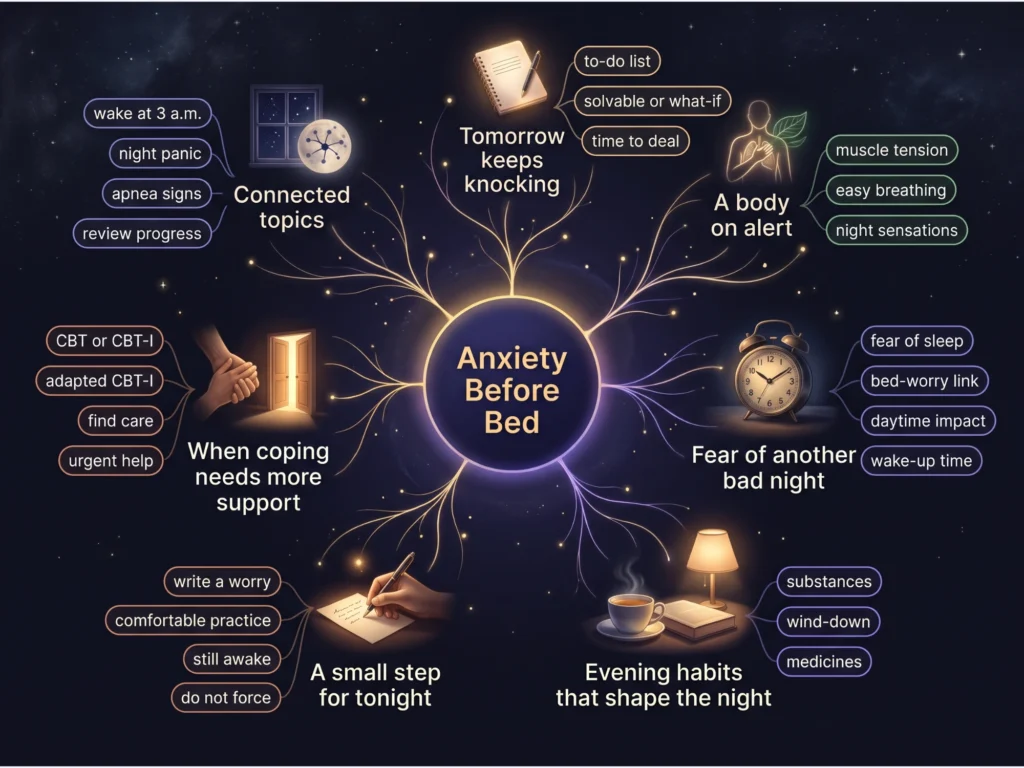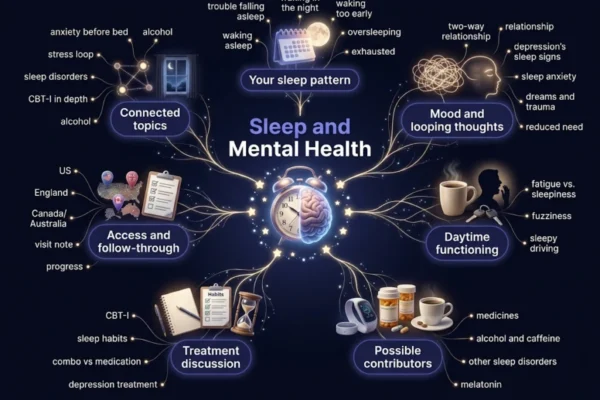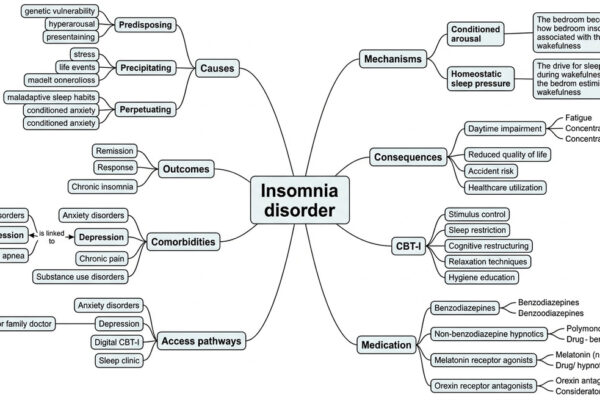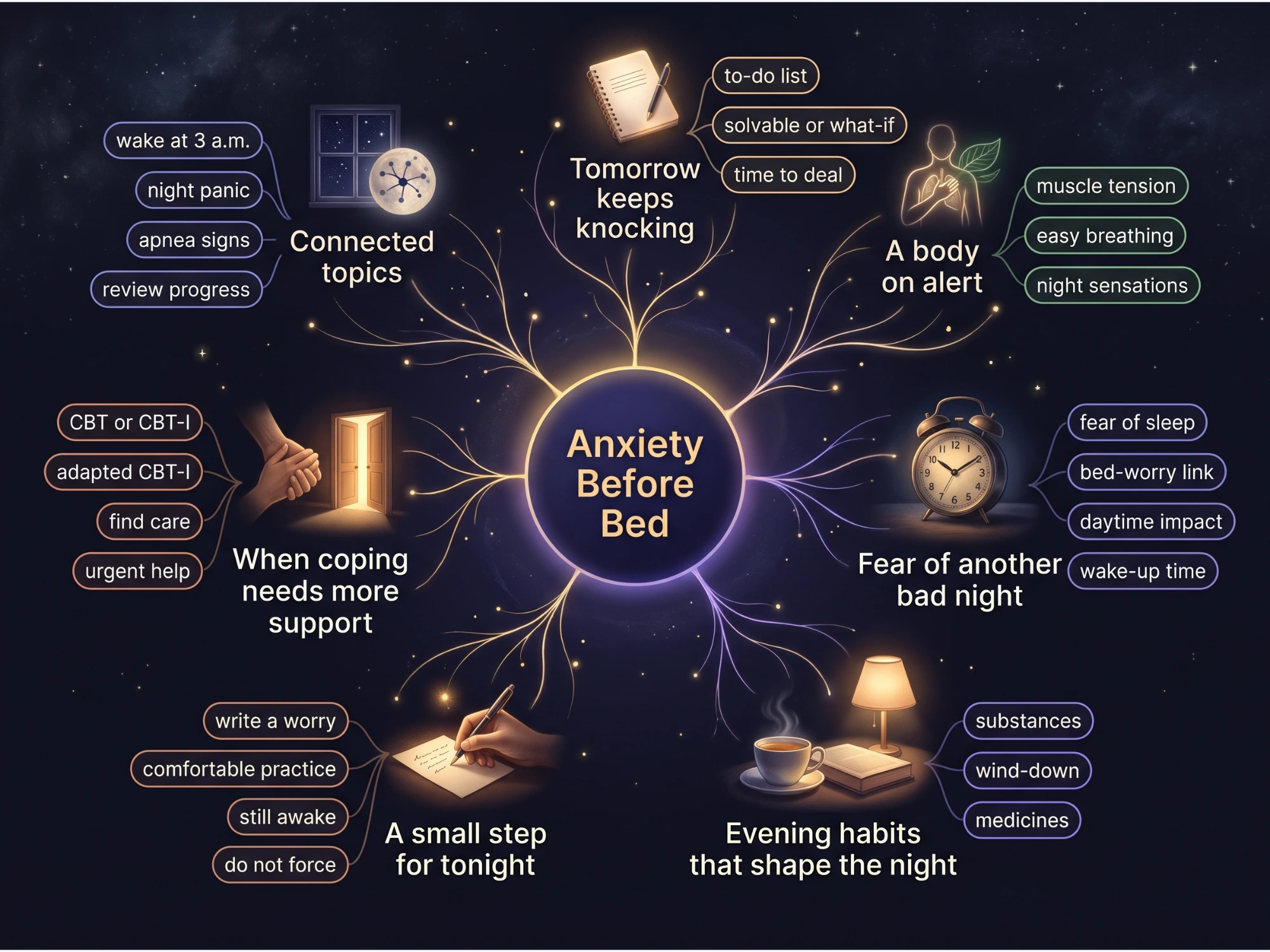

Anxiety before bed mind map shows how racing thoughts, body tension, fear of sleep, habits, coping steps, and care fit together. Open one area, answer the self-check, try a small action, add what fits to your plan, and jump to the page that goes deeper.
Anxiety before bed mind map: how it all connects
Anxiety before bed
01Tomorrow keeps knockingThe problem
Tomorrow’s list can feel loud when the room is quiet. A practical worry has a next step you can choose. A what-if worry has no task tonight. Writing both down helps you sort them and decide what needs action now, later, or not at all.
Key insight: A worry you can act on is different from a what-if fear you cannot solve tonight (NHS, n.d.).
Ask yourself: Which thought is a task I can plan, and which is a what-if I cannot settle tonight?
The 2 a.m. to-do list
When several thoughts arrive together, put them on paper instead of holding them in your head. A written list can make concerns easier to work through one at a time (NHS, n.d.).
Try this: Write one concern and one possible next action. Stop if writing makes you more alert; then set the page aside.
Why paper helps
A page can hold a thought so your mind does not have to keep checking it. Keep the list short and away from the bed if looking at it pulls you back into planning.
- sort the list into solvable or what-if
Solvable or what-if
A worry tree asks one question: can I do something about this now? If yes, choose a specific action. If no, name it as a what-if and set it aside for now (NHS, n.d.).
Try this: Pick one worry. Write “action possible” or “not within my control.” Stop after one worry, not the whole list.
What if I am unsure?
Unsure is a real category. If you cannot tell whether a worry is solvable tonight, mark it “ask for help to sort this” instead of forcing an answer in bed.
- turn a solvable worry into a time
A time to deal with it
For a real problem, write what you will do, how, and when. If you cannot act now, schedule a time to deal with it. That gives the thought a place without asking you to solve it at bedtime (NHS, n.d.).
Try this: Choose a time tomorrow to handle one task. If no time works, write “review with a provider” and stop.
A plan is not a promise
A scheduled time is a container, not a promise that the problem will be fixed. Choose an ordinary daytime slot, and keep it short.
- start with one written worry
Read more: the Article’s worry-plan section
02A body on alertThe problem
At night, small body signals can feel larger. Muscle tension or a tight chest can pull attention toward danger. A fast heartbeat can do the same. These feelings are real, but a sensation alone does not tell you what is causing it or whether you need urgent care.
Key insight: Quiet rooms make it easier to notice body sensations, but noticing them is not proof of harm (Cleveland Clinic, 2023).
Ask yourself: What do I notice in my body at bedtime, and what would comfort rather than check it?
Muscle tension
Tension can show up as tight shoulders or a clenched jaw. Restless legs can be part of it too. Relaxing muscles can help you notice the difference between tense and relaxed (NHS, n.d.).
Try this: Tense one muscle group for a moment, then let it go. Keep it gentle, and stop if it increases pain or worry.
Why not squeeze hard
Gentle tension and release can teach you what relaxed feels like. Skip strong squeezing if you have pain, injury, or a condition that makes muscle tensing unsafe.
- pair it with easy breathing
Breathing that stays easy
Comfortable breathing is not a breath hold or a target rate. Breathe in through your nose and out through your mouth if that feels easy, and let the breath flow without forcing it (NHS, 2026).
Try this: Take three easy breaths, in through your nose and out through your mouth. Stop if you feel dizzy or more tense.
Practice, not performance
Regular practice may help more than one perfect attempt. Keep the breath comfortable, and do not hold it or chase a target count.
- choose one settling practice
Sensations you notice at night
A fast heartbeat or tight chest can be scary at night. Anxiety can cause strong body feelings, but chest pain with sweating or sickness needs emergency help. So does chest pain with light-headedness or shortness of breath (NHS, 2023).
When to check symptoms
Strong body feelings can come with anxiety, but this page cannot sort them for you. New, severe, or frightening symptoms deserve a clinician’s check.
- body signals can feed fear of sleep
Read more: the Article’s recognition section
03Fear of another bad nightWhy it happens
Fear about sleep can become its own problem. You may dread the bedroom or watch the clock. You may worry that another bad night means you cannot cope tomorrow. Anxiety and poor sleep can feed each other, and the bed can become linked with worry over time.
Key insight: Sleep anxiety means fear or stress about falling or staying asleep, not a diagnosis you give yourself (Cleveland Clinic, 2024).
Ask yourself: Do I fear the night itself, or the daytime consequences I expect?
Fear about sleep itself
Sleep anxiety is fear or stress about falling or staying asleep. It can show up as dread at bedtime or clock-watching. A busy mind can be part of it too. The feeling is real, but it does not by itself prove you have an anxiety disorder (Cleveland Clinic, 2024).
Not a diagnosis
Sleep anxiety is a descriptive term, not a diagnosis you assign yourself. A clinician can assess whether anxiety, insomnia, or another problem is the main target.
- one question answered
The bed-worry link
Your bed can become linked with worry. If you toss and check the time, the bedroom may cue alertness before sleep. Stimulus control helps rebuild the link between bed and sleep (Cleveland Clinic, 2023).
Try this: If you are awake and frustrated, get up for a quiet activity. Skip this if you have fall risk or trouble getting out of bed.
What stimulus control means
Stimulus control means rebuilding the link between bed and sleep. It is one part of CBT-I, not a test of willpower or a stopwatch rule.
- when the bed itself cues worry
When it spills into daytime
When bedtime worry starts to affect work, relationships, or daily life, it is time to seek professional help. A clinician can assess the pattern and discuss options (NIMH, 2025).
What a first appointment may ask
A first appointment may ask when symptoms began, how long they last, how often they happen, and how they affect your life.
- find the care route for your country
04Evening habits that shape the nightYour options
Daily habits can support sleep, but they are not a stand-alone treatment for chronic insomnia. A steady wake-up time, daytime movement, and a simple wind-down can help. Attention to alcohol and caffeine can reduce friction. Nicotine and a medicines review with a clinician matter too.
Key insight: Sleep hygiene education alone is not recommended as a stand-alone treatment for chronic insomnia (VA/DOD, 2025).
Ask yourself: Which habit would be realistic to adjust this week without building a strict ritual?
A steady wake-up time
A regular get-up time can anchor your body clock, even after a rough night. Get out of bed at the same time each day when you can, and adjust for shift work or medical advice (NHS, 2024).
Try this: Pick one wake-up time for the next three days. Stop if your work schedule or care plan needs a different routine.
Why wake time matters
A steady get-up time matters more than a perfect bedtime. Shift work, caregiving, and medical conditions may need a different plan.
- add one simple wind-down step
Alcohol, caffeine, nicotine
Alcohol can make sleep lighter and increase night waking. Caffeine and nicotine can also contribute to insomnia. Initial drowsiness from alcohol does not mean the rest of the night will be better (NHS, 2024; NHLBI, 2022).
Try this: Track any alcohol, caffeine, or nicotine for one evening. Stop tracking if it becomes a new worry; bring the note to a clinician instead.
Why alcohol misleads
Alcohol may feel calming at first, but it can make sleep lighter and increase waking later. Caffeine and nicotine can also keep the system alert.
- lighter sleep can mean more waking
A simple wind-down
A wind-down can be simple. Read or listen to soothing music. A hot bath is another option. Keep it flexible, and do not turn it into a long checklist you must complete perfectly (NHLBI, 2022).
Try this: Choose one wind-down item that takes under ten minutes. Stop if it feels like a test you can fail.
Simple, not compulsory
A wind-down is a bridge, not a performance. One or two quiet steps are enough; a long routine can become another task to worry about.
- park one worry before wind-down
Medicines that can interfere
Some medicines can cause insomnia. Do not stop or change a medicine yourself; ask the prescriber about timing, effects, and alternatives (NHS, 2024).
What to ask about
Bring a list of medicines and timing to a clinician. Do not stop or change a medicine on your own, even if you think it affects sleep.
- bring the list to a care visit
Read more: the Article’s routine section
05A small step for tonightYour options
Tonight you can choose one small, comfortable step. Write down one worry or try a gentle practice. You can also get out of bed if you are awake and frustrated. The goal is to lower pressure, not to perform a perfect routine or force sleep to arrive.
Key insight: Complete control of worry is not required; a comfortable practice and one chosen action are enough for tonight (NHS, n.d.).
Ask yourself: What is the smallest action I can take without forcing sleep?
Write one worry down
Writing one worry down can move it out of your head and make it easier to work through one concern at a time. A notebook can hold the thought while you stop holding it (NHS, n.d.).
Try this: Write one sentence about the worry and one next action. Stop after one page; do not turn it into a long task.
If writing wakes you up
If writing makes you more alert, keep it to one line or do it earlier in the evening. The aim is to park the thought, not solve it at bedtime.
- plan a worry step
Try a comfortable practice
A settling practice should feel easy. Gentle breathing or muscle relaxation can be options. Noticing thoughts without chasing them is another. None is a guaranteed sleep switch (NHS, 2026; NHS, n.d.).
Try this: Try one practice for two minutes. Stop if you feel dizzy, more tense, or more awake.
Practice, not a test
Meditation can help you notice thoughts and let them go, but evidence for mindfulness as chronic-insomnia treatment is insufficient in one guideline.
- start with muscle tension
If you’re still awake
If you are awake and frustrated, stimulus-control advice is to get out of bed and do something quiet until sleepy. This needs adaptation if you have fall risk or cannot transfer easily (NHLBI, 2022).
Try this: If you get up, keep the light low and choose a quiet activity. Stop and seek advice if getting out of bed feels unsafe.
Safety first
Bed-leaving advice needs adaptation for fall risk or trouble transferring. Ask a clinician what is safe for your body before using it.
- rebuild the bed-sleep link
What not to force
You do not have to remove every worry before rest. Worries cannot all be eliminated, and trying to control everything can add pressure. Aim for a comfortable pause, not a perfect mind (NHS, n.d.).
When the effort backfires
Trying to control every thought can become another pressure. A comfortable pause is enough; repeated effort is not a requirement.
- if pressure affects daytime life
Read more: the Article’s tonight section
06When coping needs more supportWhat to do
Coping tips are not the same as treatment. CBT for anxiety targets anxious thoughts. CBT-I is structured insomnia care that also addresses sleep worry. A trained provider can help you choose the right target. They can adapt treatment if needed and help you find a route you can afford.
Key insight: VA/DOD recommends CBT-I for chronic insomnia, and it must be delivered by a professional trained in it (VA/DOD, 2025).
Ask yourself: Is my main problem anxiety in general, sleep itself, or both?
CBT for anxiety or CBT-I?
CBT for anxiety helps you question unhelpful thoughts. CBT-I is a structured insomnia treatment that also addresses nervousness about sleep. Assessment helps decide which target fits your problem (NIMH, 2025; NHLBI, 2022).
Different targets
CBT for anxiety and CBT-I target different problems. Assessment helps decide whether anxiety, sleep, or both need the main focus.
- see treatment averages
Who needs adapted CBT-I
Some people need CBT-I adapted or delayed. The VA/DOD list includes medical instability and active substance use. It also includes excessive sleepiness, fall risk, and bipolar disorder. Acute mental health symptoms and pregnancy or postpartum insomnia are on the list too (VA/DOD, 2025).
Why adaptation matters
Adaptation is not failure. A trained provider checks medical and mental health factors before CBT-I starts, or adjusts the plan.
- ask a clinician about the fit
How to find care
Start with your country’s route. In England, you can self-refer to NHS talking therapies without a prior diagnosis. In the US, primary care can screen and refer. Canada often starts with a family doctor; Australia may use a mental health treatment plan (NHS, 2025; NIMH, 2026).
Try this: Write down one care route and one question about cost. Stop if the search becomes another bedtime task; save it for daytime.
Questions to bring
Ask about the provider’s experience and expected duration. Ask about insurance and cost too. Public funding rules differ, so check the route for your country before assuming care is free.
- find my starting point
Red flags and urgent help
Seek routine help when anxiety affects daily life or sleep habits have not helped. Chest pain with sweating or sickness needs emergency help. So does light-headedness or shortness of breath. If you cannot keep yourself or someone else safe, get emergency help now.
Urgent vs routine
Routine help is for ongoing impact; emergency help is for immediate danger. Do not decide that chest pain is anxiety without medical assessment.
- daily impact is a routine-help signal
Read more: the Article’s treatment section
07Connected topicsKeep it working
Some bedtime problems need a different page. Waking at 3 a.m. and night panic each have their own pattern. Snoring does too. Treatment follow-up is different as well. Use these links when your main problem starts after sleep or needs a clinician’s review.
Key insight: A problem that starts after sleep or involves breathing pauses may need a different assessment than bedtime worry (NHS, 2024; Cleveland Clinic, 2024).
Ask yourself: Does my problem happen before sleep, during sleep, or after waking?
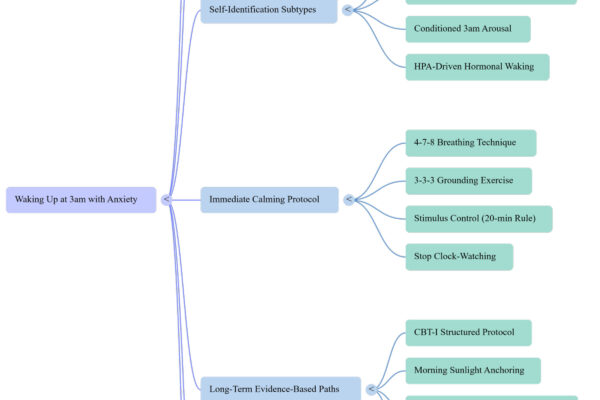
Waking at 3 a.m.
If your main problem is waking at 3 a.m. with anxiety, the bedtime map is only a starting point. The related page covers anxiety after waking during the night (Cleveland Clinic, 2024).
Why timing matters
Timing changes the question. Waking later in the night can involve sleep cycles, stress, or other problems, so the related page covers that pattern.
- read about waking at 3 a.m.
Night panic
Nocturnal panic can wake you from sleep, which is different from worry while you are still awake. Night panic has its own guidance (Cleveland Clinic, 2024).
Panic vs worry
A panic attack that wakes you is different from pre-sleep worry. The panic page covers what to do and when to get help.
- read about night panic
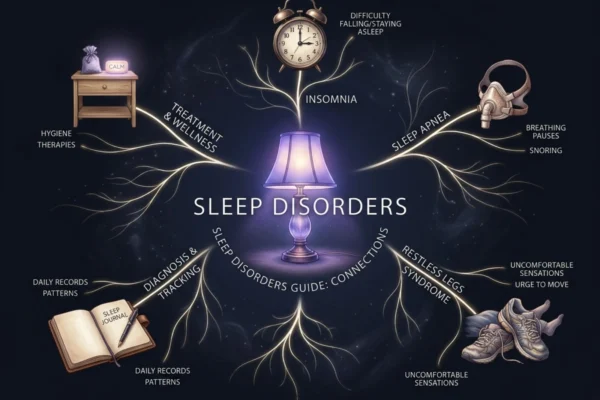
Snoring and breathing pauses
Snoring or interrupted breathing can interfere with sleep. Symptoms of another sleep disorder may lead to a sleep-clinic referral, but these signs do not diagnose sleep apnea (NHS, 2024).
When to ask about sleep apnea
Loud snoring, gasping, or pauses in breathing are reasons to ask a clinician. This page cannot diagnose sleep apnea from symptoms alone.
- read about sleep apnea signs
Review progress with a provider
Follow-up is about patterns, not perfect nights. Note what changed and what remains hard. Add any treatment concerns. Discuss concerns with your provider before stopping a treatment (NIMH, 2026; NIMH, 2025).
Try this: Write three lines before an appointment: what changed, what is hard, and one question. Stop if this becomes a bedtime worry; do it earlier.
Setbacks are expected
Setbacks can happen while managing anxiety. A follow-up note helps your provider see patterns and adjust support without starting over.
- review the treatment target
Read more: the Article’s follow-up questions
Anxiety and sleep: the connections that matter most
Some links matter more than others. A written worry can become a plan. A bed linked with worry can point toward sleep-focused treatment. Alcohol can make night waking more likely. Daytime impact is a routine-help signal.
- Write one worry down → Solvable or what-if — writing a worry on paper can make it easier to work through one concern at a time (NHS, n.d.). This helps you sort a task from a what-if without solving everything at once.
- Solvable or what-if → A time to deal with it — a worry tree separates problems you can solve from what-if worries, then you can choose an action or schedule a later time (NHS, n.d.). That gives the thought a next step without bedtime pressure.
- The bed-worry link → CBT for anxiety or CBT-I? — the bed can become linked with worry, and CBT-I addresses nervousness about not being able to sleep (Cleveland Clinic, 2023; NHLBI, 2022). Ask about sleep-focused treatment when the bed itself cues worry.
- Alcohol, caffeine, nicotine → If you’re still awake — alcohol can make sleep lighter and increase waking during the night (NHLBI, 2022). Initial drowsiness is not a sign that the rest of the night will be easier.
- When it spills into daytime → How to find care — when anxiety starts to cause problems in everyday life, professional help is appropriate (NIMH, 2025). Use the care route for your country and ask about cost.
- Review progress with a provider → CBT for anxiety or CBT-I? — discuss treatment concerns with your provider before stopping, and note what changed (NIMH, 2026). Follow-up can adjust the plan without demanding a perfect night.
You can see the whole picture. Here is where to start.
Still unsure? The Compass picks a path, the Article gives depth, and Answers handles one question. More in Mental Health & Sleep.
Find my starting point →Sources
- VA/DOD — Clinical Practice Guideline for Chronic Insomnia Disorder and Obstructive Sleep Apnea (2025). Supports: the habits branch and the support branch, including CBT-I recommendation and adaptation list.
- National Institute of Mental Health — Generalized Anxiety Disorder: What You Need to Know (2025). Supports: the fear branch, CBT for anxiety, and the routine-help signal when anxiety affects daily life.
- NHS — Tackling your worries (n.d.). Supports: the tomorrow branch, worry tree, scheduling a time, and the limit of control.
- NHS — Breathing exercises for stress (2026). Supports: the body branch and comfortable breathing.
- NHS — Insomnia (2024). Supports: the habits branch, wake-up time, medicines, snoring and referral, and routine help.
- National Heart, Lung, and Blood Institute — Insomnia Treatment (2022). Supports: wind-down, alcohol effects, stimulus control, and CBT-I details.
- Cleveland Clinic — Sleep Anxiety (2024). Supports: the fear branch, sleep anxiety definition, and night panic.
- Cleveland Clinic — How To Stop Your Mind From Racing and Get To Sleep (2023). Supports: the body branch and the bed-worry link.
- NHS — How can meditation help with sleep? (n.d.). Supports: the comfortable-practice option and the limit of mindfulness evidence.
- National Institute of Mental Health — Help for Mental Illnesses (2026). Supports: the find-care branch and follow-up concerns.
- NHS — Find NHS talking therapies for anxiety and depression (2025). Supports: the England self-referral route.
- Centre for Addiction and Mental Health — Looking for Mental Health Services (n.d.). Supports: the Canada route in the find-care branch.
- Services Australia — Mental health care and Medicare (2026). Supports: the Australia treatment-plan route.
- NHS — Chest pain (2023). Supports: the urgent chest-pain safety line.
- NHS — Where to get urgent help for mental health (n.d.). Supports: the immediate-safety line.
Sources checked · Next review
How we made this map: built from the sources above, drafted with AI assistance and edited by Aamir Bashir, Founder & Editor. Read our editorial policy.
This page is information, not medical advice; see a doctor if anxiety or sleep problems affect daily life, and get emergency help for chest pain with sweating or if you cannot keep yourself safe.