
The short answer
Wake up at 3AM with anxiety, and stress, worry, disrupted sleep, or other health factors may be contributing. The hour alone cannot identify the cause or prove that your cortisol is too high. Choose the help you need right now, whether that’s calming down, understanding possible causes, tracking a pattern, or finding care. Pick what you need below and go straight to the page that fits.

What to Do When You Wake Up at 3AM with Anxiety
Choose what you need right now, and you’ll go straight to the page that best fits your situation.
If you may harm yourself, or someone is in immediate danger, contact your local emergency service now. In the US or Canada, call or text 988 for crisis support.
Every starting point
If you’re awake and anxious
Find your next step for tonight
You don’t have to solve every worry before morning. The immediate-response section helps you choose what to do when sleep won’t return.
Open the sleep diaryRecord the awakening and note patterns. Read tonight’s guidanceFind steps for waking anxious at 3AM.If you’re scared this is panic
Understand panic and anxious thinking
Compare panic-like symptoms with anxious thoughts to help choose a next step.
Get specific answersRead answers about nighttime panic and anxious waking. Compare the symptomsUnderstand nighttime panic and anxious thinking without self-diagnosing.If this keeps happening
Record your sleep without clock-watching
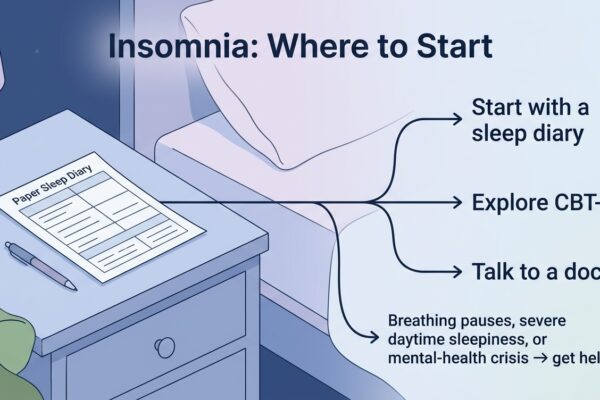
A short sleep diary can record waking, naps, daytime sleepiness, caffeine, alcohol, and exercise. These details can help a clinician assess recurring sleep problems.
Open the sleep diaryRecord sleep patterns and symptoms in a format you can use when seeking help. Learn what to trackSee which sleep details may help you and your clinician understand the pattern.If you wonder whether it’s insomnia
Understand when waking may signal insomnia
Insomnia can involve repeated waking or waking too early and being unable to return to sleep. Frequency, duration, daytime effects, and other causes matter when assessing it.
Explore the statisticsUnderstand insomnia estimates and their limits without confusing them with 3AM anxiety rates. Understand insomnia symptomsLearn how recurring sleep difficulties differ from one anxious awakening.If you want to understand possible causes
See how sleep and anxiety factors connect
Stress, anxiety, disrupted sleep, medicines, and health conditions may contribute to nighttime waking. More than one factor can be involved, and the clock time cannot identify your cause.
Explore the causes mapSee the connections between possible contributors, symptoms, tracking, and next steps. Understand why 3AMExplore why waking at this hour does not reveal a single cause.If you need help finding care
Prepare a practical plan for getting help
If sleep problems affect your daily life or are hard to manage, you can ask a health professional for an assessment. A record of your symptoms may help explain what’s happening.
Find help and prepareLearn what to discuss at an appointment and how to approach possible treatment options.Quick questions
Do I need to read the whole guide?
No. Start with the need that matters most right now. Choose another route later if your questions change.
Does waking at 3AM mean my cortisol is too high?
The clock time alone cannot identify your cortisol level or the cause of waking. Consider the wider pattern rather than treating one hour as a diagnosis.
Which page should I choose if this happens most nights?
If this happens often, record the pattern and how you feel during the day. Consider an assessment if sleep problems make daily life hard to manage.
Sources
-
Clinical guidance recommends CBT-I for chronic insomnia and advises against sleep hygiene as the sole treatment.
-
Stress, worry, and medicines can cause insomnia. Clock-watching can also worsen sleep problems.
-
A sleep diary can record sleep and daily habits to help a clinician assess ongoing sleep difficulties.
-
Insomnia may involve waking during the night or waking early and being unable to return to sleep. Medical advice is appropriate when sleep difficulties affect daily coping.
This Compass helps you find the right page; it cannot diagnose you or replace care from a clinician who knows your health. Sources checked . Researched from the sources above, drafted with AI assistance and edited by Aamir Bashir, Founder & Editor (editorial policy).