
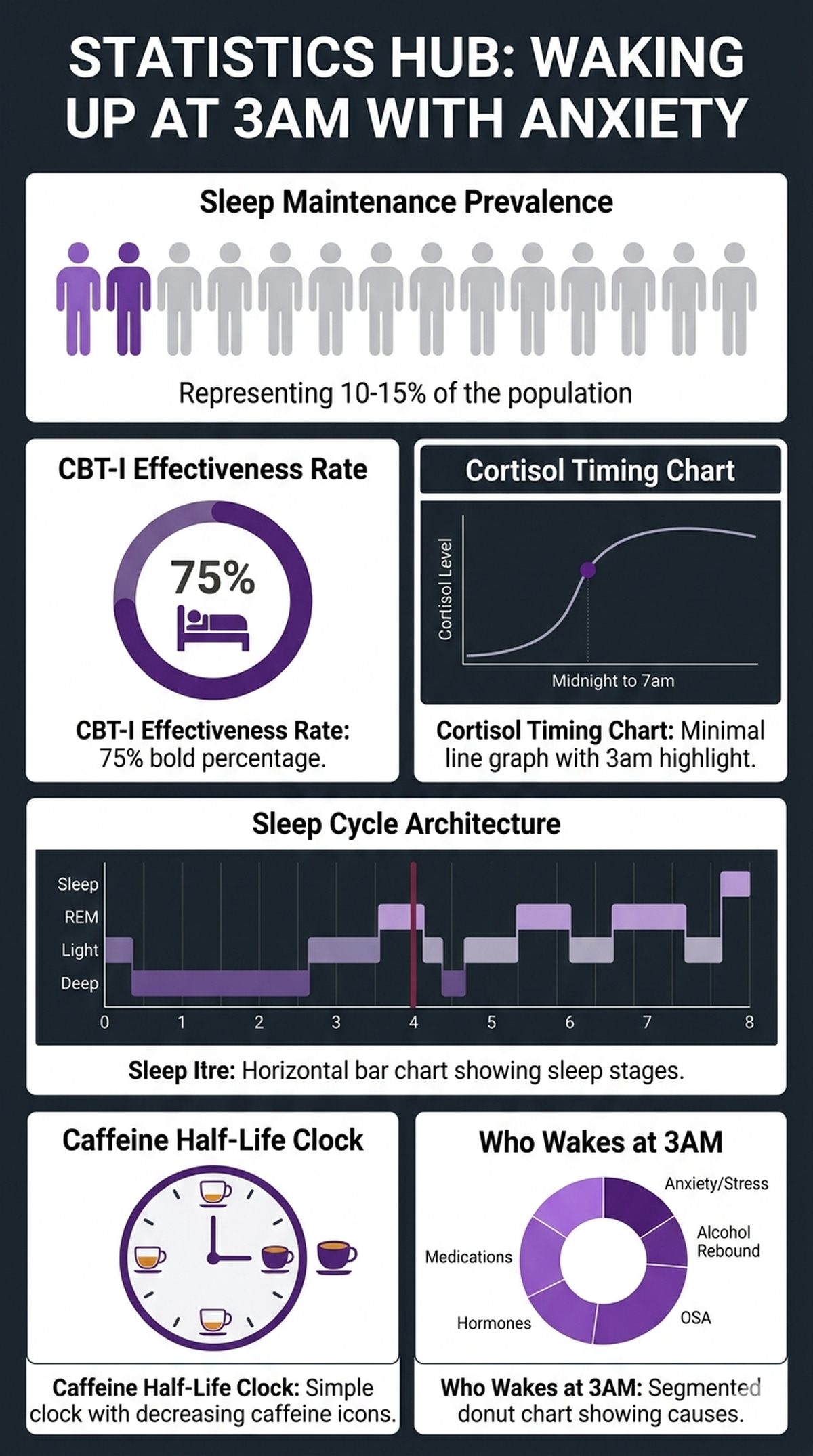
You wake up at 3am with anxiety, heart pounding in the dark, wondering why your brain suddenly decided it was time to panic. This exact biological misfire happens to millions, but the trigger is rarely what you think. Let’s decode exactly what your body is doing right now.
This content is for educational purposes and does not replace professional medical advice. Consult a doctor for persistent nighttime panic or chest pain.
Quick Answer
Waking at 3 a.m. with anxiety is typically caused by a nocturnal panic response, an early cortisol surge, conditioned bed-arousal, or metabolic rebound from late-night alcohol. Identifying the specific pattern is required to stop it.
Tap the option that best describes your experience for each of the five progressive questions, and the decoder will instantly map your unique biological sleep fingerprint. Once you have your result, explore our wider sleep psychology resources for deeper context on these patterns.
How do you typically wake up at 3 a.m.?
The physical sensation of your awakening reveals the underlying biological trigger. A sudden, heart-pounding jolt points to a misfired nervous system alarm, often seen in nocturnal panic responses. Tap the single option that most closely matches your physical reality to begin mapping your unique pattern.
What is your brain doing while you lie there?
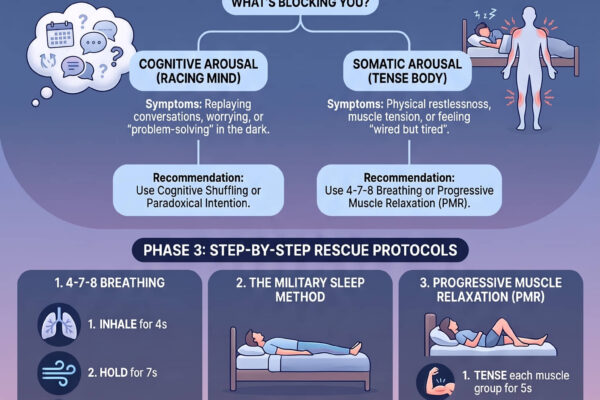
Your nocturnal thought patterns act as a direct window into your brain's current state of arousal within the broader mental health and sleep ecosystem. Catastrophic fears indicate amygdala hyperactivity, whereas hyper-focused planning reveals an overloaded prefrontal cortex. Select the mental loop that traps you most often in the dark.
What did you consume within 3 hours of bedtime?
Late-night substances directly alter your second-half sleep architecture. Alcohol might help you fall asleep initially, but it reliably causes metabolic rebound and fragmented REM cycles, disrupting your natural sleep stages and cycles. Logging these evening habits helps isolate invisible chemical triggers from purely psychological ones.
Why This Tool Matters
A sensitized HPA axis or metabolic rebound triggers a biological alarm during lighter REM sleep stages.
You wake up terrified, heart racing, and convinced something is terribly wrong, unable to return to sleep.
Identifying your specific biological pattern allows you to apply targeted calming techniques instead of generic sleep advice.
How long has this 3 a.m. waking pattern been happening?
Duration separates acute stress responses from deeply wired neurological habits. A few weeks of disruption usually tracks with a specific life event, while months of identical awakenings suggest your brain has accidentally learned to associate your bed with frustration, fueling the stress insomnia cycle. Note the timeline to understand how entrenched the cycle has become.
What do you usually do if you can't fall back asleep?
Your behavioral response dictates whether you break the wakefulness loop or reinforce it. Staying in bed while frustrated wires your brain to expect anxiety in that environment, whereas getting up resets the physical association, a core tactic in our broader insomnia guide. Choose the action you default to when the clock keeps ticking.
3 A.M. Anxiety Questions Answered
Find rapid, science-backed answers to the specific questions keeping you awake tonight.
Read the answers →Wake Up at 3am With Anxiety Guide
Dive deep into the biological mechanisms of nocturnal panic and the clinical protocols to stop it.
Read the guide →Sources
- Mayo Clinic, 2024 — Nighttime panic attacks awaken you from sleep and respond best to targeted behavioral therapy.
- Cleveland Clinic, 2026 — Nocturnal panic attacks cause sudden fear, racing heart, and sweating without an obvious trigger.
- Sleep Foundation, 2025 — Cognitive behavioral therapy teaches critical coping skills for managing nighttime anxiety and insomnia.
- Cleveland Clinic Health Essentials, 2025 — Anxiety and depression are primary drivers of consistent 3 a.m. awakenings.
Last reviewed August 2026. ZenSleepZone updates this content regularly as new research becomes available.