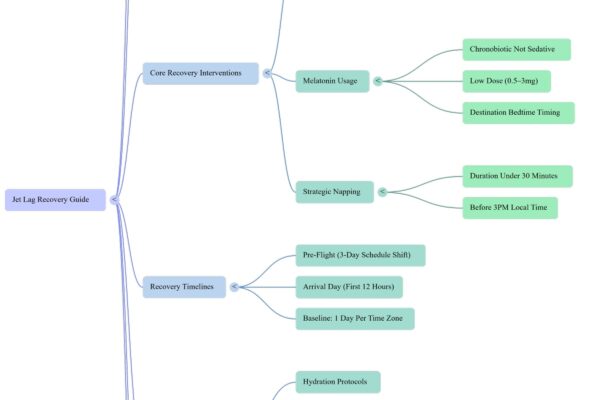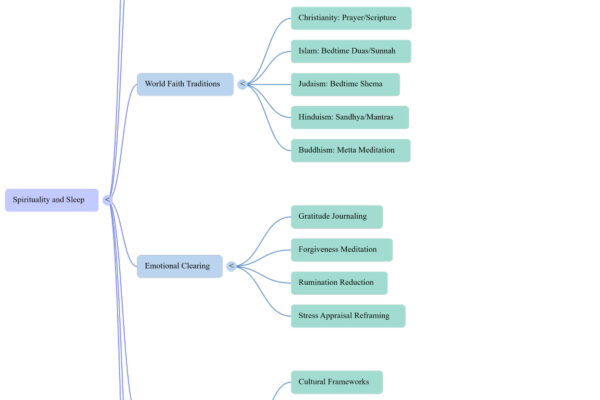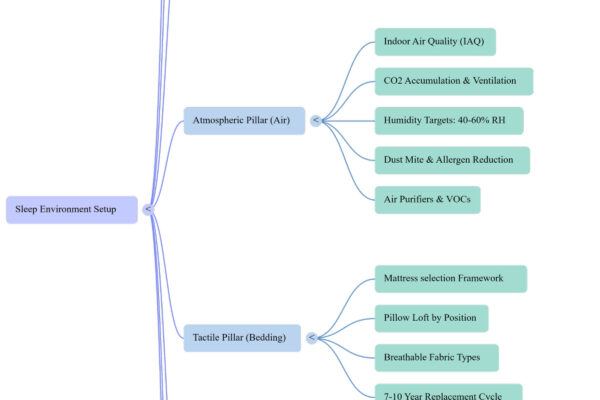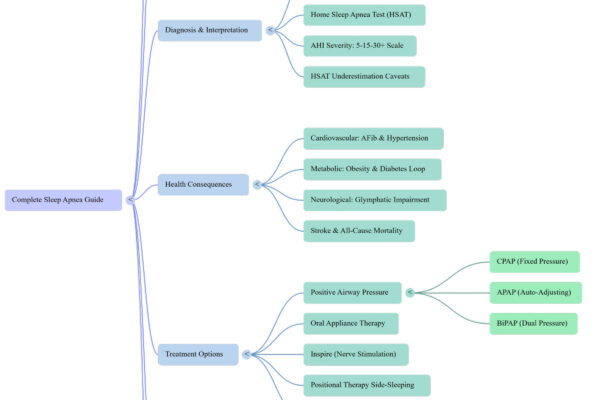
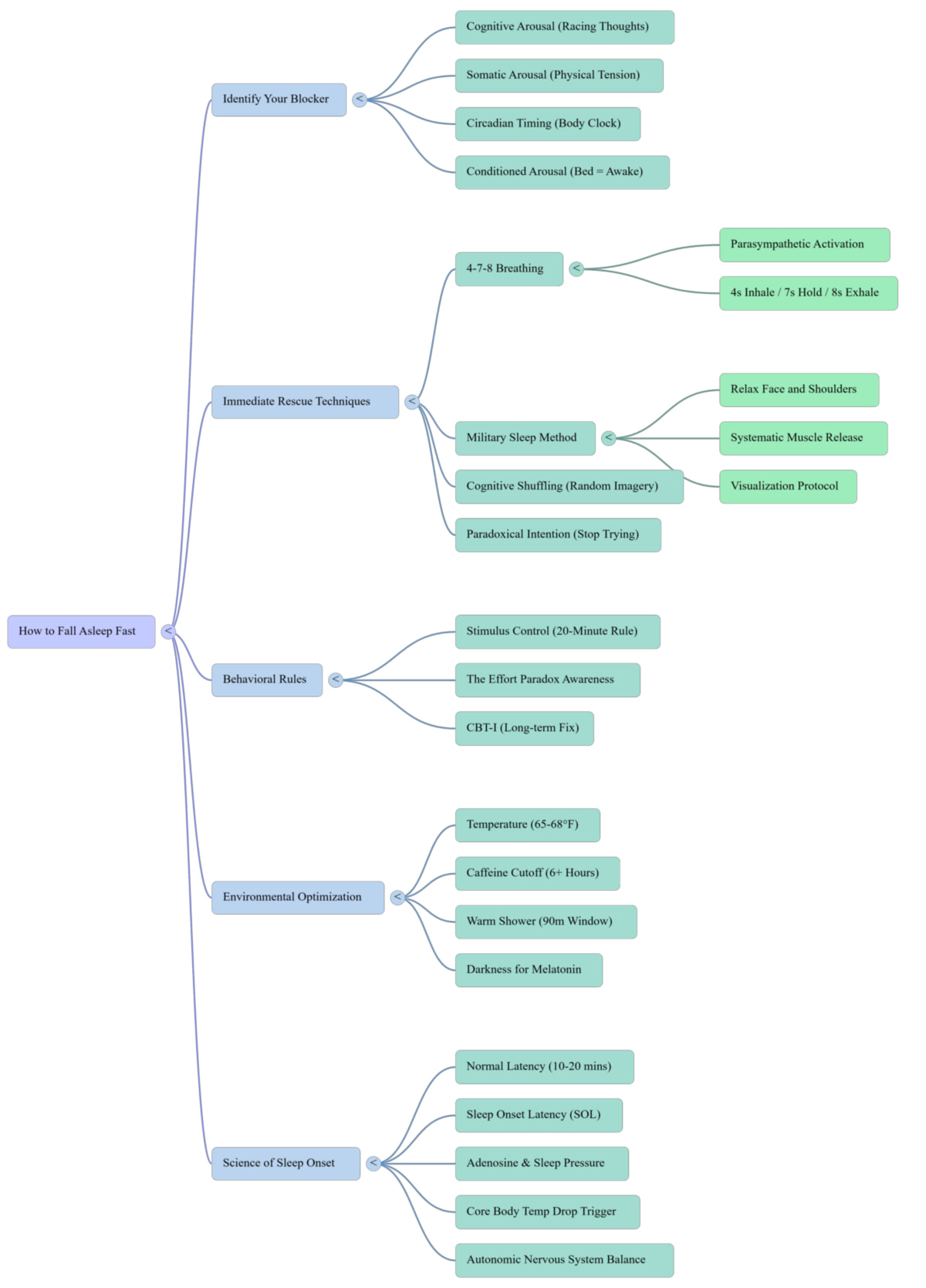
A complete visual map of everything that controls sleep onset — from the brain’s arousal systems to the fastest evidence-based techniques — organized into branches you can scan and act on tonight.
The fastest way to fall asleep is to lower arousal — not force sleep. This mind map shows every factor that controls sleep onset (cognitive, somatic, circadian, conditioned) and maps the science-backed technique to each. Most people fall asleep 10–20 minutes after quieting their nervous system; consistently under 8 minutes signals sleep deprivation.
The Full Mind Map
This map covers all key branches: why sleep onset fails, the physiological triggers you can control, the fastest rescue techniques, environment factors, and a long-term behavioral plan. Use it to identify your branch, find the matched technique, and apply it tonight.
Key Numbers Behind the Map
Mind Map Branches — Text Breakdown
Every node in the map is explained below. This text version lets search engines index all concepts fully — and lets you find your branch without zooming.
Cognitive Arousal
- Racing thoughts at bedtime
- Rumination, worry loops
- Sleep performance anxiety (“will I sleep?”)
- Fix: Cognitive Shuffle, to-do list offload, Paradoxical Intention
Somatic Arousal
- Physical tension, tight muscles
- Heart racing, shallow breathing
- Body “on alert” despite fatigue
- Fix: PMR, 4-7-8 Breathing, Military Method
Circadian Disruption
- Irregular sleep/wake schedule
- Delayed sleep phase (natural night owl)
- Melatonin timing issues
- Fix: Fixed wake time, morning light, low-dose melatonin
Conditioned Arousal
- Bed associated with wakefulness
- Clock-watching reinforces anxiety
- History of lying awake for hours
- Fix: Stimulus Control (CBT-I), sleep restriction
4-7-8 Breathing
- Inhale 4s · Hold 7s · Exhale 8s
- Activates parasympathetic nervous system
- Slows heart rate via vagus nerve
- Best for: cognitive + somatic arousal
Military Sleep Method
- Relax face → shoulders → arms → chest → legs
- Clear mind with a calm image for 10s
- Combines PMR + visualization
- Requires 4–6 weeks of nightly practice
Progressive Muscle Relaxation
- Tense then release each muscle group
- Feet → calves → thighs → abdomen → chest → arms → face
- Increases slow-wave sleep (NIH 2022)
- Best for: somatic arousal + conditioned arousal
Cognitive Shuffle
- Think of random unrelated images in sequence
- Interrupts analytical/worry thought patterns
- Mimics hypnagogic imagery of natural sleep onset
- Best for: cognitive arousal, overthinking
Environment: Temperature
- Optimal bedroom: 65–68°F (18–20°C)
- Core body temp must drop 1–2°F to initiate sleep
- Hot bath 60–90 min before bed accelerates the drop
- Most people sleep too warm
Environment: Light & Darkness
- Blue light suppresses melatonin (2 hrs of screen = −22% melatonin)
- Full darkness signals safe sleep to the brain
- Blackout curtains or eye mask recommended
- Dim warm lights for 60 min before bed
Caffeine Timing
- Caffeine half-life: 4–6 hours (can be up to 12h)
- Blocks adenosine — the sleep pressure molecule
- Cut off by 2pm for most people
- Affects sleep quality even if you fall asleep
Stimulus Control (CBT-I)
- Use bed only for sleep (and sex)
- Get out of bed after 20 min of wakefulness
- Breaks the bed → wakefulness association
- Works in 70–80% of CBT-I completers
Technique Comparison: Which Works for You?
Each technique targets a specific arousal type. Matching the right technique to your blocker is the fastest path to shorter sleep onset latency.
| Technique | Blocker Type | Speed | Evidence Level | Effort to Learn |
|---|---|---|---|---|
| 4-7-8 Breathing | Cognitive + Somatic | Tonight | Moderate (HRV studies) | Low — 3 min to learn |
| Military Sleep Method | Somatic + Cognitive | 4–6 weeks | Moderate (component evidence) | Medium — requires practice |
| Progressive Muscle Relaxation | Somatic | Week 1–2 | Strong (NIH/PMC 2022) | Medium — 15 min/night |
| Cognitive Shuffle | Cognitive | Tonight | Emerging (mechanism supported) | Low — practice helps |
| Paradoxical Intention | Conditioned/Anxiety | Tonight | Strong (CBT-I RCTs) | Low — mindset shift |
| Stimulus Control | Conditioned | Weeks | Very strong (CBT-I first-line) | High — requires consistency |
| Temperature Management | Somatic + Circadian | Tonight | Strong (PubMed meta-analysis) | Very low — adjust thermostat |
| Fixed Wake Time | Circadian | 1–2 weeks | Very strong (sleep science consensus) | Medium — requires discipline |
How to Use This Mind Map
Step 1 — Identify Your Arousal Type
Ask yourself: when you can’t sleep, is your mind more active or your body more active? Racing thoughts = cognitive arousal. Tight chest, tense muscles, racing heart = somatic arousal. Both = mixed. Bed feels like a stress trigger = conditioned arousal. Naturally wired late = circadian.
Step 2 — Match Your Technique
Use the node cards and comparison table above to pick the technique matched to your arousal type. If you’re unsure, start with 4-7-8 breathing tonight — it addresses both cognitive and somatic arousal and takes under 3 minutes to learn. Use our Sleep Blocker Identifier tool to get a precise match in 8 questions.
Step 3 — Control What You Can Tonight
Before bed: cool the room to 65–68°F, put your phone in another room 30 minutes before sleep, write tomorrow’s to-do list to offload cognitive load, and choose your technique. Set a consistent wake time for tomorrow — this is the single most powerful long-term lever.
Step 4 — Build the Long-Term Plan
For persistent difficulty falling asleep (30+ minutes, 3+ nights/week, for 4+ weeks), stimulus control and sleep restriction through CBT-I are the evidence-backed path. 70–80% of people who complete CBT-I see significant improvement. If that doesn’t resolve it, see a sleep physician — it may be delayed sleep phase syndrome or sleep apnea.
Explore the Full Cluster
- 📖 Main Article: How to Fall Asleep Fast — 12 Science-Backed Methods
- 📊 Infographic + Sleep Blocker Identifier — Find Your Personal Fix
- ❓ 22 Questions Answered: How to Fall Asleep Fast — Q&A Hub
- 📈 58 Statistics on How to Fall Asleep Fast [2026 Data]
- 🧠 Sleep Optimization Pillar — All Guides
- 🏛️ CDC NCHS Data Brief No. 559 — Sleep Difficulties in US Adults 2024
- 🏛️ NIH/PMC: PMR and Sleep Onset — 2022 Systematic Review
Not Sure Which Technique Fits You?
Answer 8 quick questions and get your personal sleep blocker profile — cognitive, somatic, circadian, or conditioned — plus the technique most likely to work for you tonight.
Take the Sleep Blocker Identifier →Or read the full evidence-based guide: How to Fall Asleep Fast — Science-Backed Methods