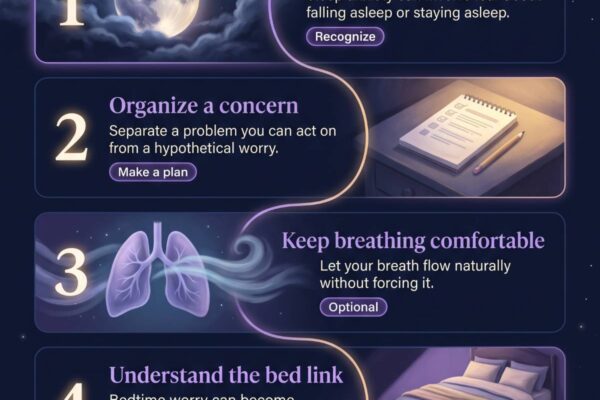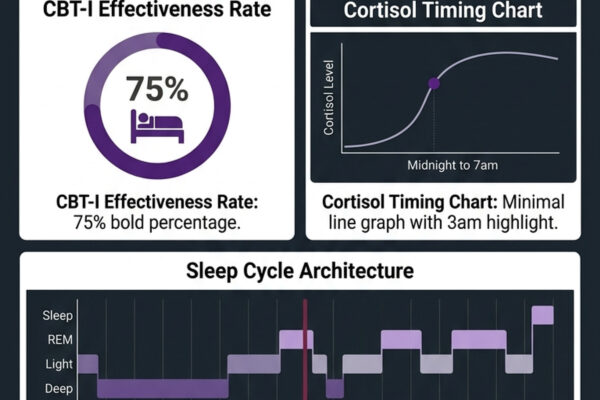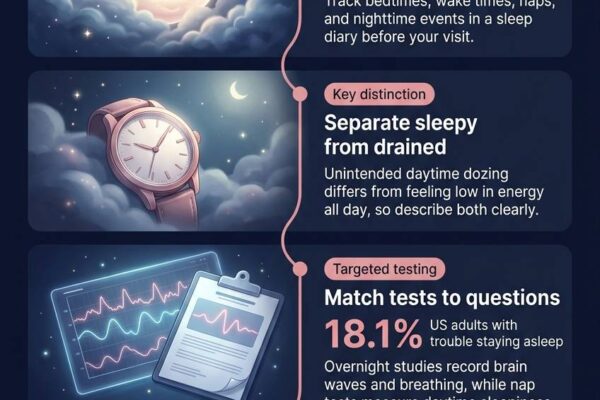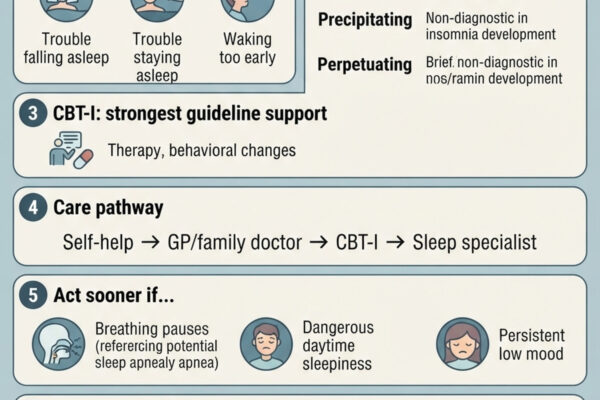

The sleep and mental health planner helps you prepare for a more useful healthcare conversation. Sleep problems, mood changes and daytime difficulties can overlap. This free tool turns your own observations into organized appointment notes, including sleep patterns, current concerns, treatment questions and care access needs.
This educational planner does not diagnose a condition or recommend treatment. It helps adults organize information for a discussion with a qualified healthcare professional.
How to use the sleep and mental health planner
Build a personal appointment note in about one minute. You choose what matters, and the planner organizes your answers.
- Describe your sleep pattern — choose the difficulty that best describes your recent experience.
- Add your daytime experience — select the effects you have noticed in daily life.
- Choose your questions — include concerns about medicines, treatment, assessment or access to care.
- Review your notes — add an optional personal note, then copy or print your appointment summary.
You can use recent observations or an existing sleep diary. A diary is helpful, but it is not a requirement for seeking care. If sleep problems make daily life hard to cope with, arrange an assessment. If you cannot keep yourself or someone else safe, contact local emergency services immediately. Acute mental-health symptoms also need clinical assessment before intensive sleep-treatment protocols are considered.
Free appointment preparation tool
Sleep and Mental Health Planner: Build Your Appointment Notes
Turn your sleep concerns and questions into an organized note you can take to an appointment.
The live planner needs JavaScript. You can still use the guidance on this page to prepare your own notes.
Your entries are used to prepare this result in your browser. The planner does not send them to a healthcare provider or save them to an online account.
Choose any options above to build your appointment notes. You do not need to answer every question.
Showing an example. Change any answer to make it yours.
Your appointment notes are ready
Use this summary to explain what you have noticed and what you want to discuss. It only organizes the information you selected.
What to do next: Review your notes, add anything important and take them to a qualified healthcare professional. You can also bring an existing sleep diary.
Open next: Read how to prepare for your appointment
What your sleep and mental health planner result means
Your result is an organized record of your own observations. It does not decide what condition you have or which treatment you need.
Each part has a practical purpose:
- Sleep pattern: Describes whether you struggle to fall asleep, stay asleep or wake too early.
- Daytime experience: Shows how sleep difficulties affect your energy, focus, mood and daily activities.
- Assessment questions: Helps you remember topics you want to discuss with your clinician.
- Location and access: Keeps questions about cost, coverage and appointment options together.
- Personal note: Gives you space to explain anything the choices did not cover.
For example, imagine someone who wakes several times at night and feels exhausted at work. They select those concerns and ask about medicines and assessment. Their result becomes a short appointment note rather than a guess about the cause.
You can bring an existing sleep diary too. NHLBI suggests recording sleep and daytime habits for one to two weeks when preparing for an appointment. However, needed care should never wait for a completed diary.
Use the notes to start a conversation. Your clinician can consider your health history, medicines, other sleep problems and mental-health concerns.
Explore the different patterns of sleep problems if you are unsure how to describe your experience.
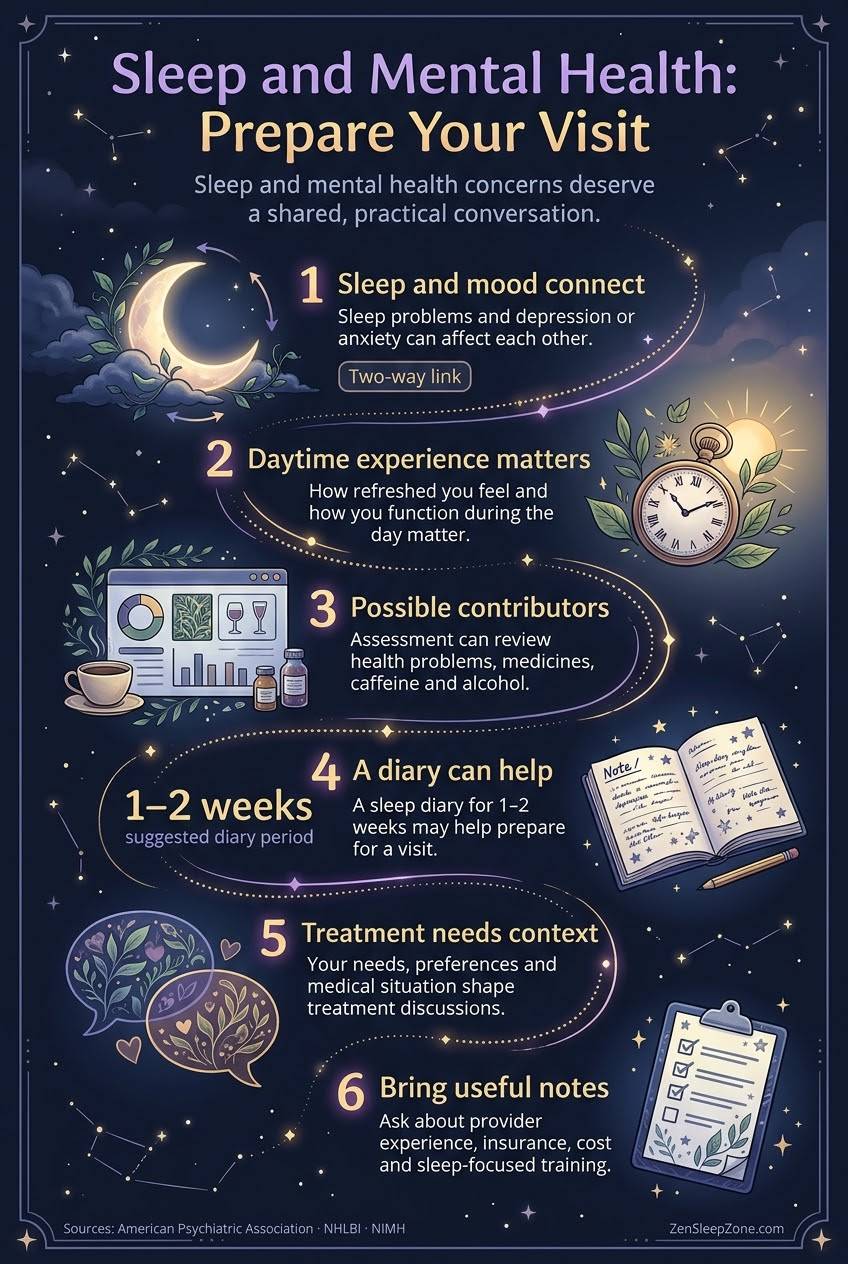
Sleep and mental health: Six ideas at a glance
Sleep, mood and daytime functioning belong in the same conversation. These six ideas show what to notice and prepare.
- Sleep and mood connect — Sleep problems and depression or anxiety can affect each other. This relationship can work in both directions.
- Daytime experience matters — How refreshed you feel and how you function during the day matter. Sleep hours alone do not tell the whole story.
- Possible contributors — Assessment can review health problems, medicines, caffeine and alcohol. These are questions to explore, not assumed causes.
- A diary can help — A sleep diary for 1–2 weeks may help prepare for a visit. It records patterns worth discussing.
- Treatment needs context — Your needs, preferences and medical situation shape treatment discussions. Different options address different concerns.
- Bring useful notes — Ask about provider experience, insurance, cost and sleep-focused training. These questions can make the conversation more specific.
Read how sleep and mental health affect each other for the full explanation. The sleep and mental health mind map connects the main ideas in one view.
The rules behind the sleep and mental health planner
The planner follows a simple rule: it organizes what you enter without making medical decisions for you.
| If you choose or enter… | The planner shows… | Why it matters |
|---|---|---|
| A sleep pattern | Your selected sleep difficulty | Sleep assessment considers the pattern you describe. |
| Daytime effects | Your selected daytime experiences | Assessment also considers how refreshed and functional you feel. |
| Treatment questions | Your chosen questions | Different treatments have different purposes and limits. |
| A location | Your selected location | Care routes and payment arrangements differ by country. |
| Access needs | Your selected access questions | Provider experience, coverage and cost deserve discussion. |
| A personal note | Your own written words | The planner repeats your entry without interpreting it. |
What the planner cannot tell you
It cannot diagnose insomnia, depression, anxiety or another sleep disorder. It cannot identify the cause of your symptoms or select a treatment. It also cannot confirm that a particular service is available in your area.
CBT-I is a recommended treatment for chronic insomnia in clinical guidance. Sleep hygiene education alone is not the same treatment. A clinician can discuss suitability, especially when other health or mental-health concerns are present.
Do not stop or change prescribed medicines because of information on this page. Discuss treatment changes with your healthcare provider.
For persistent sleep difficulties, an assessment can consider your sleep history, daytime experience and other health factors. The treatment options and their differences explain what you may want to discuss.
For research findings, including the limits of treatment studies, visit sleep and mental health statistics. For a specific treatment or medicine concern, use sleep and mental health questions.
Evidence used for the planner
- Sleep problems and depression or anxiety can affect each other. American Psychiatric Association: What Are Sleep Disorders?
- Sleep assessment considers medicines, health problems and daytime experience. NHLBI: Insomnia Diagnosis
- A sleep diary can record sleep and daytime habits. NHLBI: Sleep Diary Guidance
- Depression care considers personal needs, preferences and medical circumstances. NIMH: Depression
- CBT-I and treatment delivery options are described in official guidance. NHLBI: Insomnia Treatment
Take your sleep concerns one step further
Choose the next resource that matches your question. The sleep and mental health starting guide helps you find a useful route. Explore the mental health pillar for related topics.
Explore the research and numbers →Sources
- American Psychiatric Association — What Are Sleep Disorders?. Supports the two-way relationship between sleep problems, depression and anxiety.
- National Heart, Lung, and Blood Institute — Insomnia Diagnosis (2022). Supports assessment questions and sleep diary preparation.
- National Heart, Lung, and Blood Institute — Insomnia Treatment (2022). Supports CBT-I and treatment information.
- National Institute of Mental Health — Depression. Supports individualized mental-health treatment discussions.
- National Institute of Mental Health — Help for Mental Illnesses (2026). Supports provider and access questions.
Sources checked · Next review
How we made this page: infographic and planner rules built from the listed sources, drafted with AI assistance and edited by Aamir Bashir, Founder & Editor. Read our editorial policy.